
48 Hours in Champagne: Friendship, Tastings, and the Charm of Reims
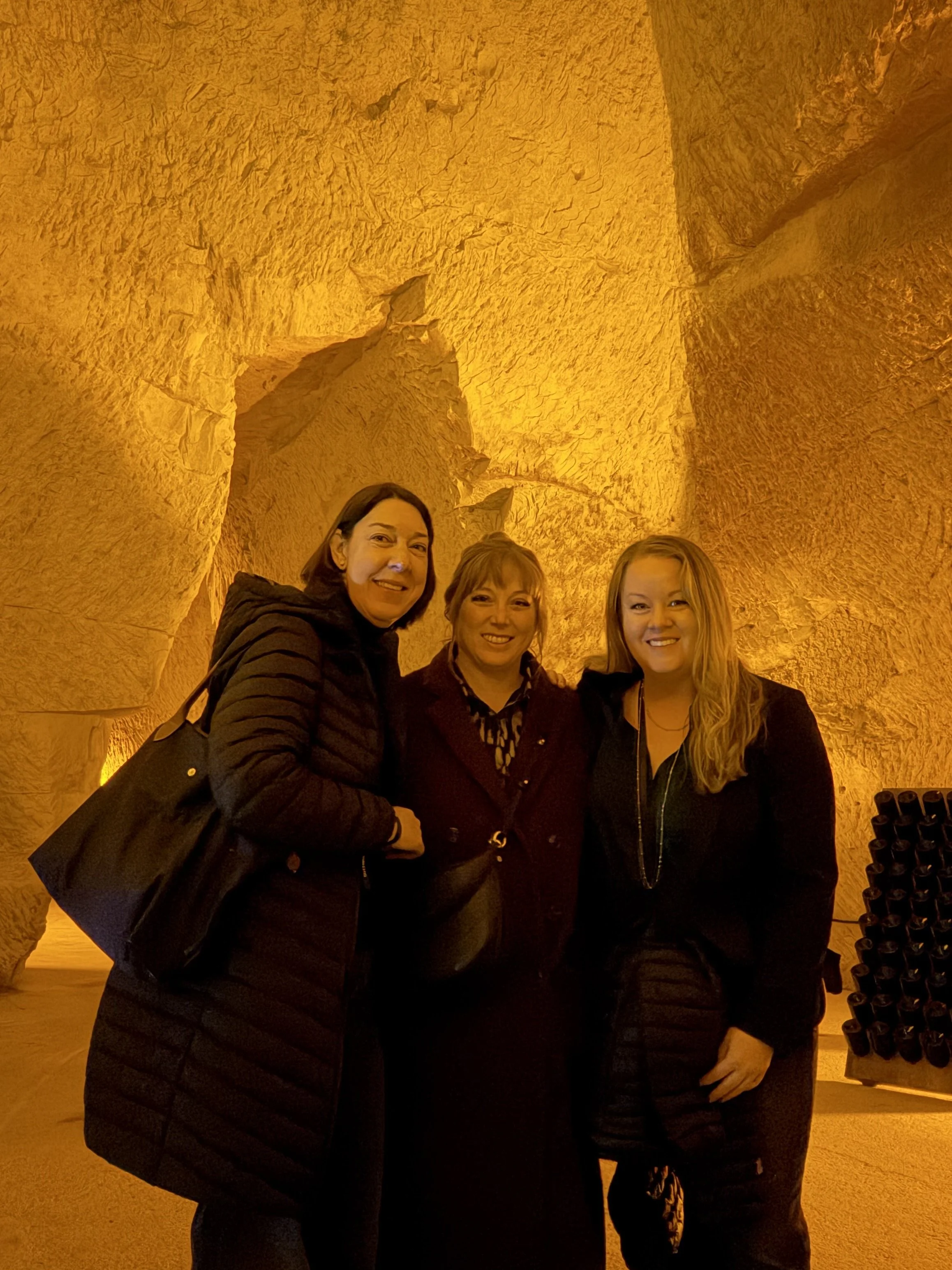
This trip may have started with Champagne, but it ended up being just as much about the people.
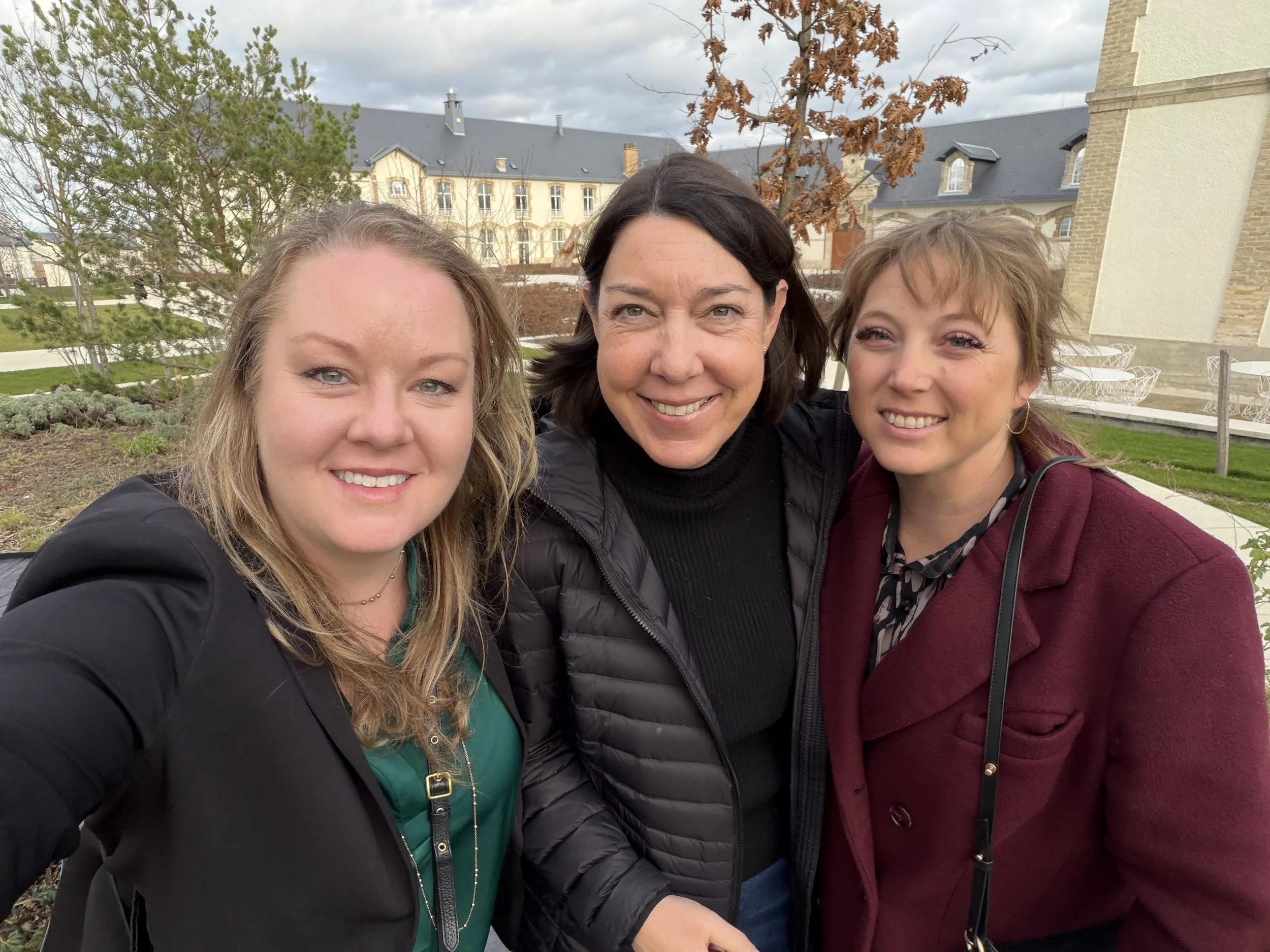
I was in France with Karen and Kaitlin, two friends I met while studying abroad there 17 years ago. None of us live in the same city now. They’re in California, I’m in Florida, and as everyone knows, life has a way of making time pass in the blink of an eye. Months go by without talking, sometimes years between visits, and yet every time we see each other, it feels like nothing has changed.
So when we decided to meet in France again, it felt special before the trip even began. At first, the plan was just a quick meetup at Kaitlin’s house in San Diego. She dangled wine, cheese, and croissants (in France), and it was a pretty quick “yes” from Karen and me. Within days, Kaitlin suggested the Champagne region.
And honestly, I can’t think of a more fitting place to celebrate a friendship like that than Champagne.
What genuinely surprised me most, though, was how much I learned in less than 48 hours.
I’ve done brewery, winery, and distillery tours, and plenty of tastings over the years. Usually, I leave with one or two interesting facts, maybe a new appreciation for the process, and that’s about it.
But nothing has ever felt like a real education the way Champagne did.
In less than two days in Reims, I walked away not just with tasting notes, but with an understanding of the history, the people, the rules, the pride, and the culture behind what might be the most misunderstood drink in the world.
And that made the trip feel even more meaningful.
Arrival in Reims
Immediately after landing in Paris, I met the girls at Gare de l’Est station (not to be confused with its neighbor, Gare du Nord, thanks girls 😉). We boarded a train, and 45 minutes later, we found ourselves at Gare de Reims in the city center.
We arrived midday, luggage in hand, with nowhere to put it. So naturally, we did what any reasonable travelers would do and left our bags at a nearby pizzeria for a few euros and headed out to explore.
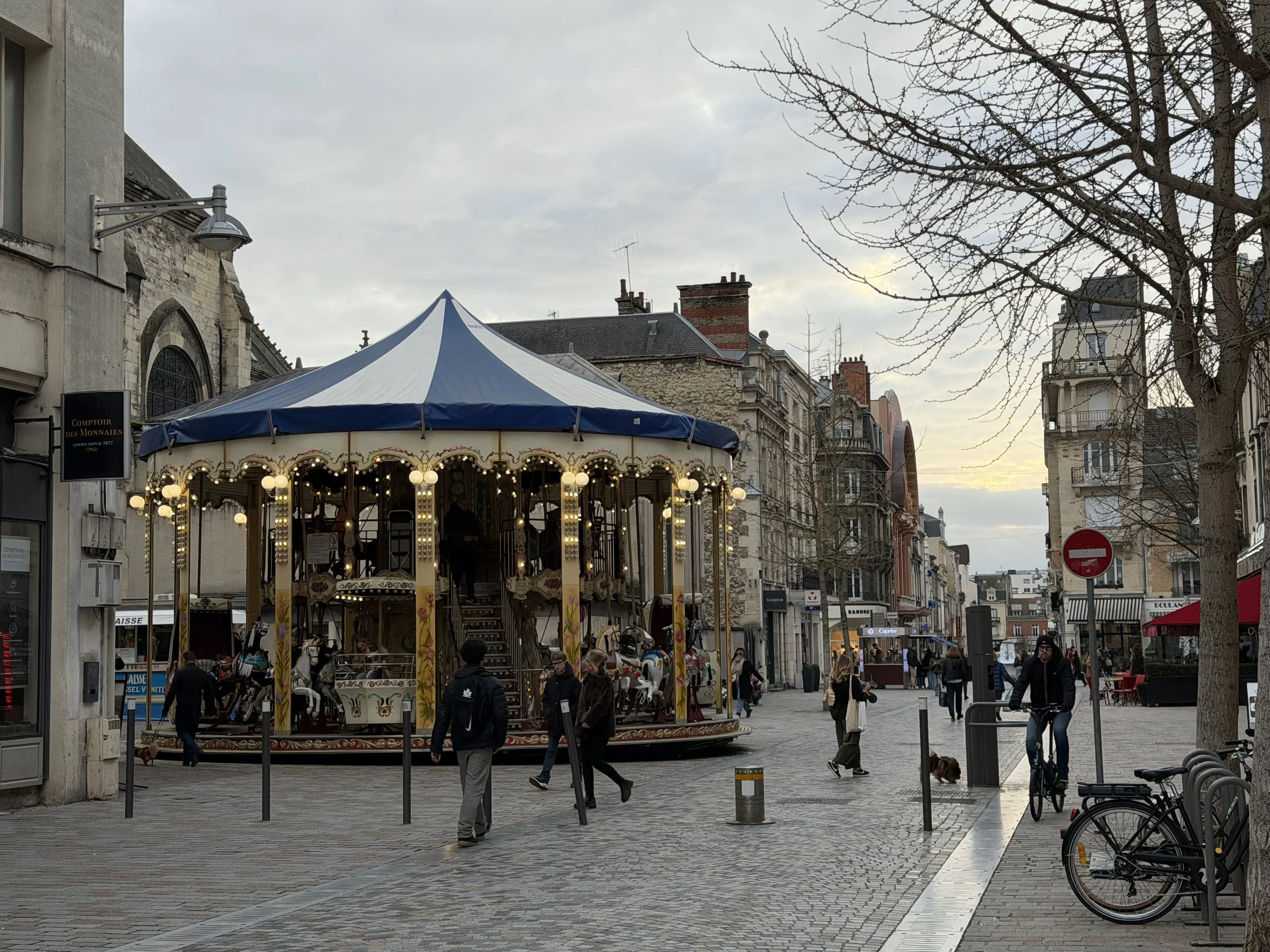
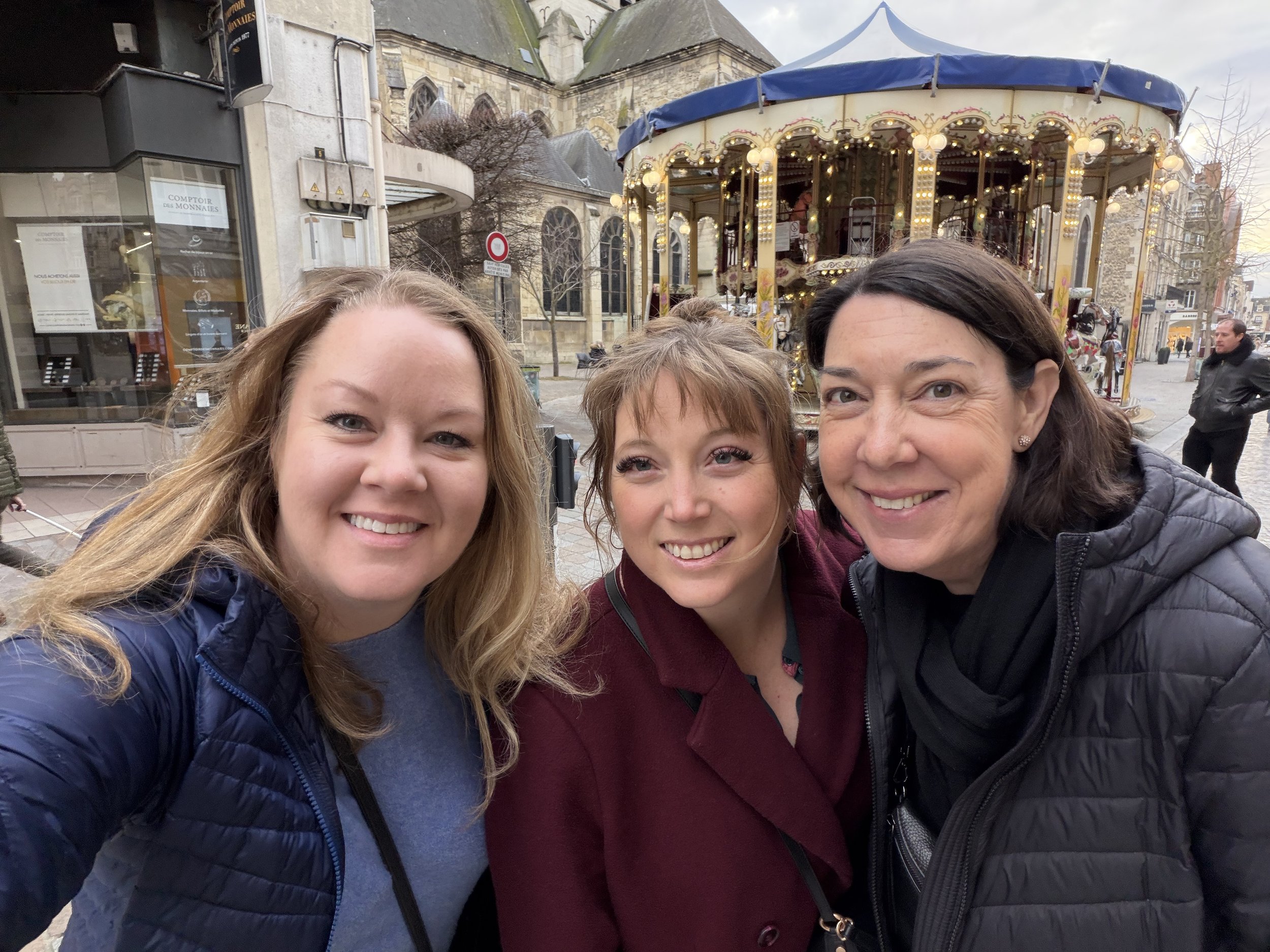
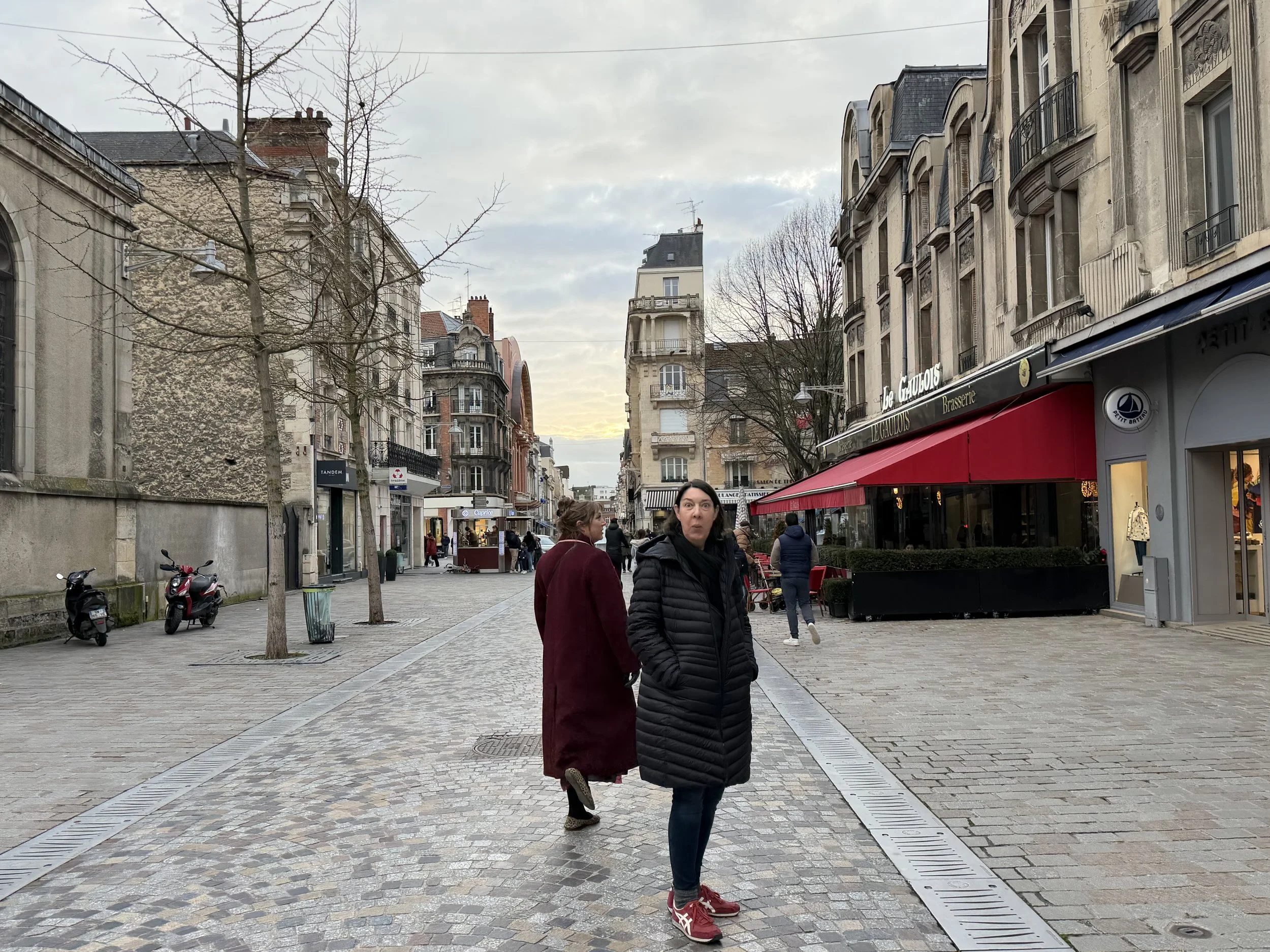
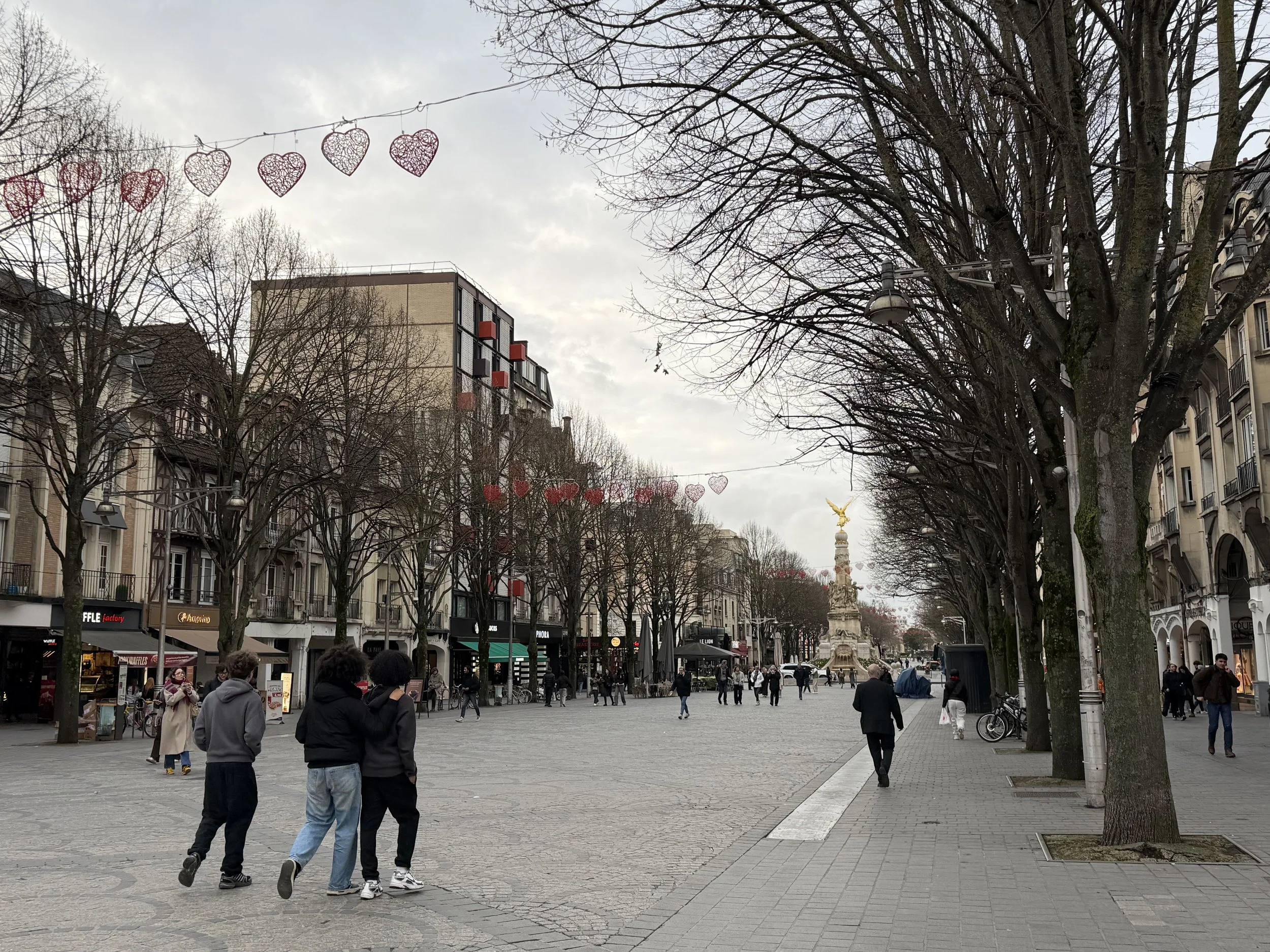
Reims felt like a village, even though it’s a city. Families walking together, children playing, the smell of boulangeries drifting into the street, and small cafés with tables spilling onto the sidewalks. At one point, we passed a carousel that seemed to run all day, with kids hopping on and off while parents stood nearby talking. It felt calm, lived-in, and welcoming in a way that’s hard to explain.
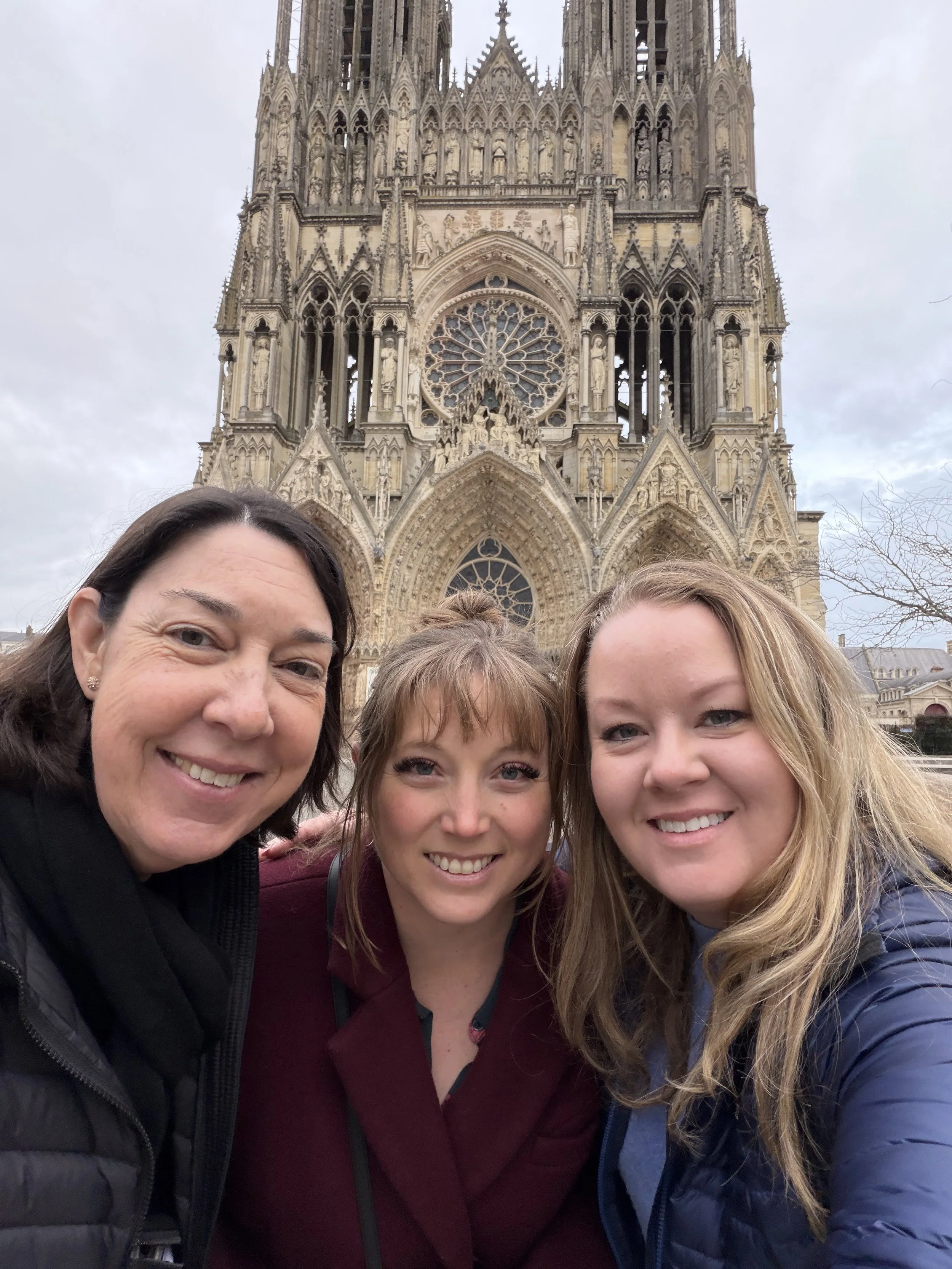
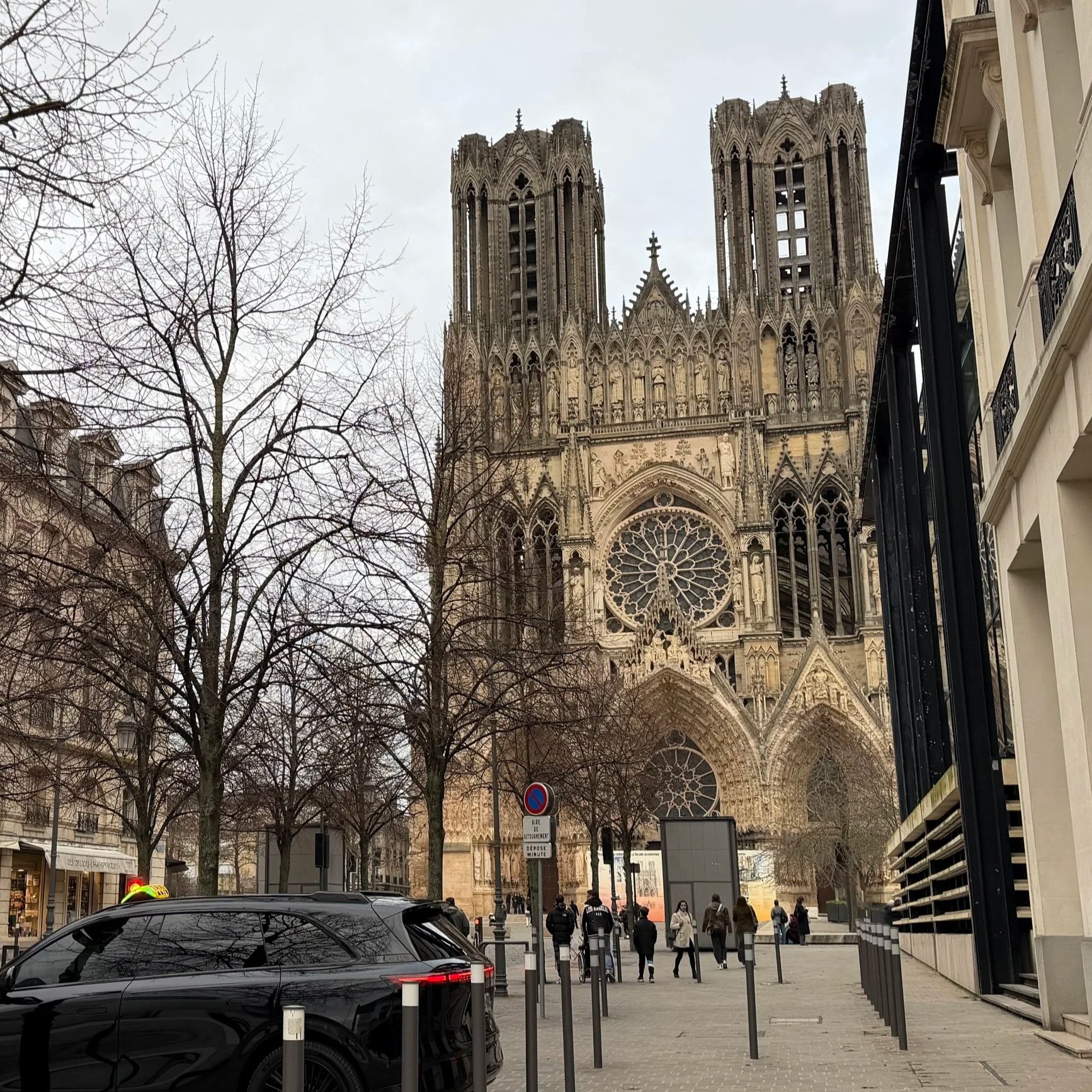
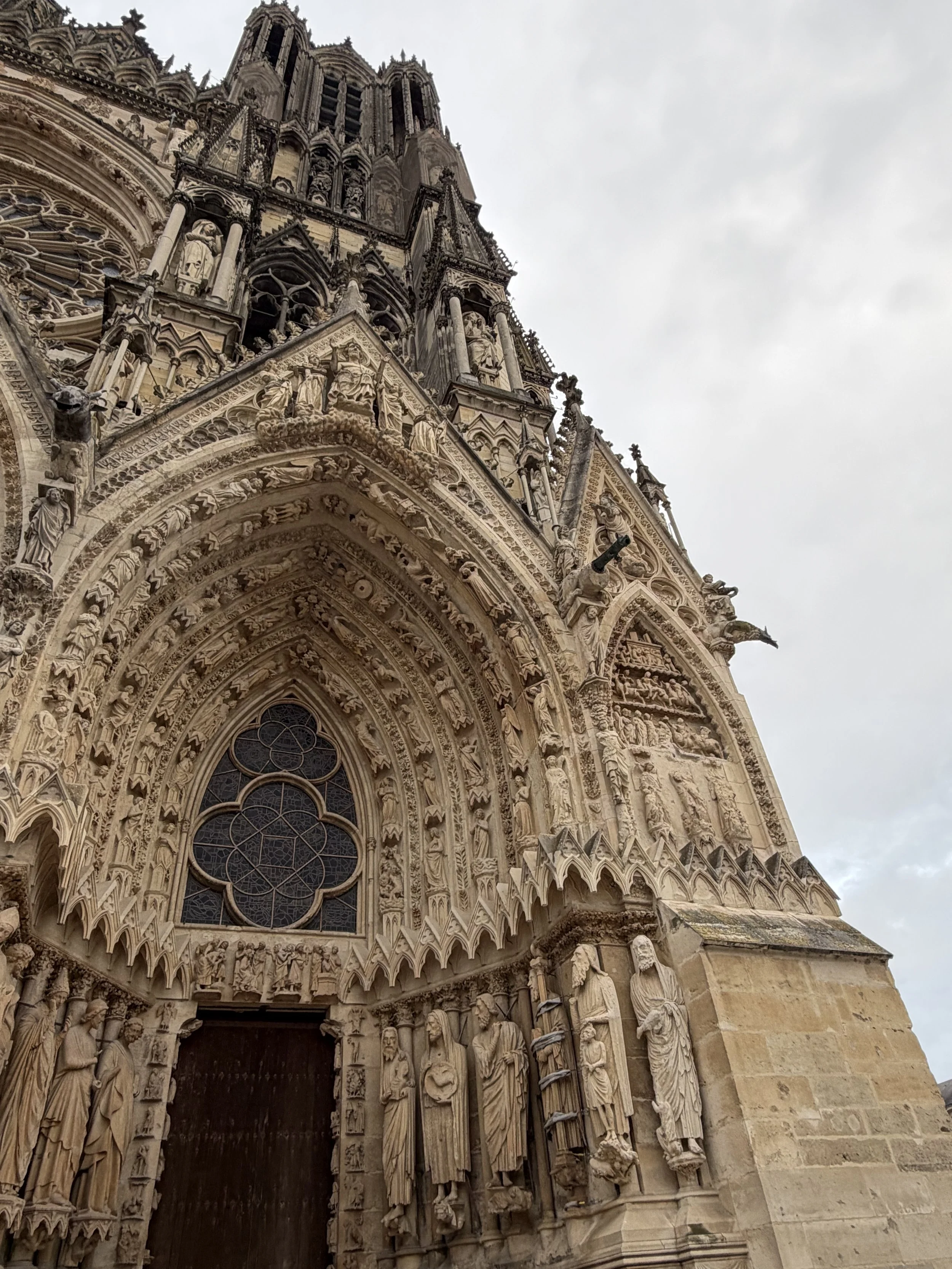
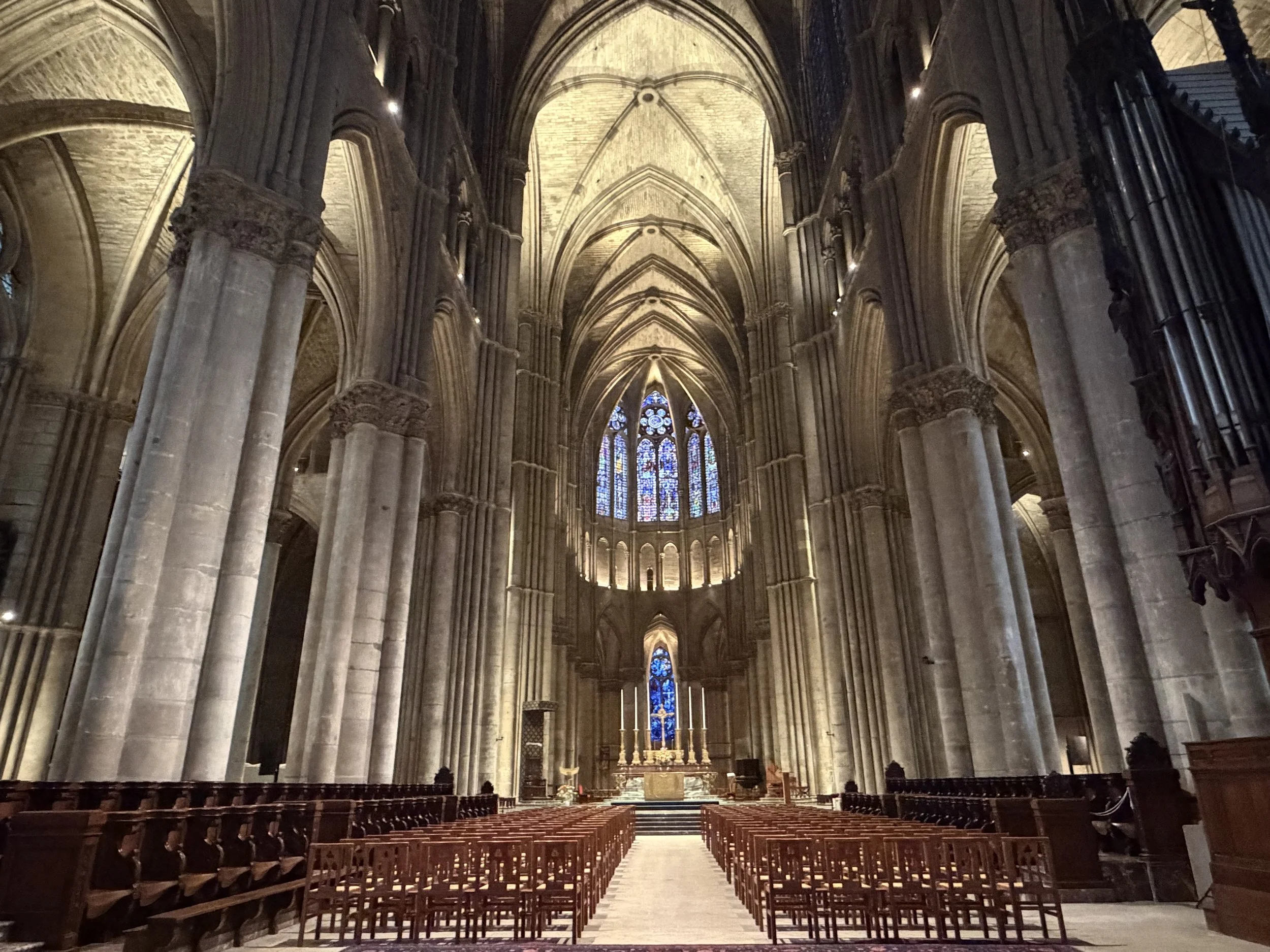
Not far from the station stands Notre-Dame de Reims, the cathedral where French kings were crowned for centuries. It’s enormous, larger than the famous Notre-Dame in Paris, and yet quieter and more peaceful to visit. A church has stood on that site since the 5th century, and the current cathedral began construction in 1211, wrapping up by the end of the century. Standing there, you feel the weight of history.
We went inside, and what struck me most was how calm it felt. There was no crowd, just a quiet stillness that made it easy to take everything in. It turned out to be one of my favorite stops on the entire trip, and I would absolutely recommend it if you’re in Reims.
Following the cathedral visit, we continued wandering through the streets, eventually settling in at Le Wine Bar (yes, that’s the real name, ha) for a quick tasting and some local cheeses before heading to dinner.
Our First Meal in Reims & Introduction to Ratafia
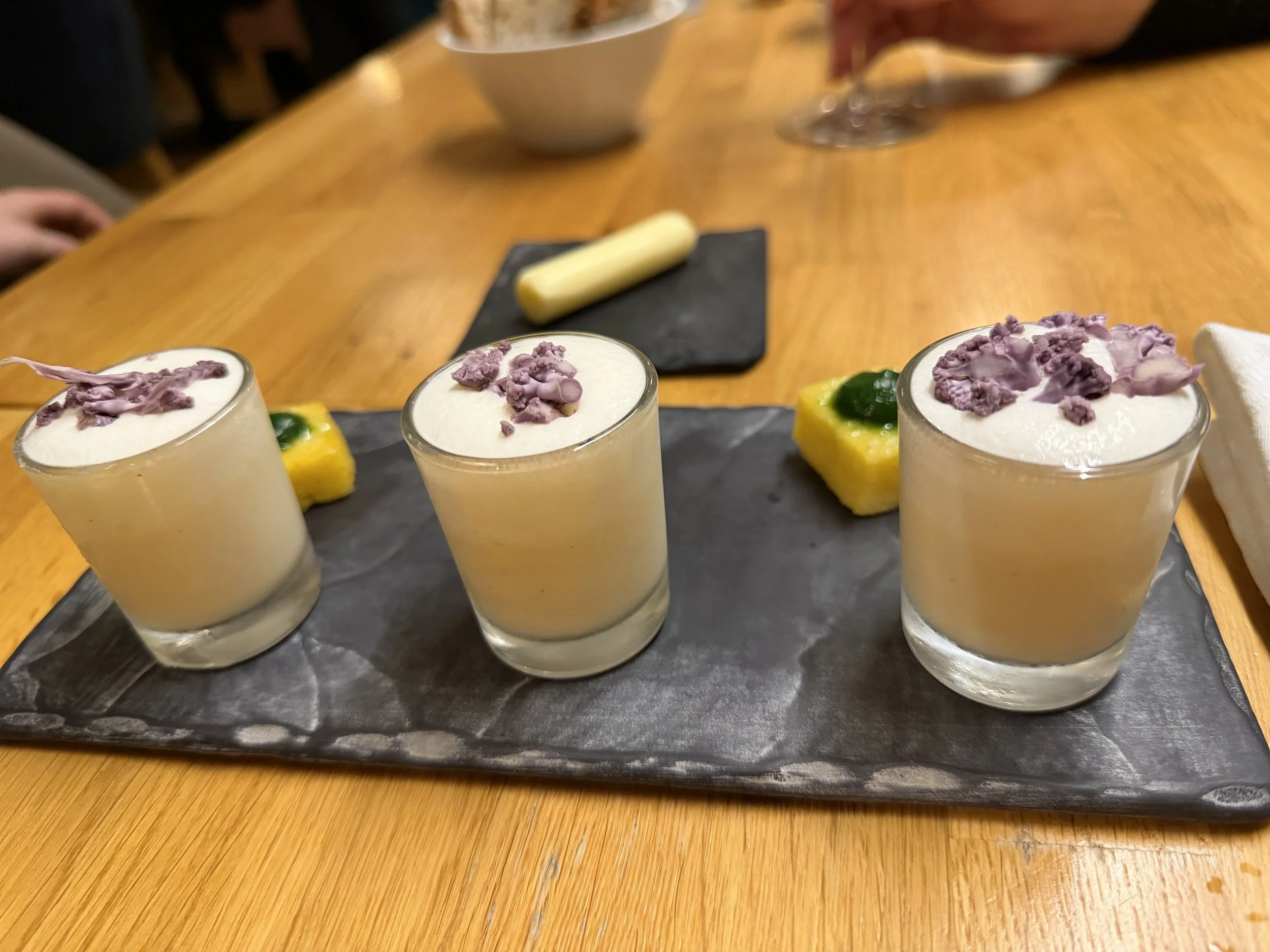
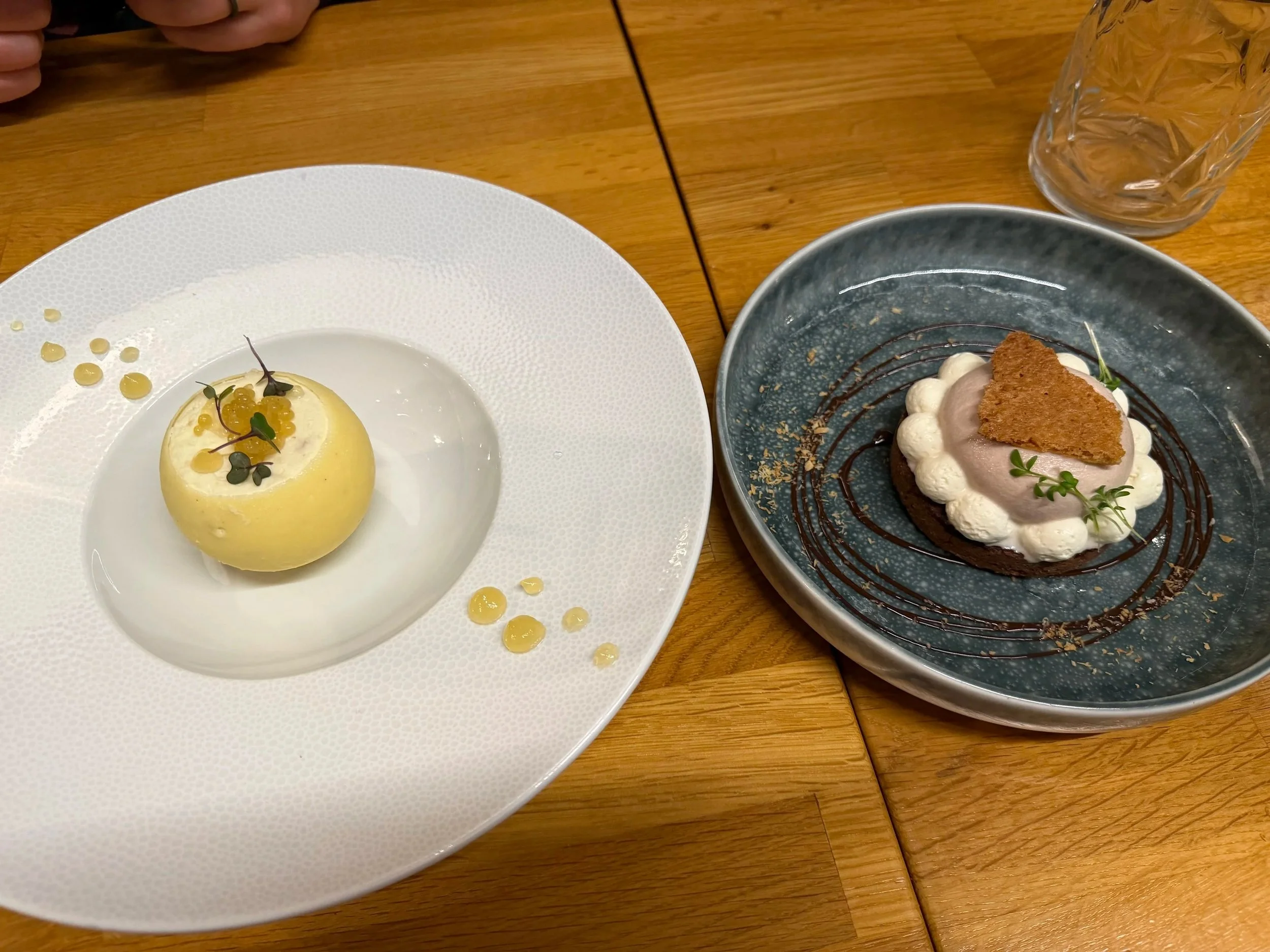
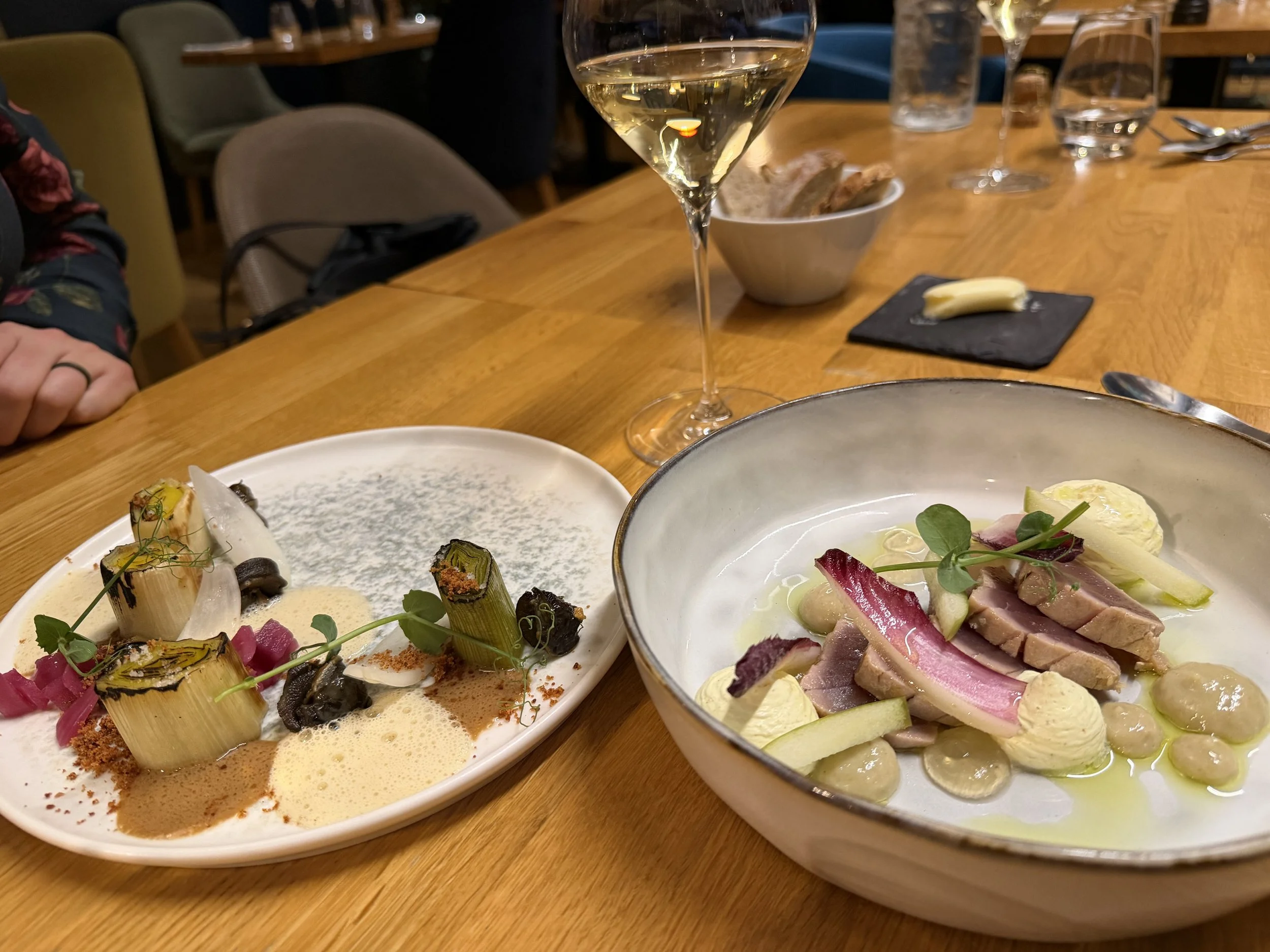
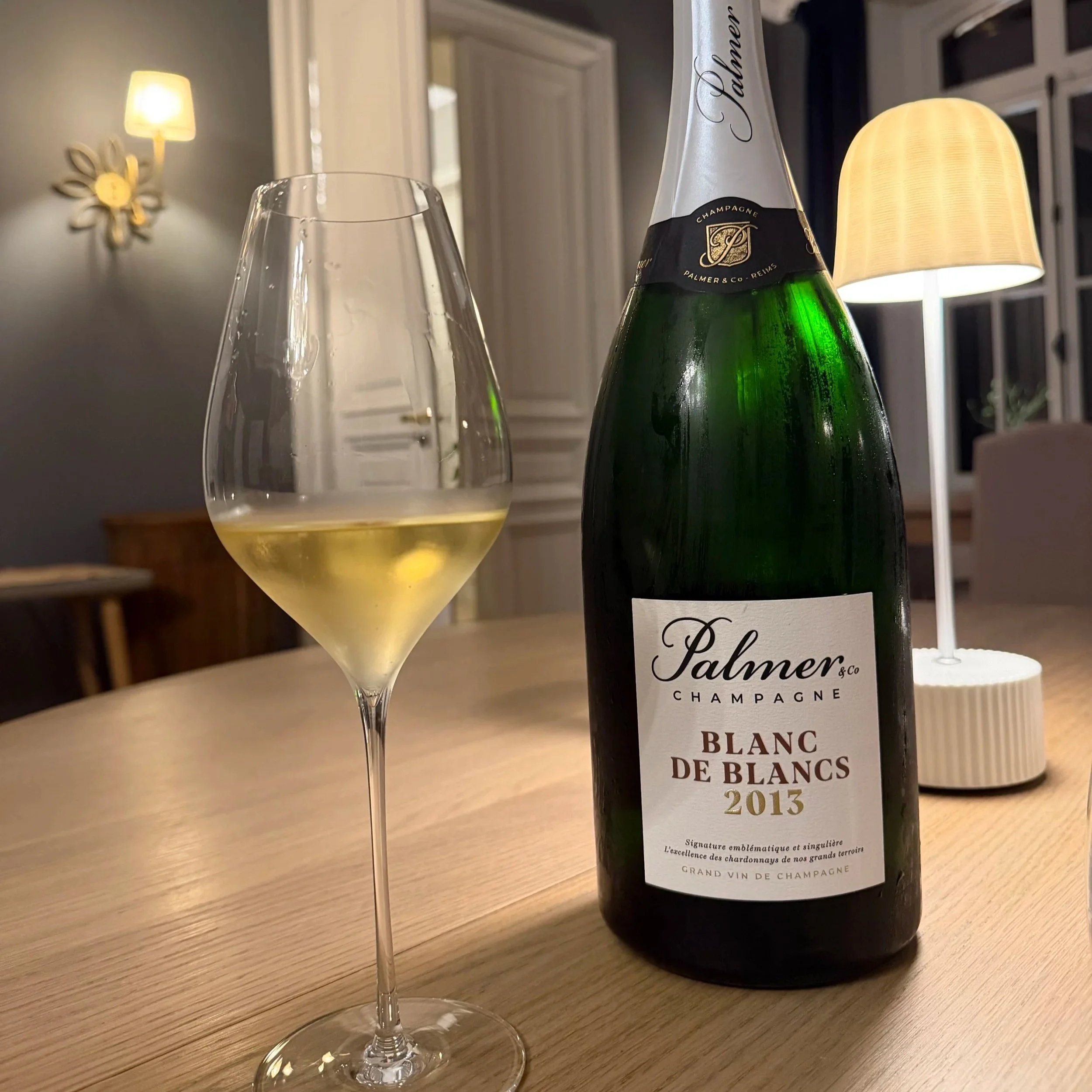
At L’Atelier, my first official meal in France, we ordered the tasting menu, and I was immediately reminded why French cuisine has the reputation it does. From the amuse-bouche to the blanc de blancs Champagne, everything was creative, perfectly cooked, and beautifully plated, with flavors that somehow felt both rich and balanced at the same time.
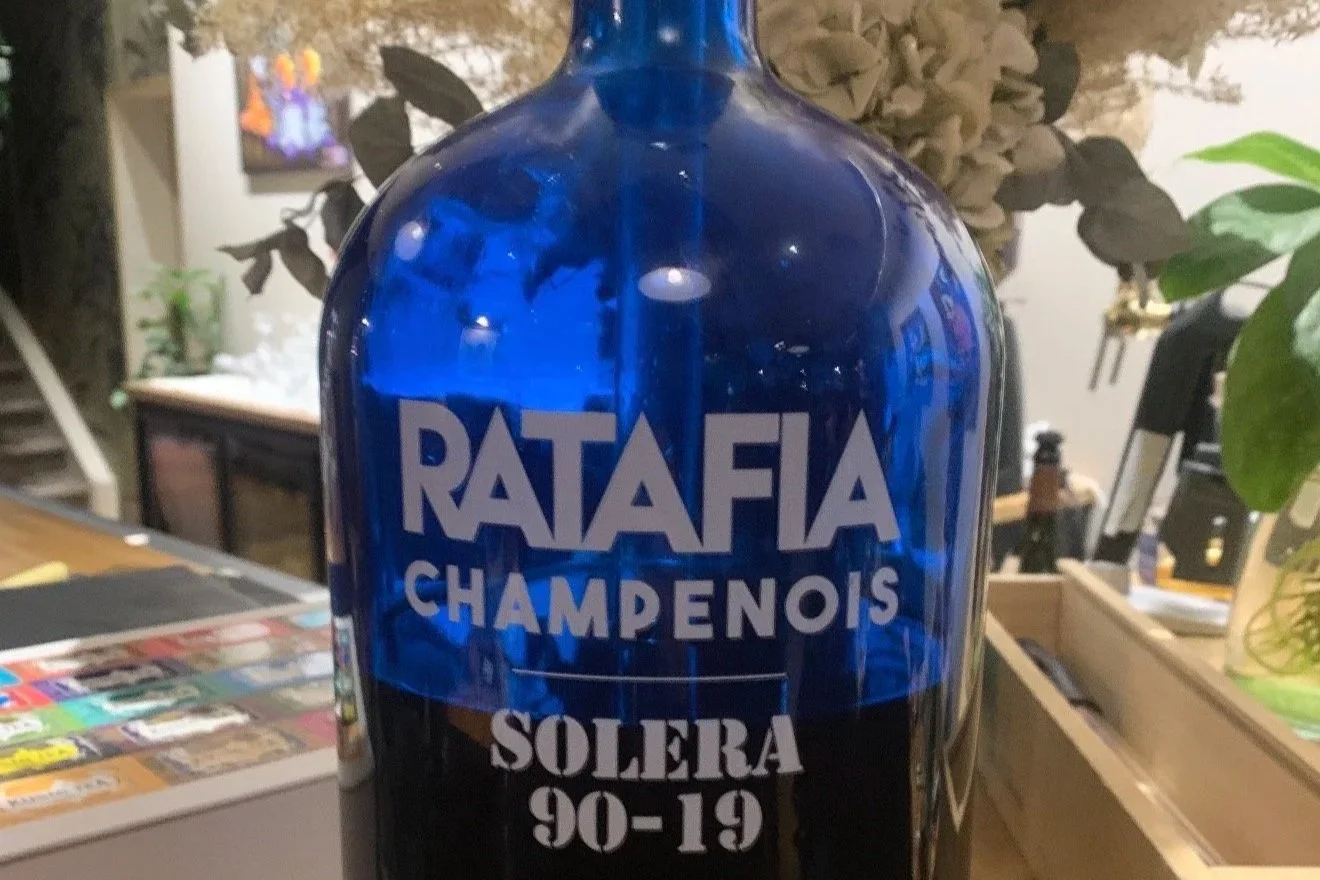
By the end of the meal, Kaitlin asked about a digestif, which is common in French dining, and that’s when we were introduced to Ratafia de Champagne. It’s a smooth, slightly sweet fortified wine made from the same grapes as Champagne, and to me it tasted like a cross between brandy and port. It was so good that it quickly became our after-dinner ritual for the rest of the trip.
Checking into Domaine du Chalet
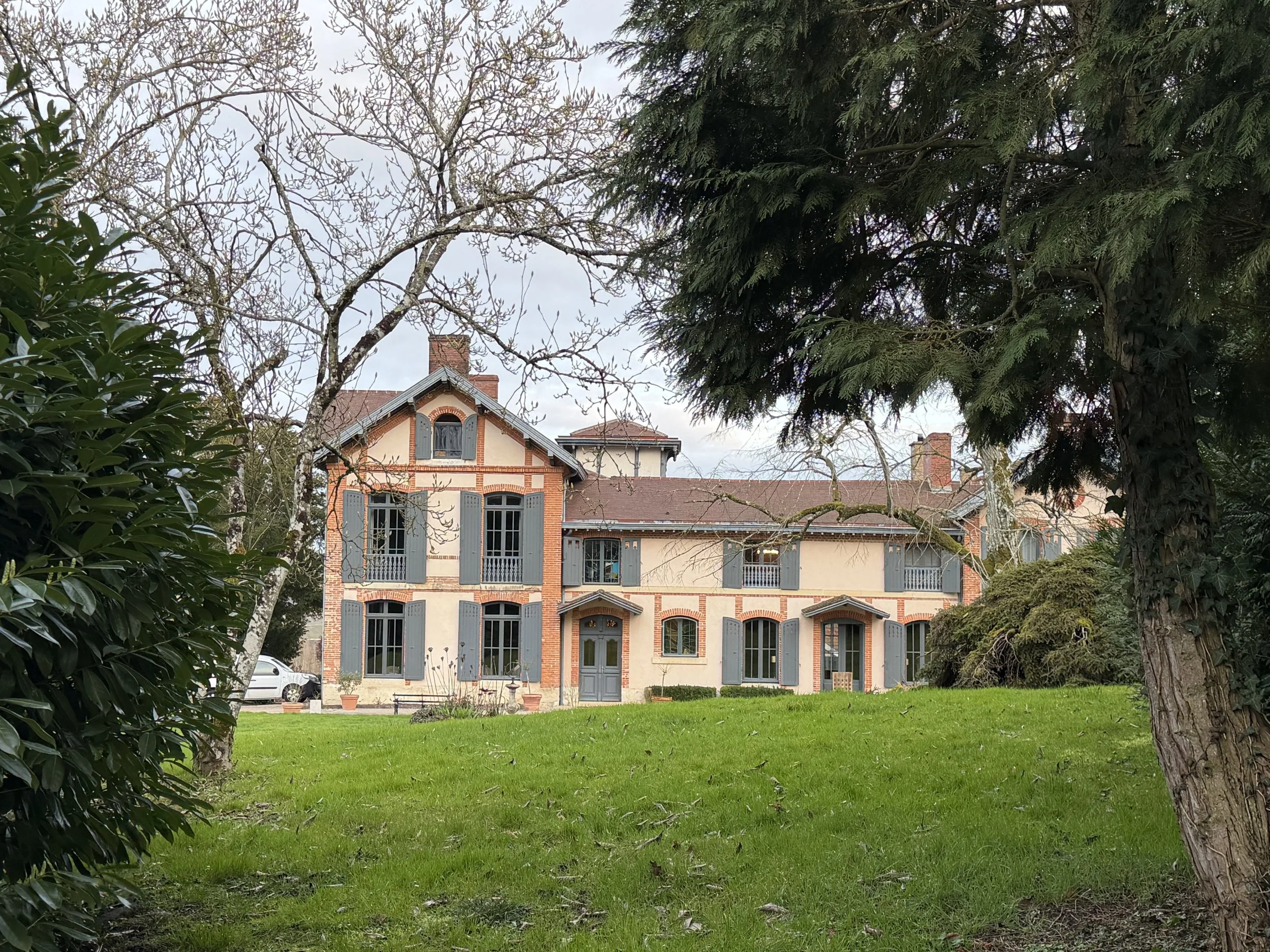
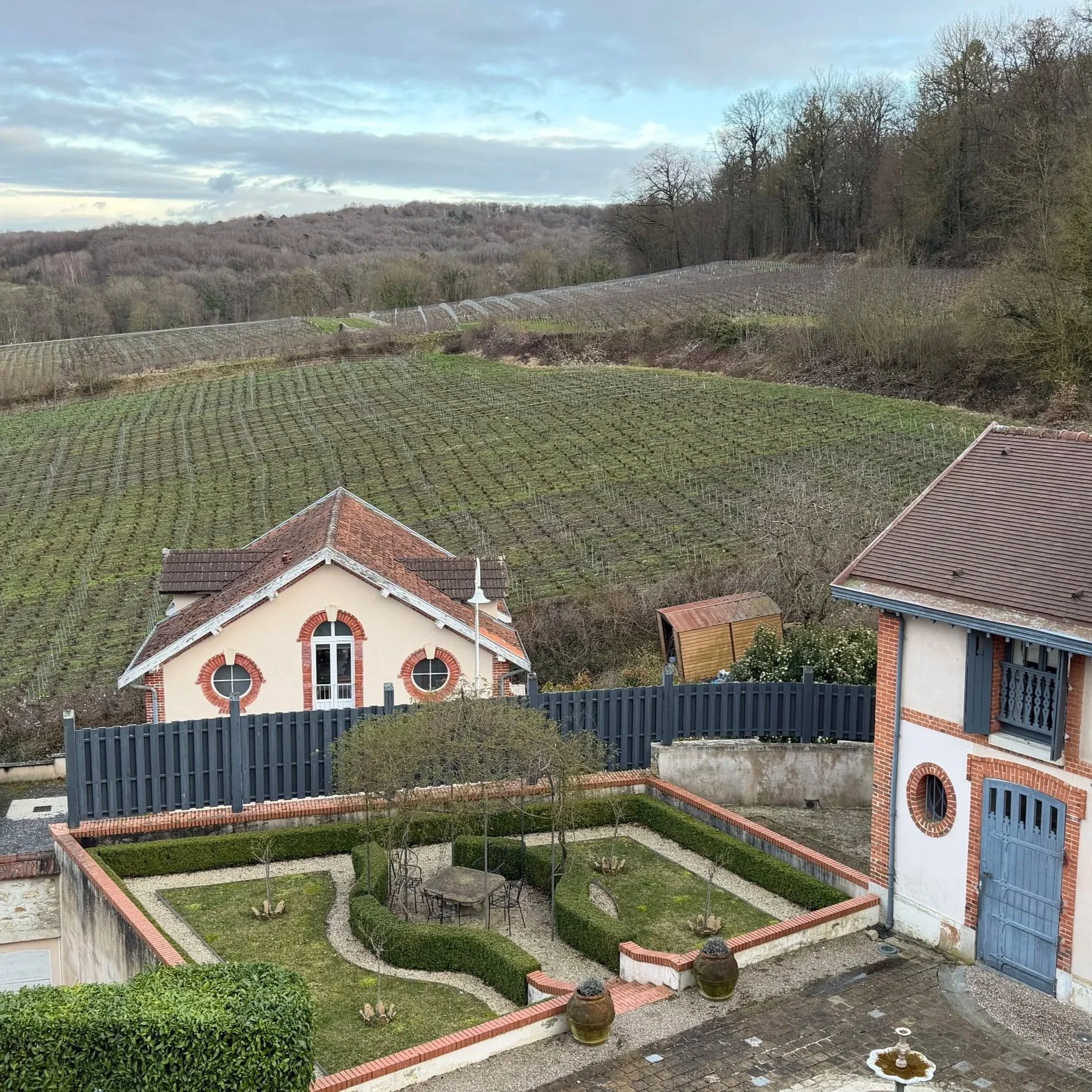
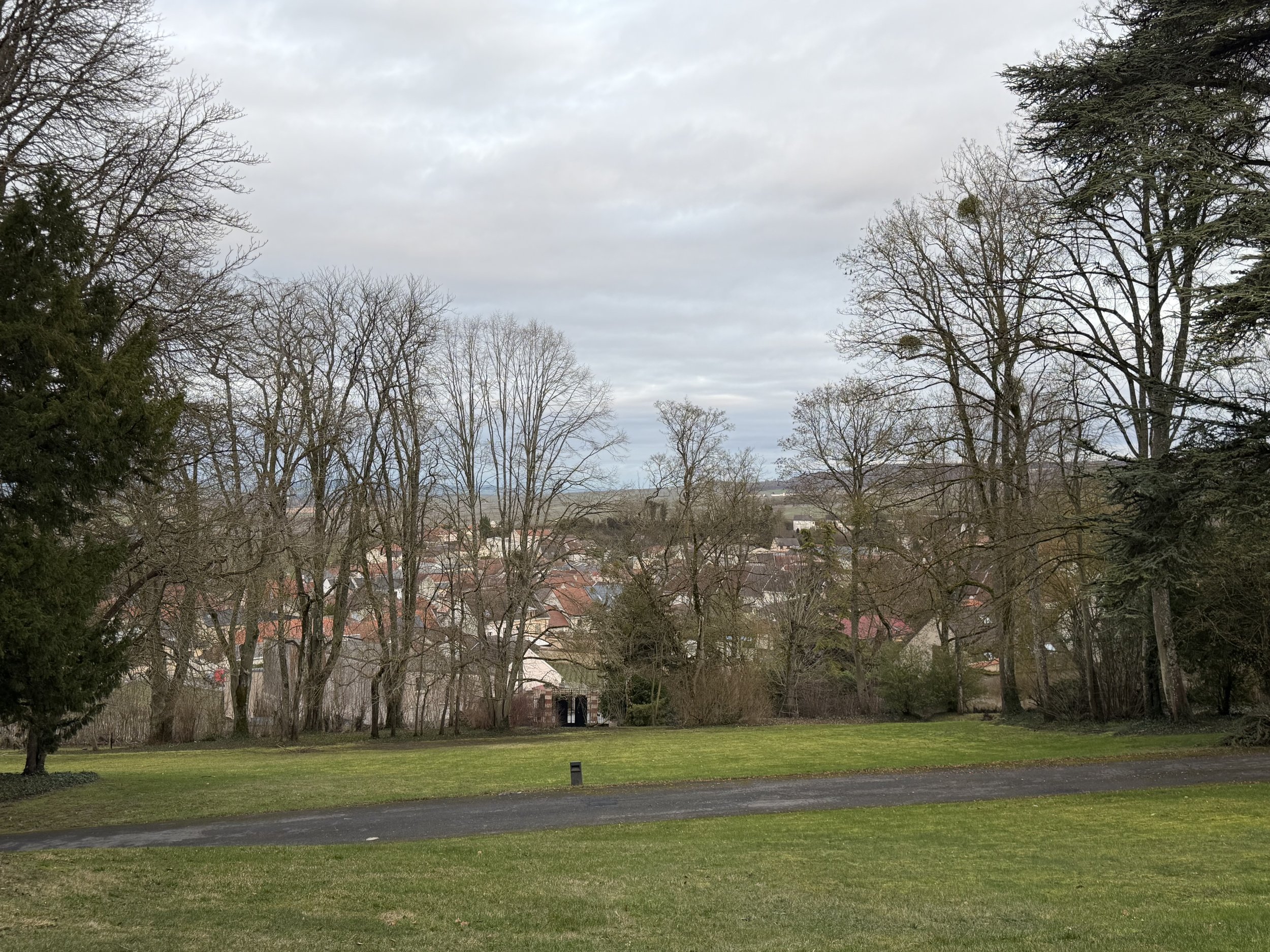
That night, we checked into Domaine du Chalet, a small luxury guesthouse tucked away in Chigny-les-Roses, just outside Reims. The house dates back to the 1860s and feels more like staying in someone’s private estate than a hotel. It’s owned by Palmer & Co Champagne, and part of the experience includes an optional six-course dinner prepared by their chef, Damien Litaudon. We opted in, but more on that later.
We arrived late, tired from travel, and were greeted by Chef Damien himself, who kindly welcomed us, poured us a drink, and carried our heavy bags all the way up the stairs.
He inquired about our allergies and dislikes for dinner the following evening, and seemed thrilled when we said none.
We had no idea yet how unforgettable that dinner would be.
Enter Julian, Our Driver & Guide to Champagne
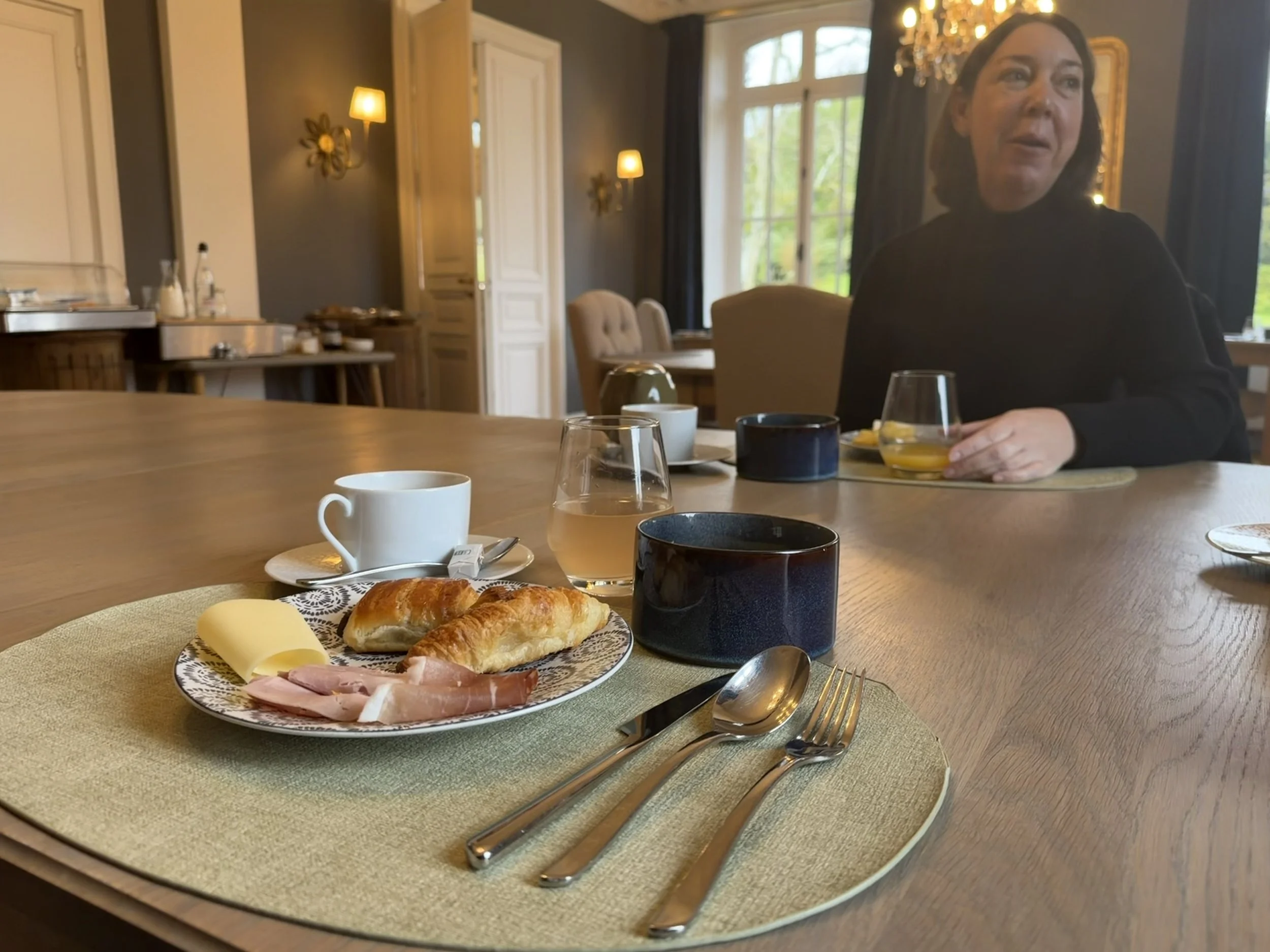
The next morning, after a delicious French breakfast hosted by the lovely Sabine, we met Julian, our driver for the day, who quickly became more like a guide and local historian.
He told stories the entire time, always with a real sense of pride in his home.
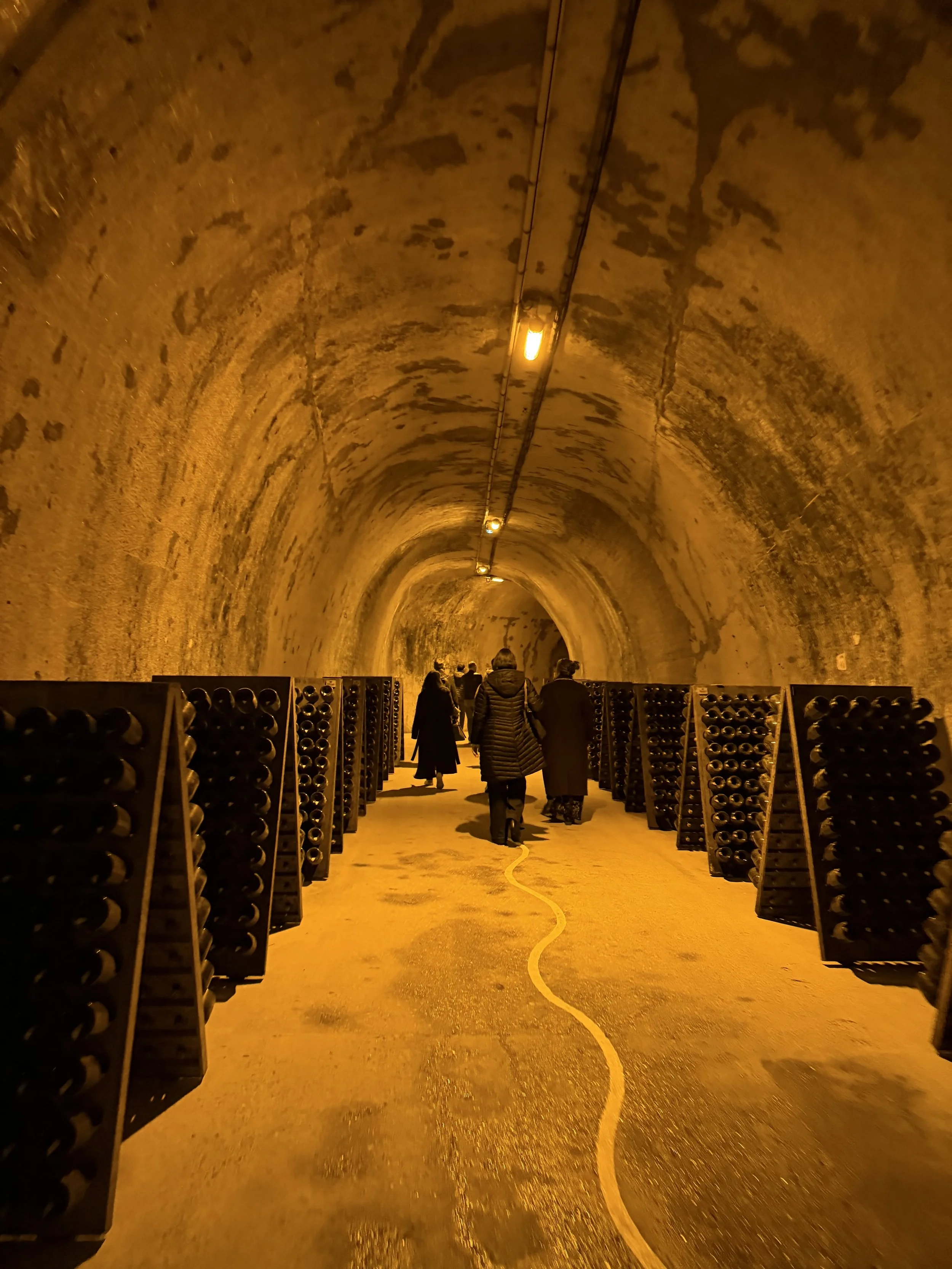
Before we even got to our first stop, he started quizzing us on what we knew about wine, and then filled in the gaps with his own knowledge. One of the first things he explained was that a massive network of ancient chalk tunnels runs beneath the city of Reims, something like 250 kilometers, if I remember correctly. These tunnels were first carved out by the Romans for construction materials, and centuries later, they became the perfect place for Champagne houses to store and age their wine. The caves, called crayères, maintain a constant temperature and humidity, making them ideal for aging Champagne. We would end up seeing parts of this underground network during our tours that day.
As we drove, he pointed out the Porte de Mars, the last remaining Roman triumphal arch in Reims, and I remember being surprised by just how much Roman history is still visible in the city.
Reims has lived through a lot.
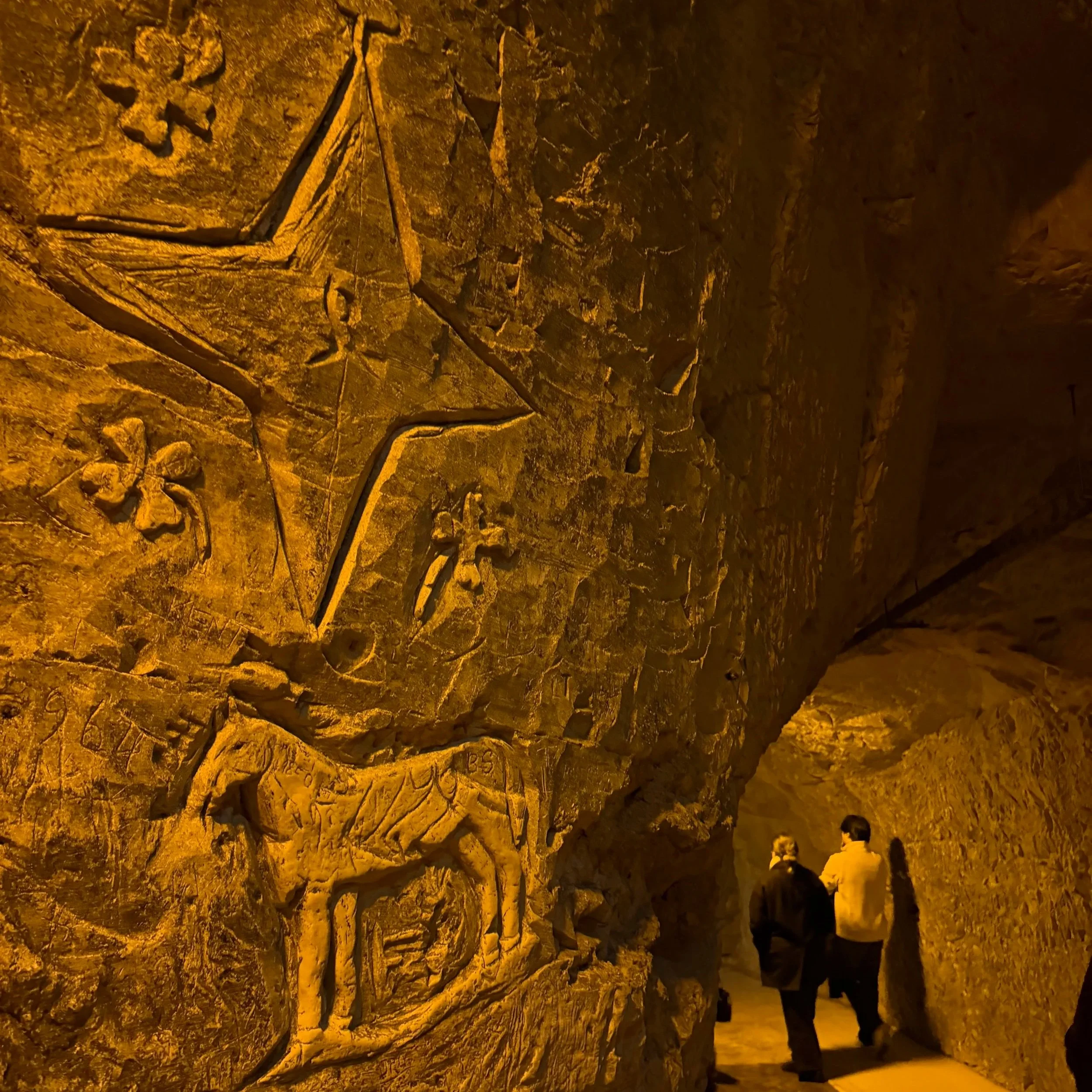
Nearly 80% of the city was destroyed during the Great War, and the caves were used during that time to shelter women and children from the bombings. In some of the cellars, you can still see drawings and inscriptions left by people who lived down there, and we would see some of those ourselves later that day.
He pointed out Rue de Tambour as we drove past, one of the few streets that survived the war untouched, and told us that it was in Reims where Germany officially surrendered in World War II.
Then the conversation shifted from history to his own family traditions.
He told us that in the Champagne region, when a baby is born, the grandparents bring Champagne to celebrate. Not just for the parents, but for the baby too. They dip a finger in the wine and place a drop on the baby’s lips so their first taste in life is Champagne.
That, he said, is how important it is here.
Hearing him talk about it made it clear this wasn’t just wine.
It was history, family, and identity.
And we were about to see exactly what he meant.
The Champagne Education Begins: Taittinger
Our first stop was Champagne Taittinger, where I got my first real look at how Champagne is made.
We started with the history of the house, still run by the Taittinger family today, led by Pierre-Emmanuel Taittinger and his children, Vitalie and Clovis. There was a real sense of family pride in the way the story was told.
Vitalie spoke about the vineyards they own, the grapes they grow, and the responsibility they feel to the region. She also said something that stuck with me the rest of the trip.
Champagne isn’t only for big celebrations.
It’s meant for everyday life too; for moments shared with people you love.
Then we went underground.
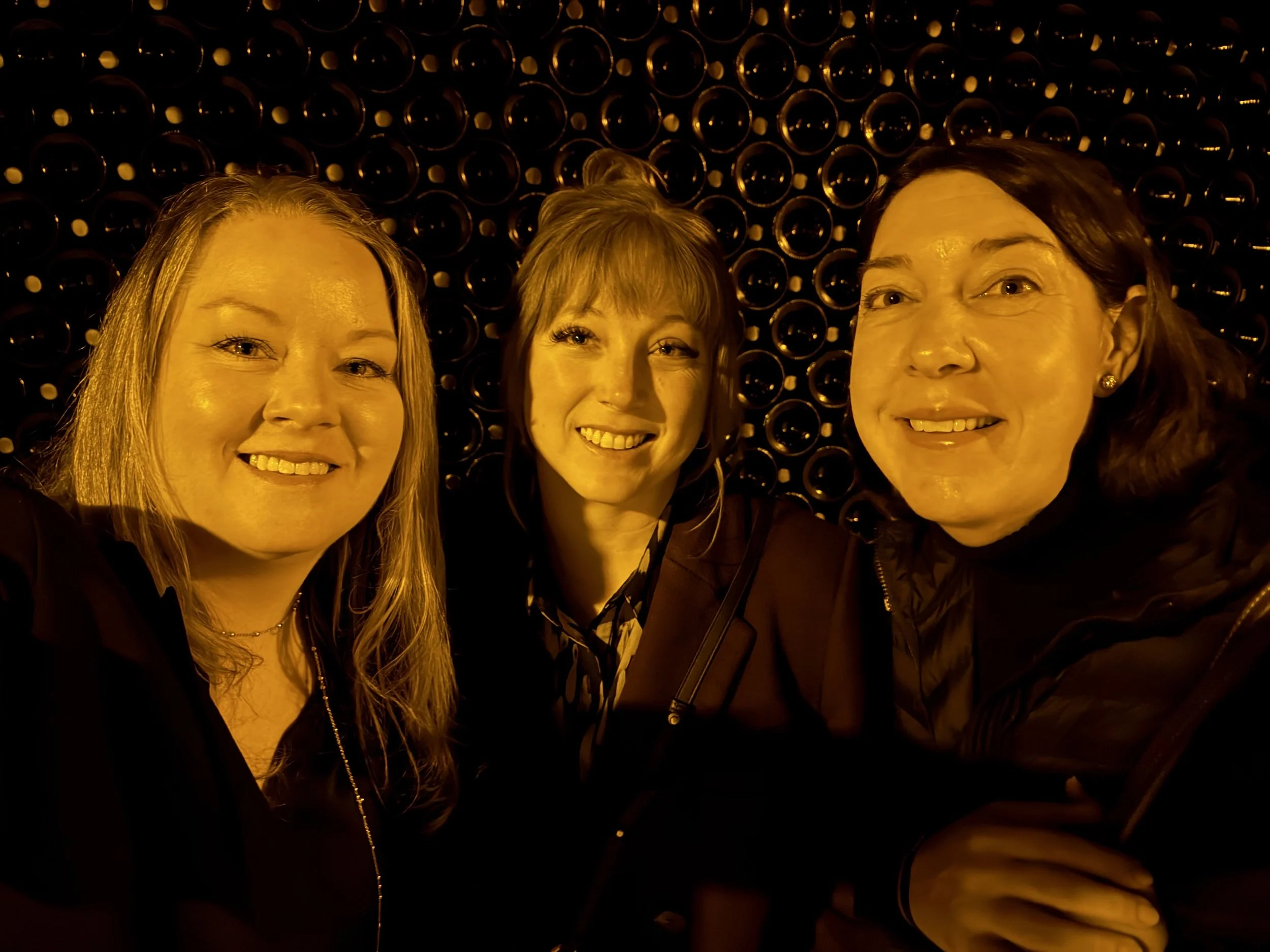
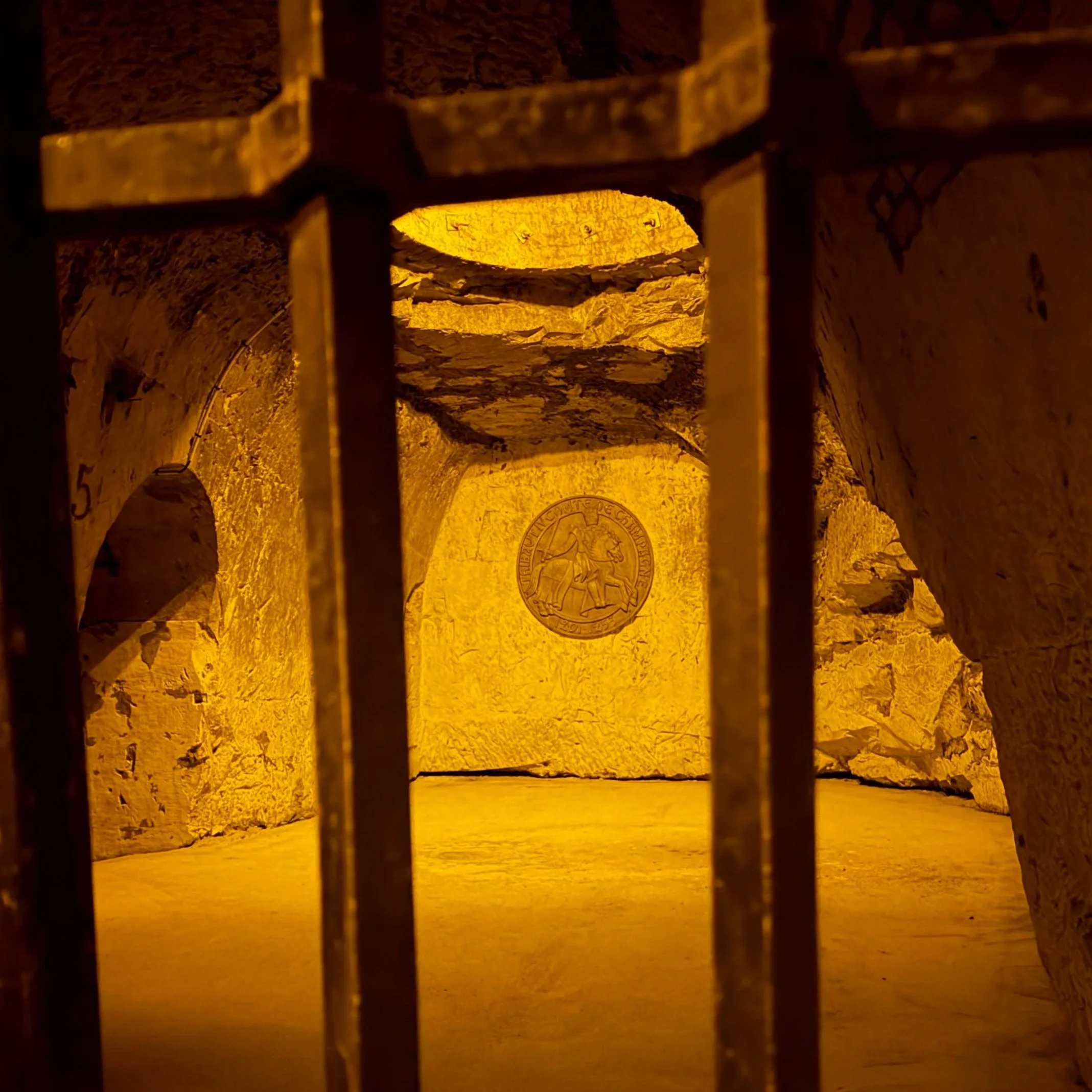
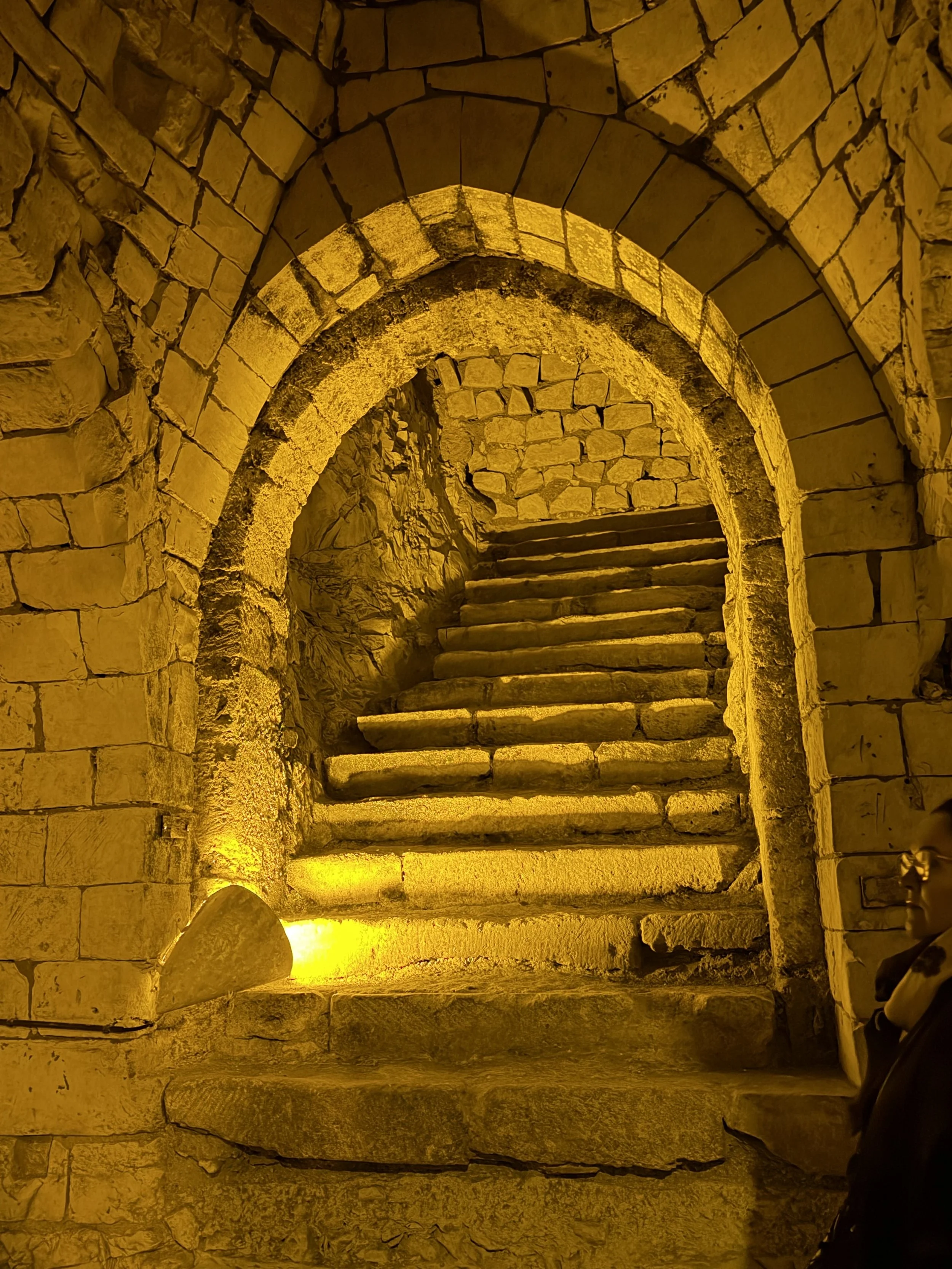
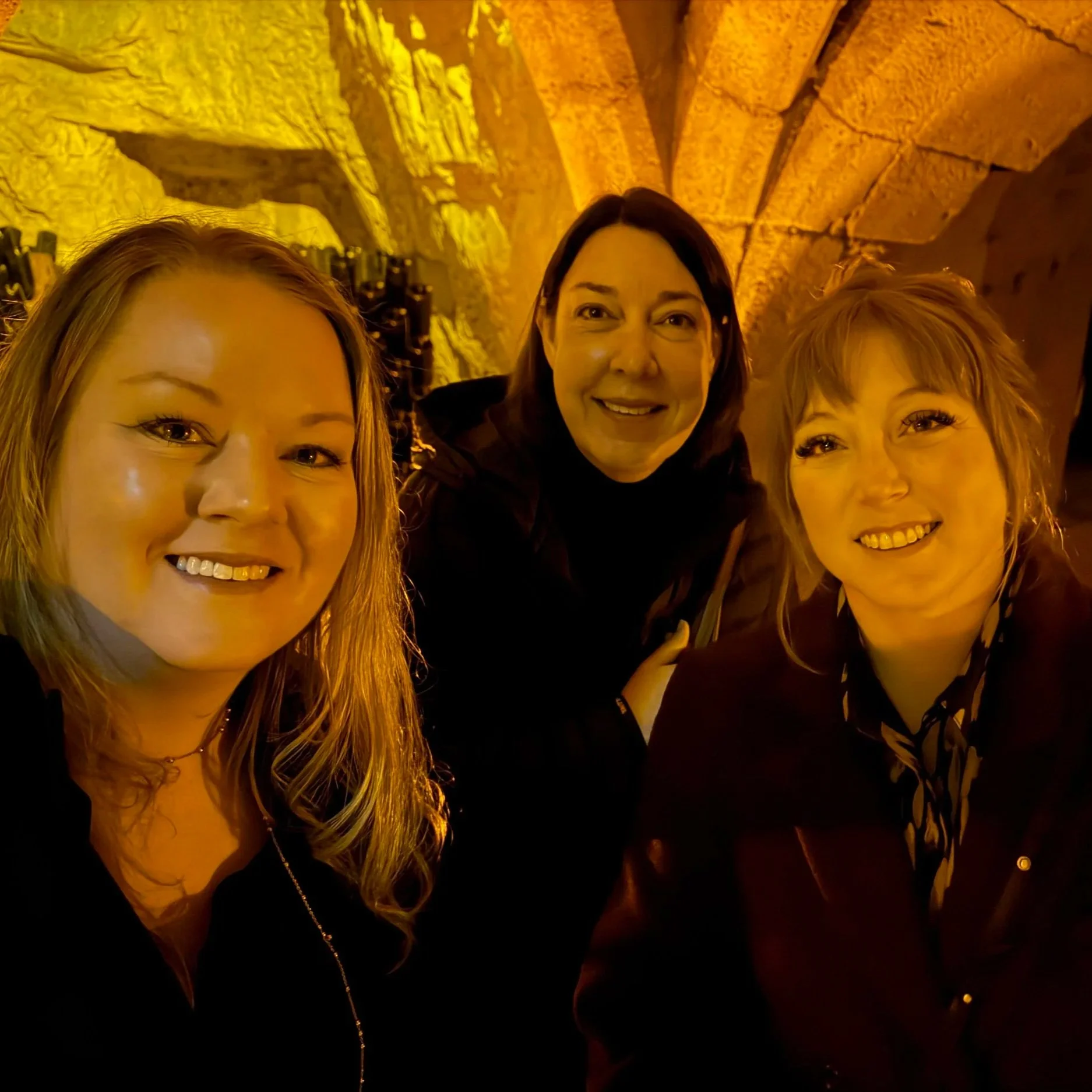
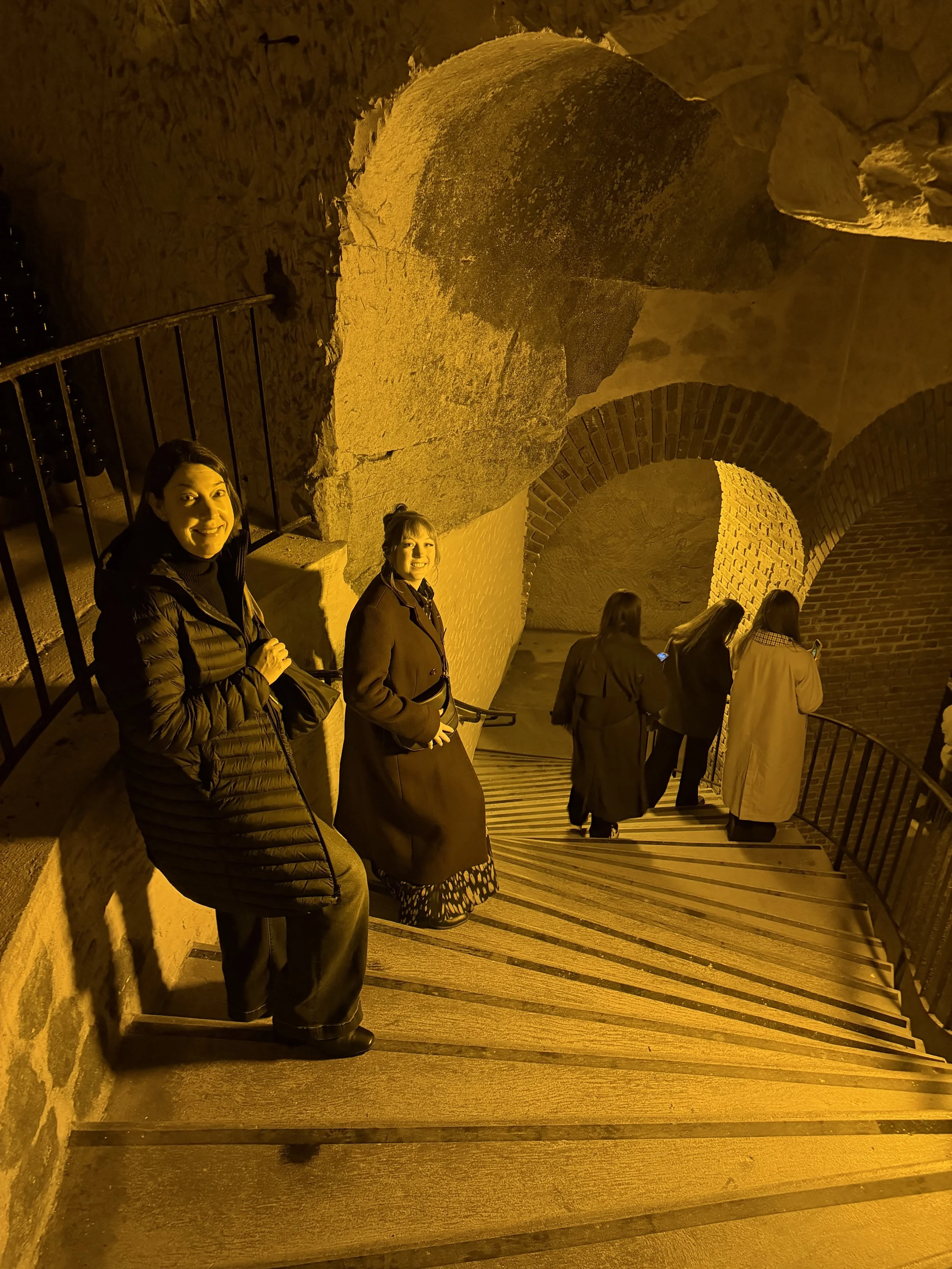
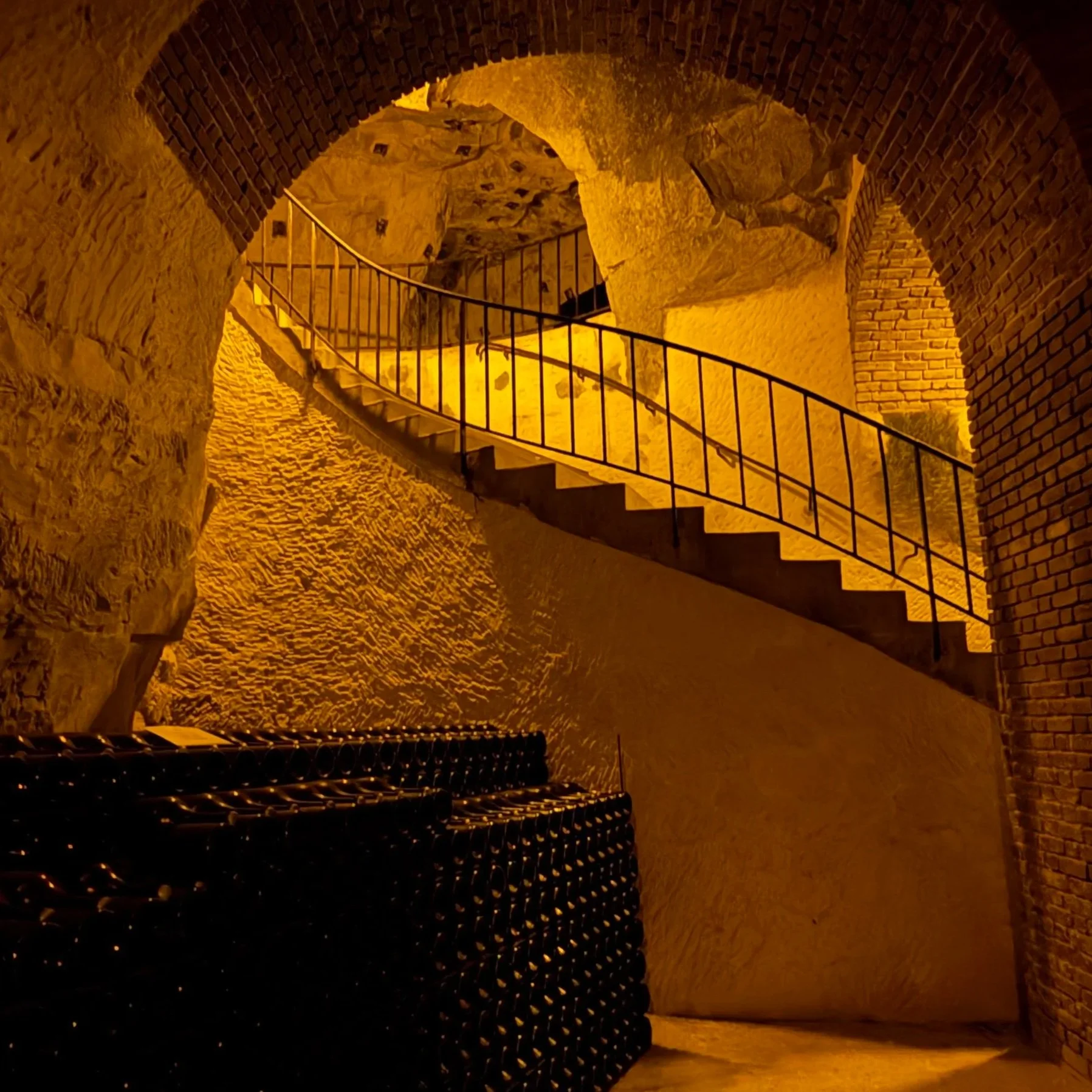
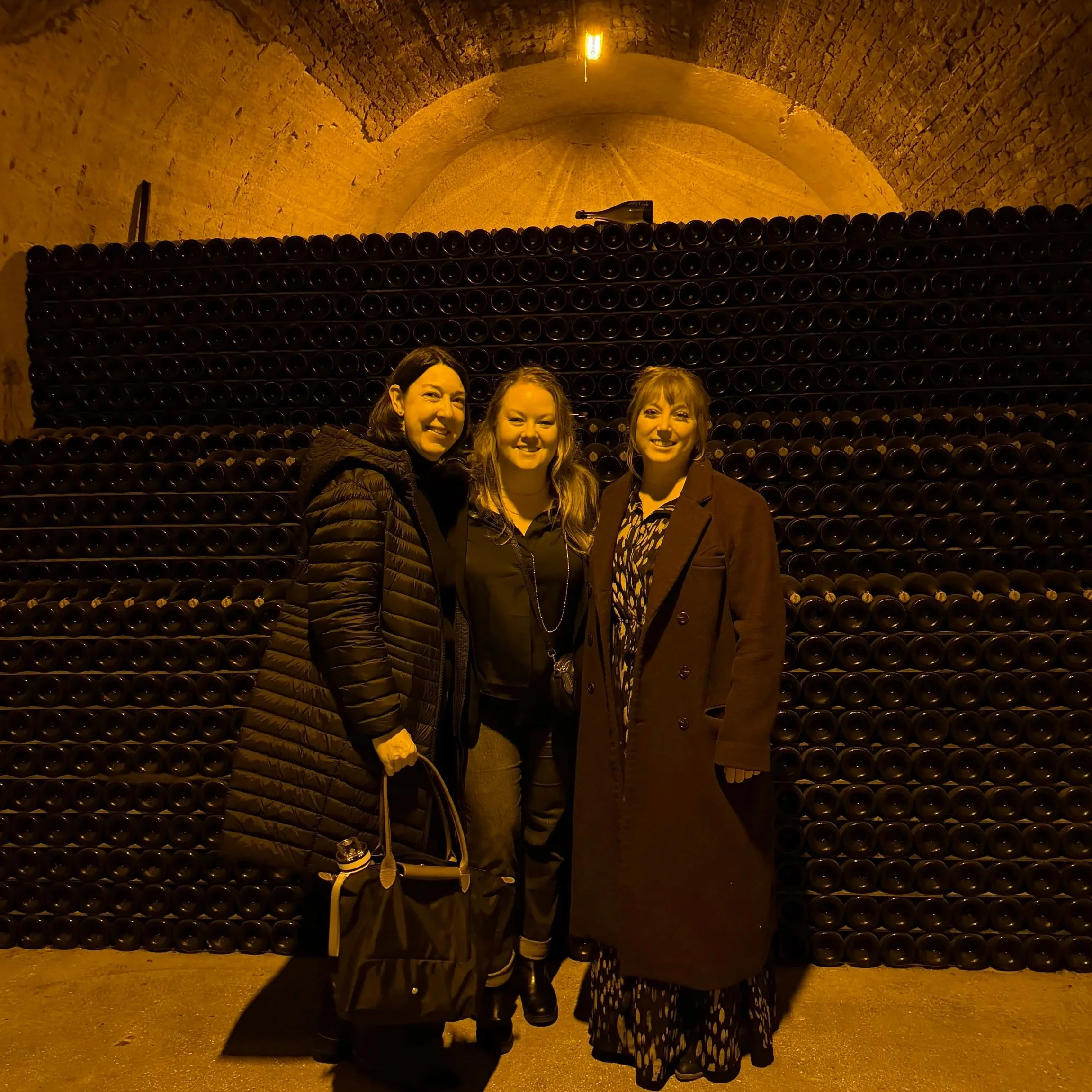
The caves beneath the house are cool, quiet, and lined with bottles stacked in perfect rows. Our guide explained that the caves were originally Roman chalk quarries and were later used by the monks of the Saint-Nicaise Abbey, which once stood above this location before being destroyed during the French Revolution. The monks grew grapes and stored wine here centuries before modern Champagne houses existed, and today Taittinger still uses the same underground tunnels to age their bottles.
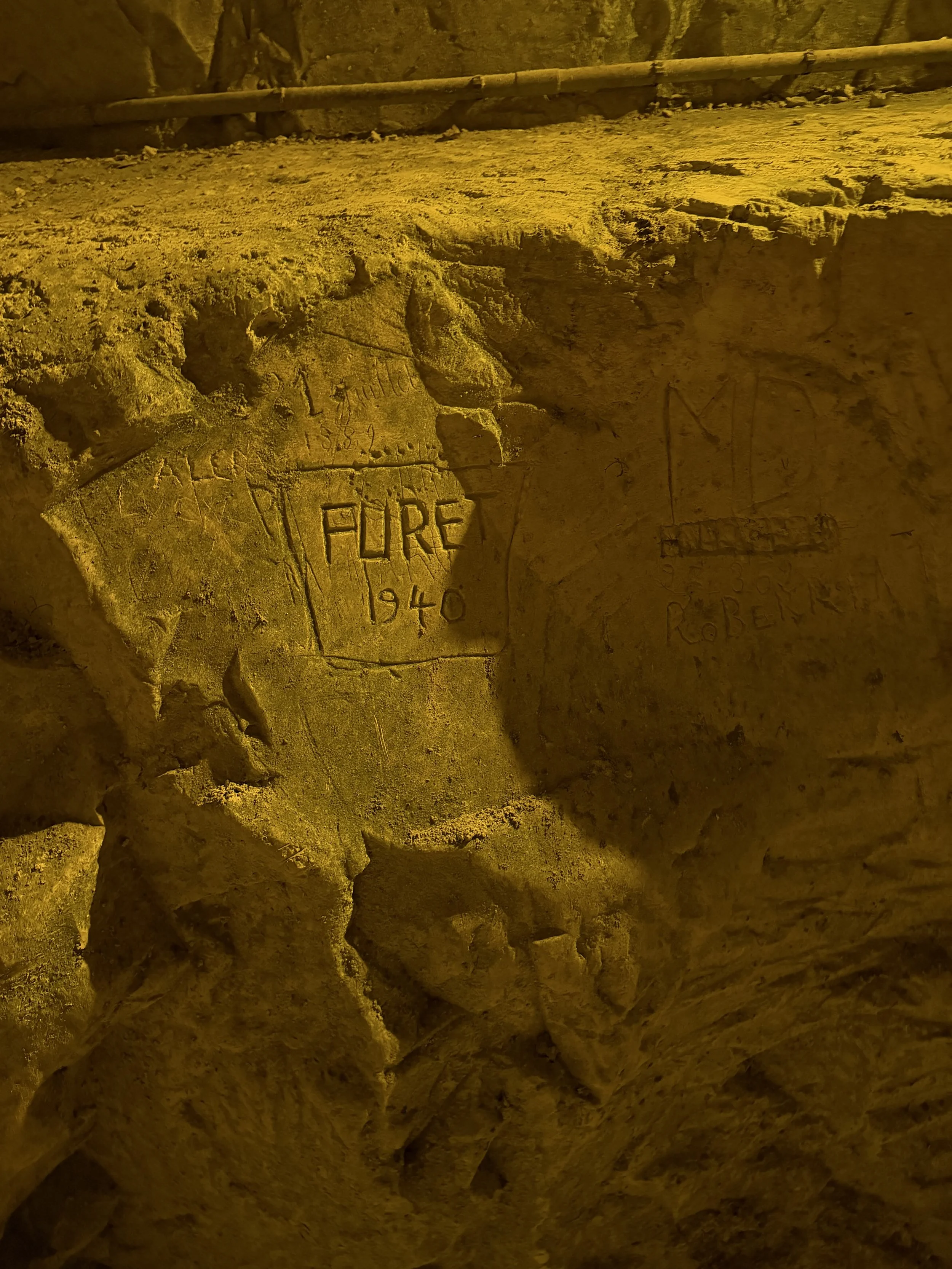
In one section, our guide showed us graffiti left during the Great War, when families sheltered in the caves. One drawing showed a horse beneath a four-point star, surrounded by shamrocks. Horses were essential during the war, and the symbols were meant to bring luck.
It was surprisingly moving to see something so human in the middle of a wine cellar and cave.
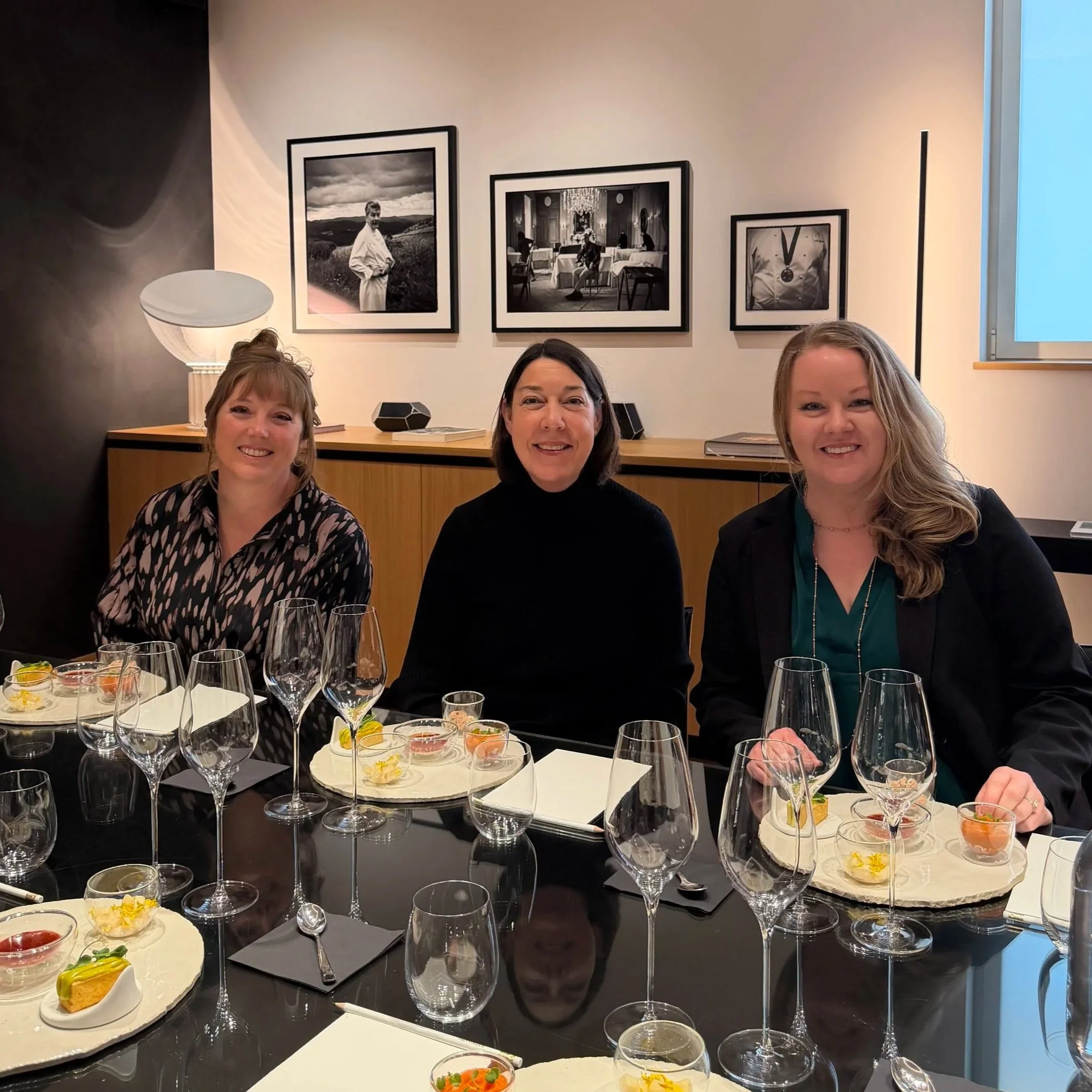
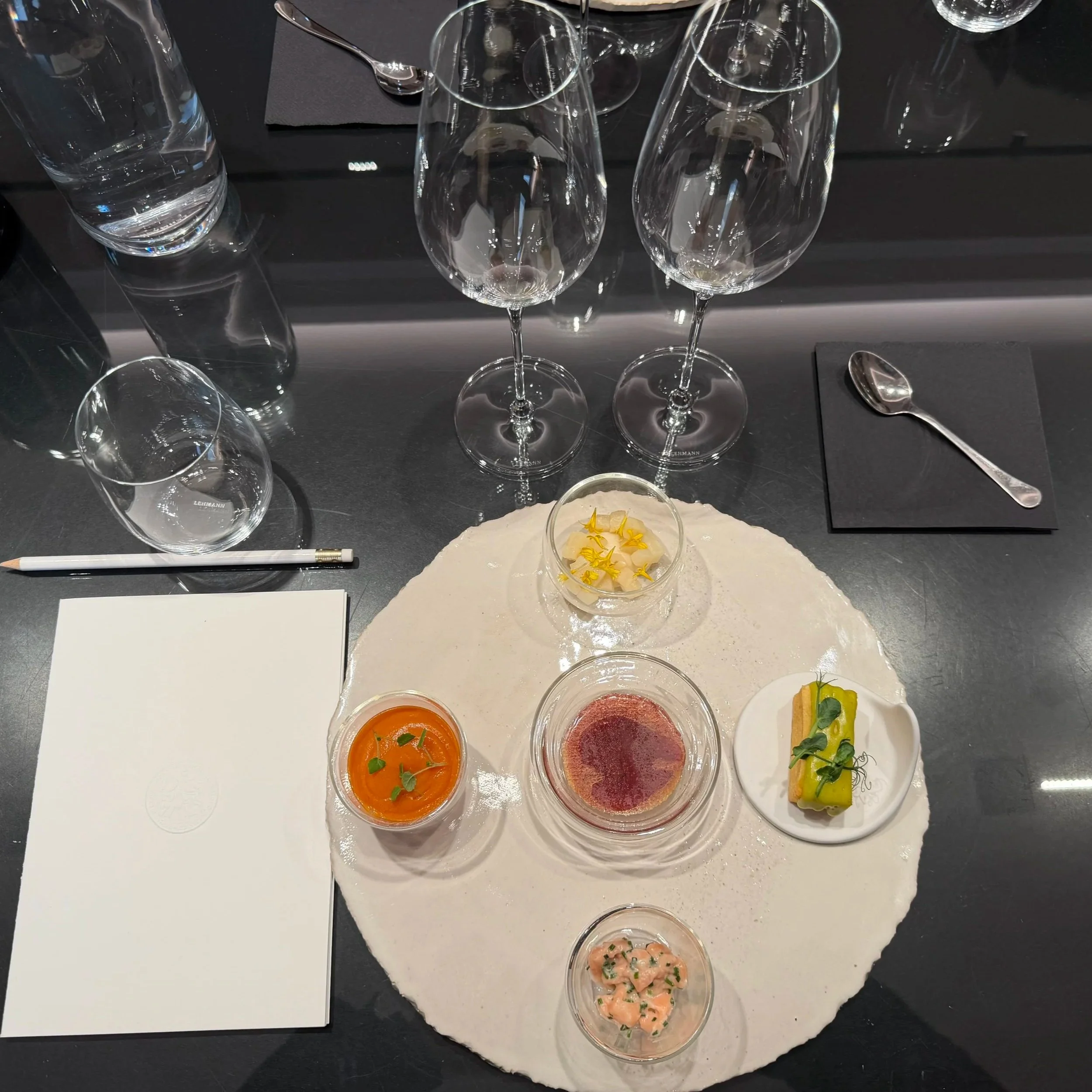
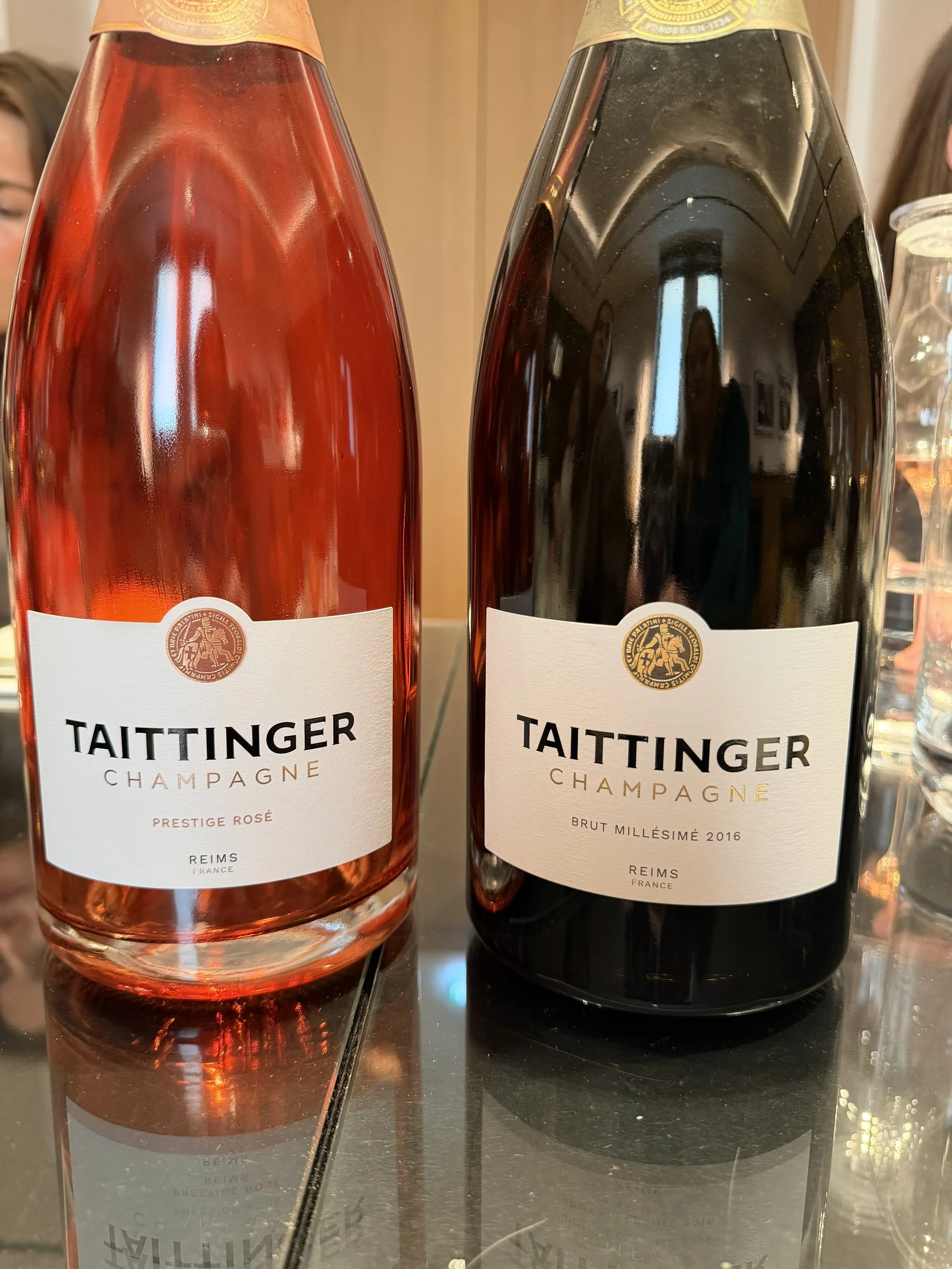
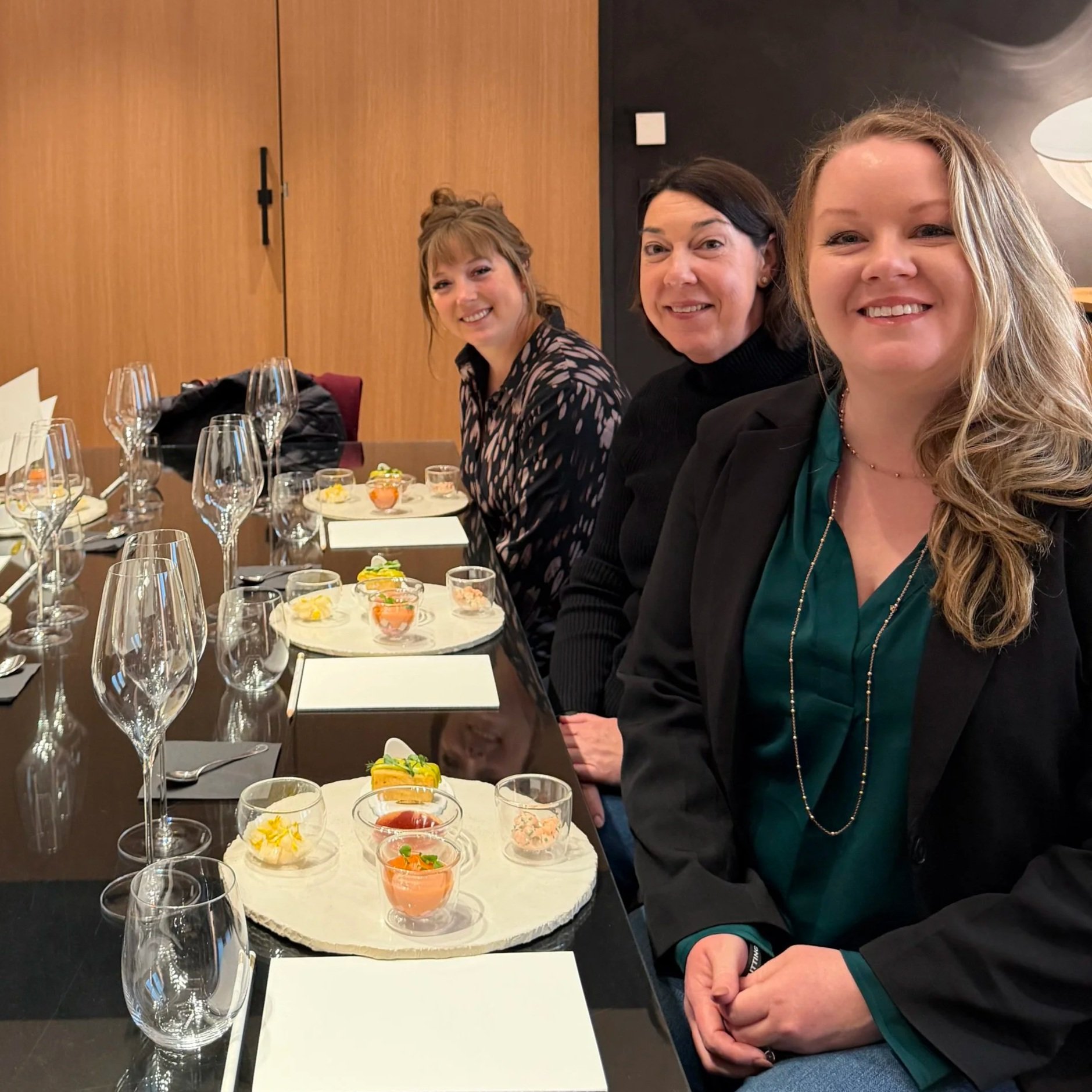
At the end of the tour, we tasted two Champagnes, Prestige Rosé and the Brut Millésime, paired with small bites, and for the first time, I realized how different bottles labeled simply “Champagne” could actually taste.
Lunch at Café du Palais: I Didn’t Know Duck Could Taste So Good
After Taittinger, we told Julian about our lunch plans, and he wholeheartedly agreed.
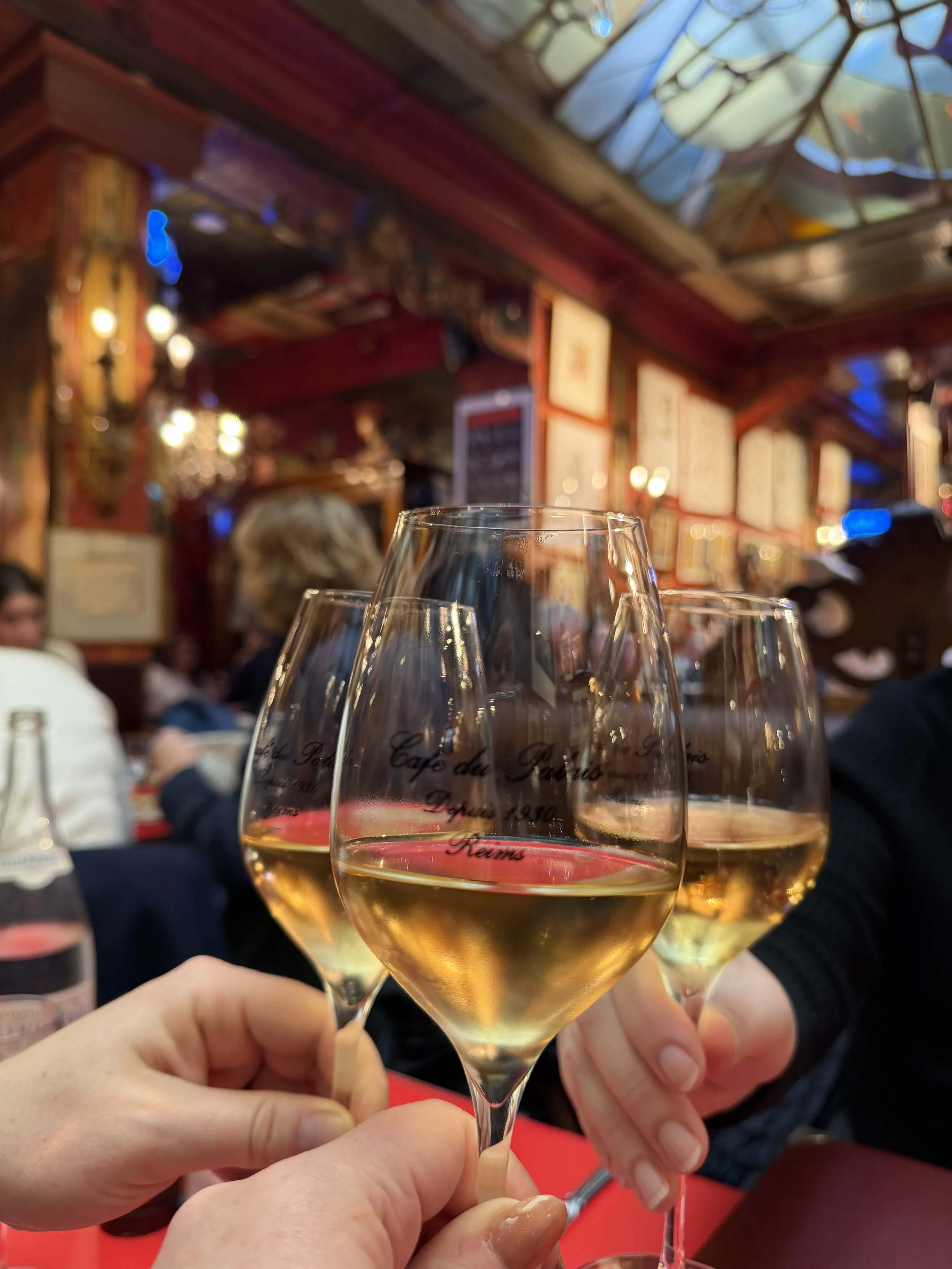
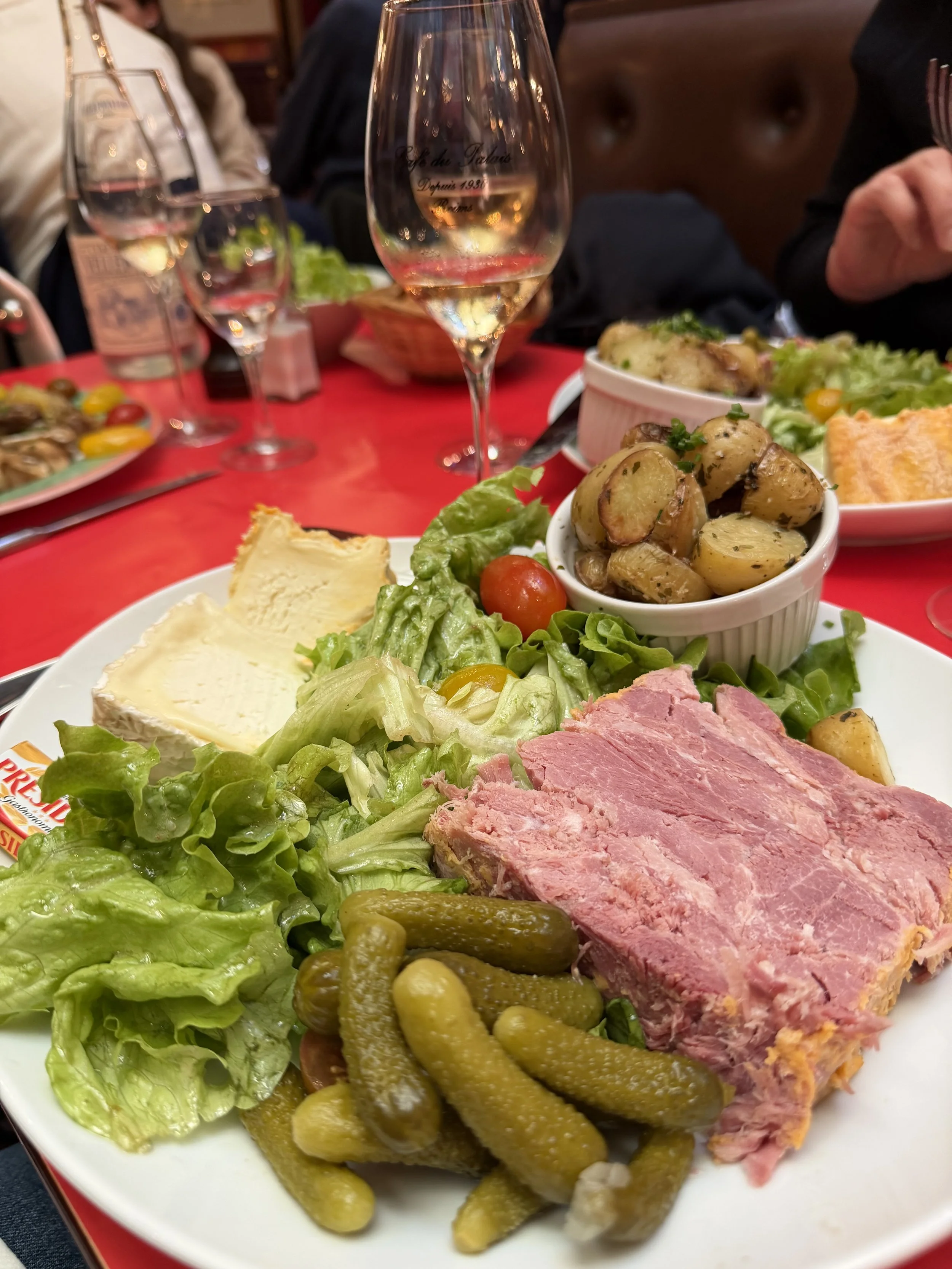
Café du Palais is bright, eclectic, and filled with stained glass, antiques, and small decorations everywhere you look. The food was incredible. I ordered ham that came with a traditional French salad, potatoes, and stinky cheese. It was delicious. The perfect lunch.
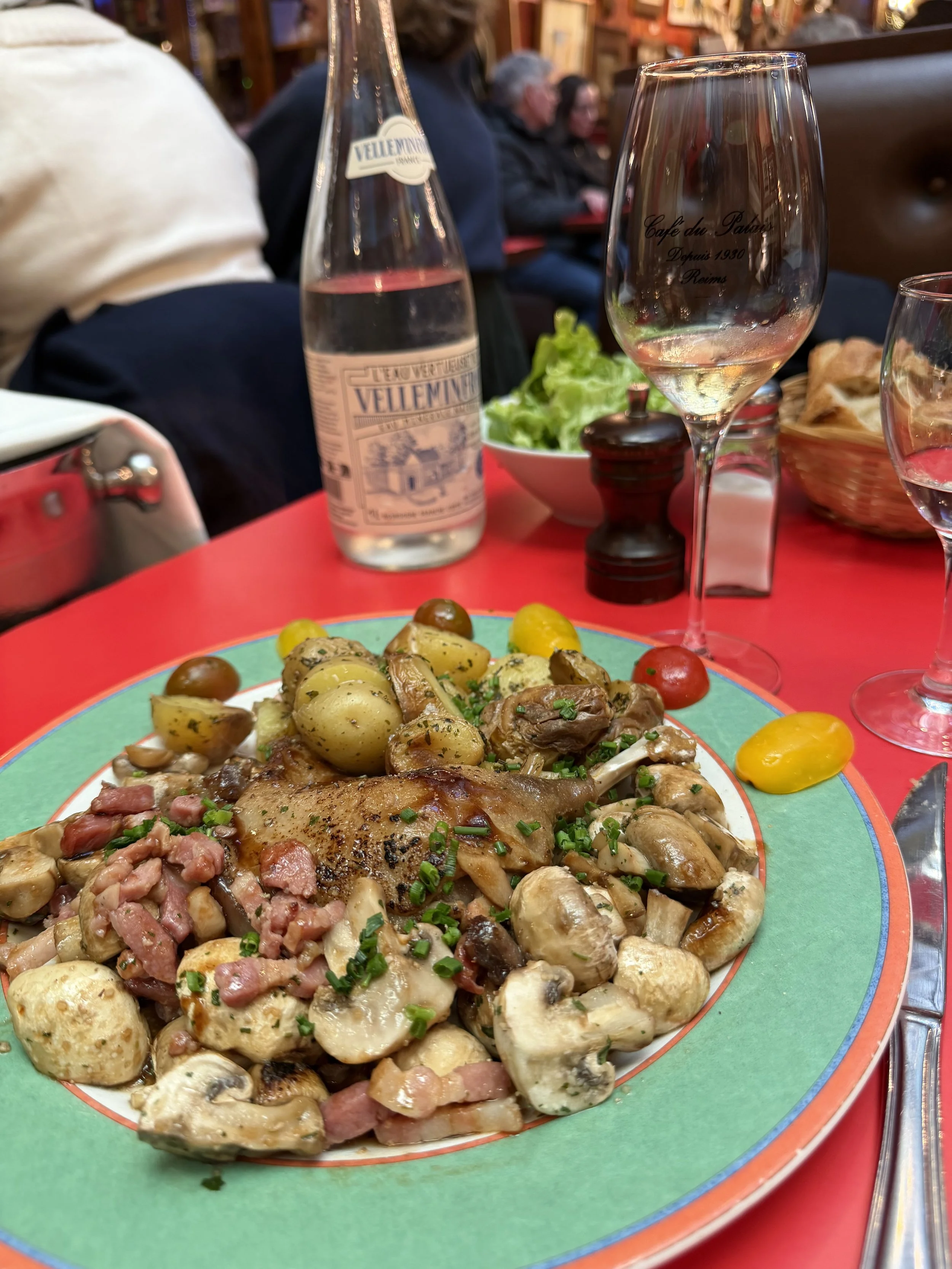
However, I got this meal despite being told the Duck Confit was the way to go. So, I stole a few bites off Kaitlin’s plate, and my goodness… I had no idea duck could taste so good. Perfectly cooked, falling off the bone, not fatty, just a delicious piece of meat.
So when you go, order the duck.
Trust me.
Oh, and did I mention, we ordered a bottle with lunch? When in Champagne…
History, Elegance, and the Chalk Caves: Ruinart
We loaded back into the van, and Julian was buzzing. Our next stop was Ruinart, and he couldn’t wait for us to experience it. Ruinart is the oldest Champagne house, and one of the first to use the ancient chalk caves for aging Champagne in the way it’s still done today. On the drive, Julian shared more of his own family history, telling stories about his grandfather, who had worked in the Ruinart caves himself. You could tell the region's history runs deep in the blood of the people, something we noticed with almost everyone we met along the way.
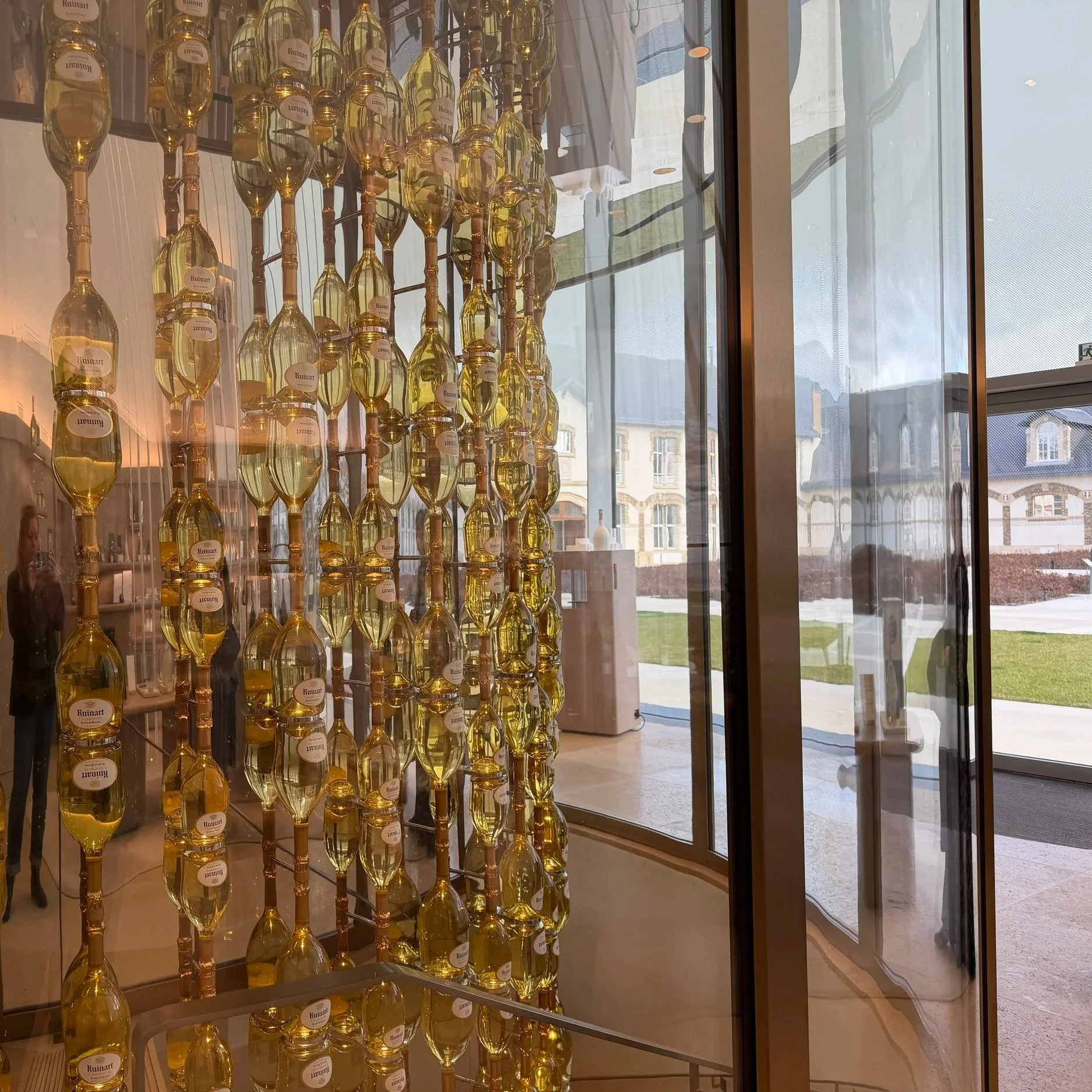
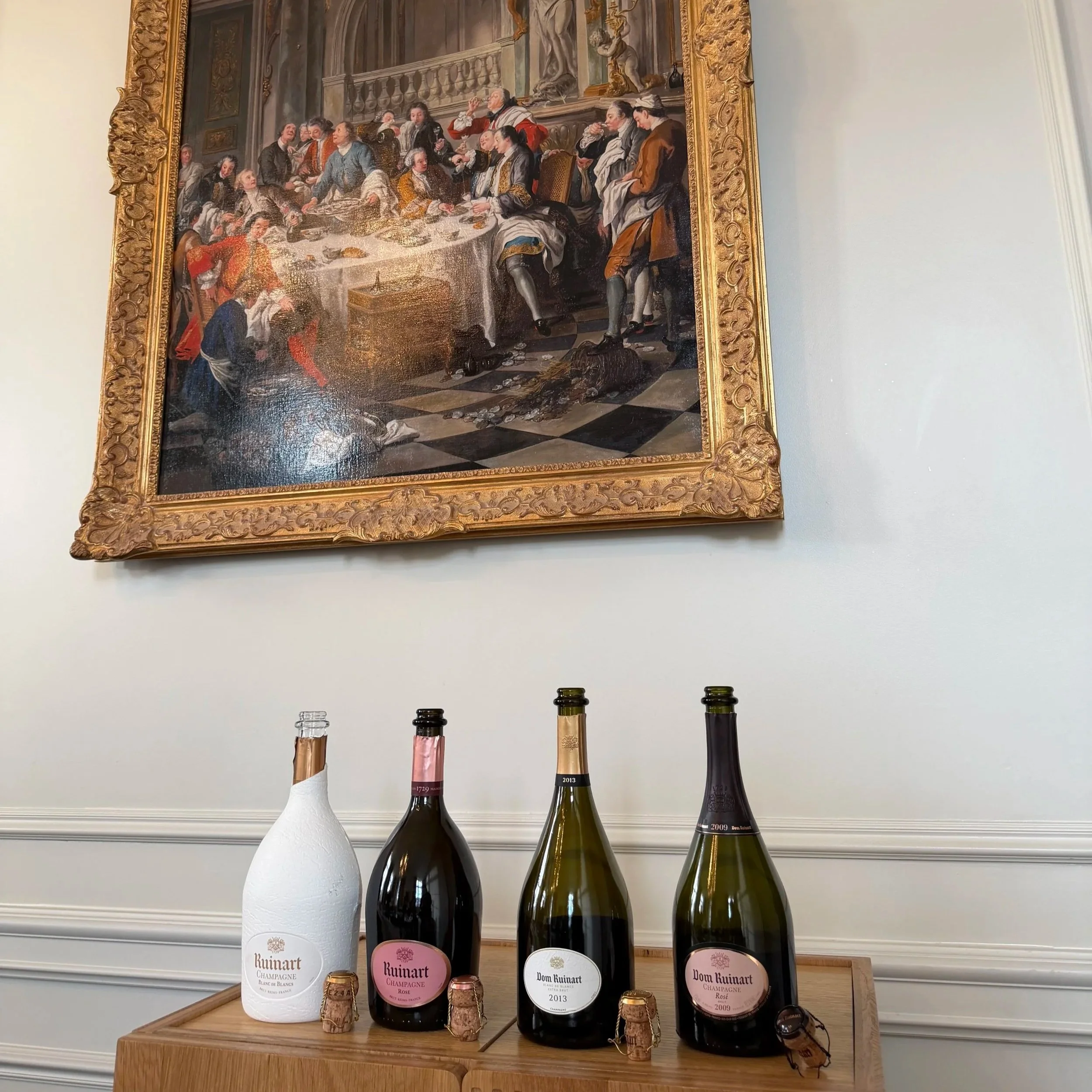
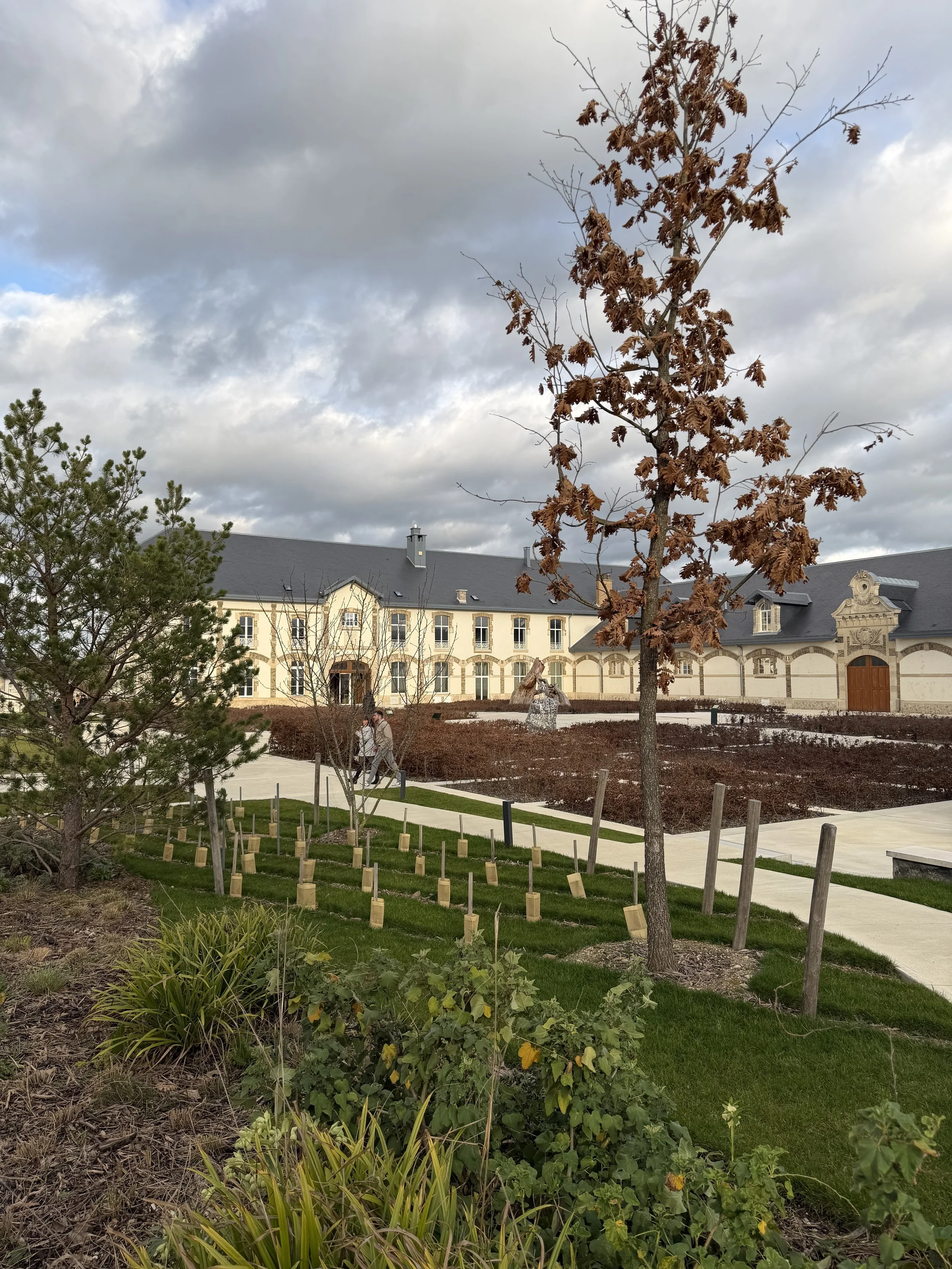
When we arrived at Ruinart, the tone felt a little different from our first stop. Instead of starting right away with the winemaking process, our guide, Leo, led our group to a comfortable room where we talked about the house's history, the style of the wine, and what makes Ruinart unique among Champagne producers. Founded in 1729, it’s considered the oldest Champagne house, and there was a real sense of tradition in the way everything was presented.
Here, we dug a bit deeper into the history of wine in the region.
Grapes have been grown in the Reims region since at least the 4th or 5th century, when the Romans first planted vineyards here. As the coronation city for French kings (ahem, remember Notre Dame de Reims?), Reims became known for serving its wines at royal banquets as early as 496, when King Clovis was baptized in the city’s cathedral. For centuries, the region produced mostly still wines, but by the late 1600s, winemakers began intentionally creating the sparkling style we now know as Champagne. (I had to circle back on the history here. Source: Champagne.fr, History of Champagne.)
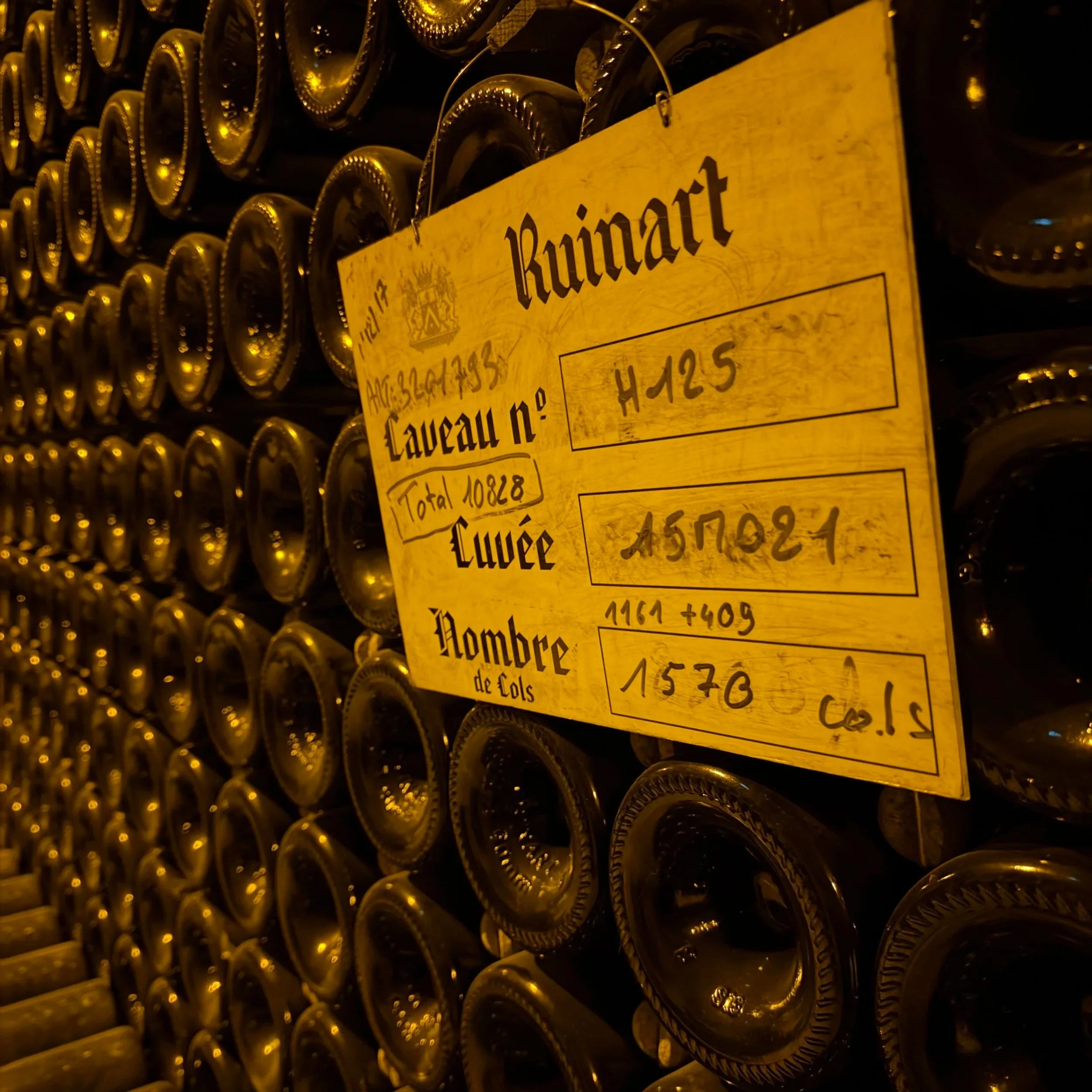
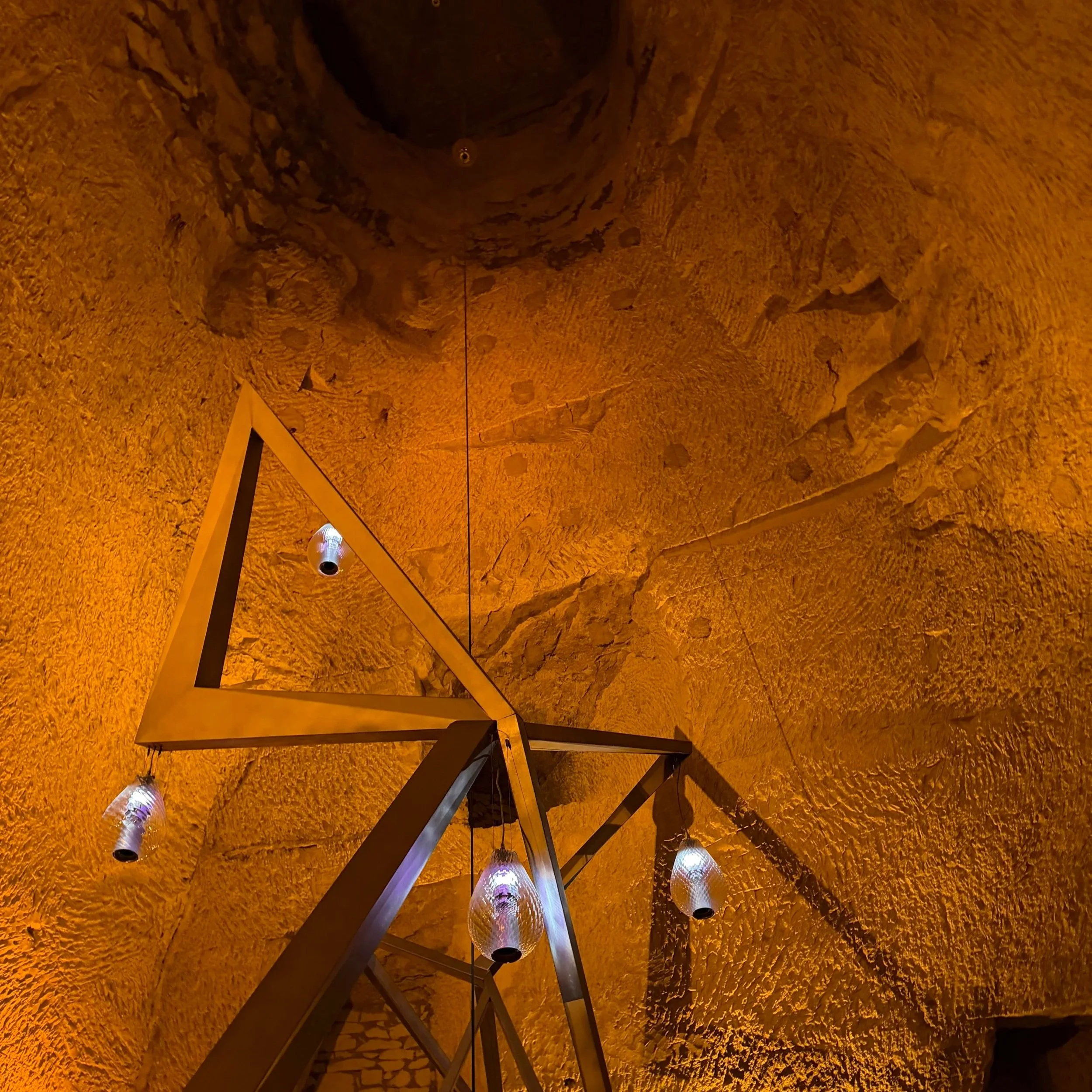
We went down into the Ruinart caves, and here we were shown a room where you could clearly see the marks left by Roman tools in the chalk walls. We learned more about how the chalk soil gives Champagne its character, keeping the temperature and humidity naturally constant year-round.
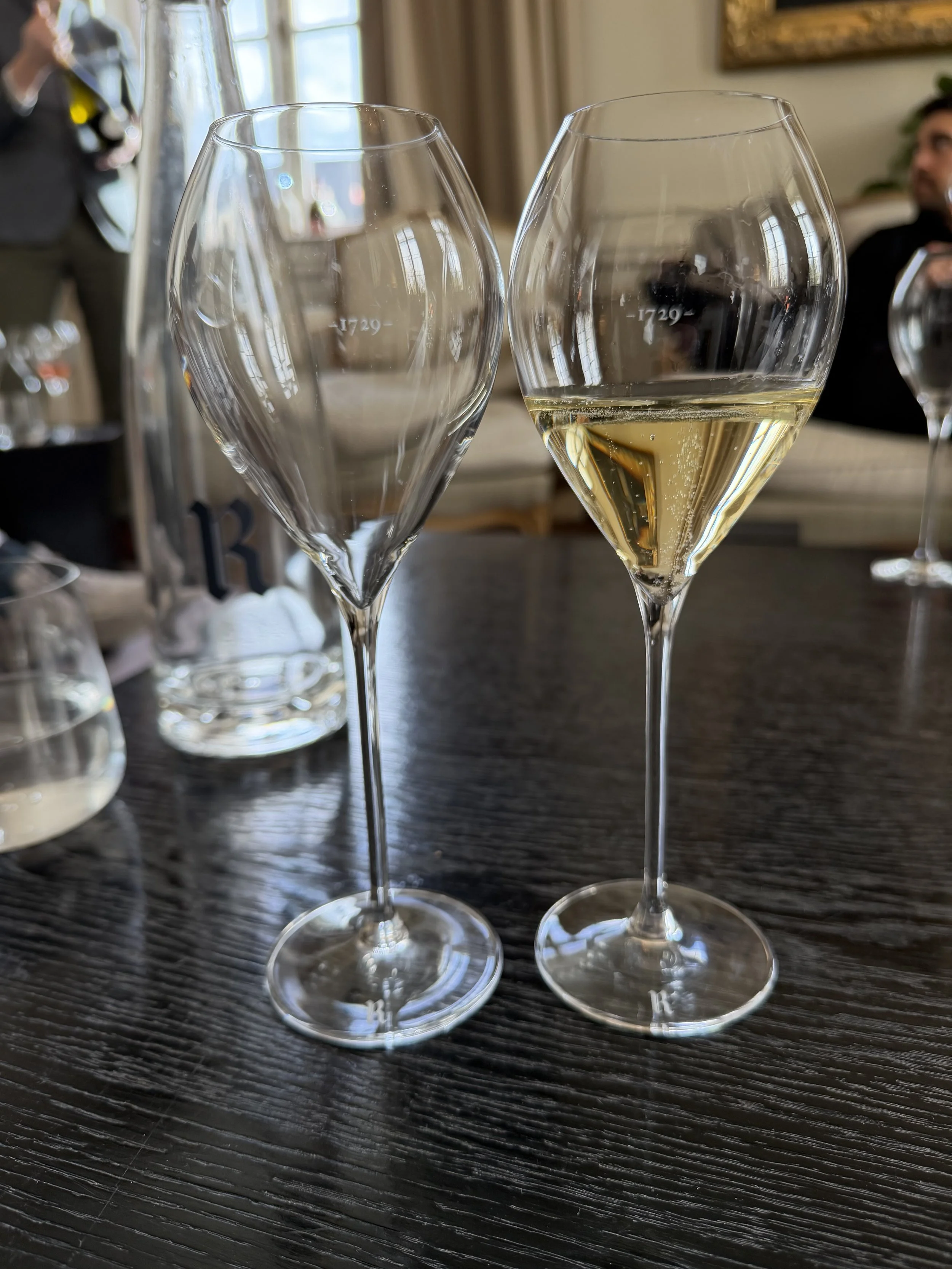
Eventually, we made our way back to ground level for our tasting. I tried both a non-vintage Blanc de Blancs and a vintage Blanc de Blancs. Both were delicious, but I was surprised to find myself slightly preferring the non-vintage. I didn’t fully understand why at the time, but it was the first moment I realized how much variation there can be between Champagnes, even from the same house.
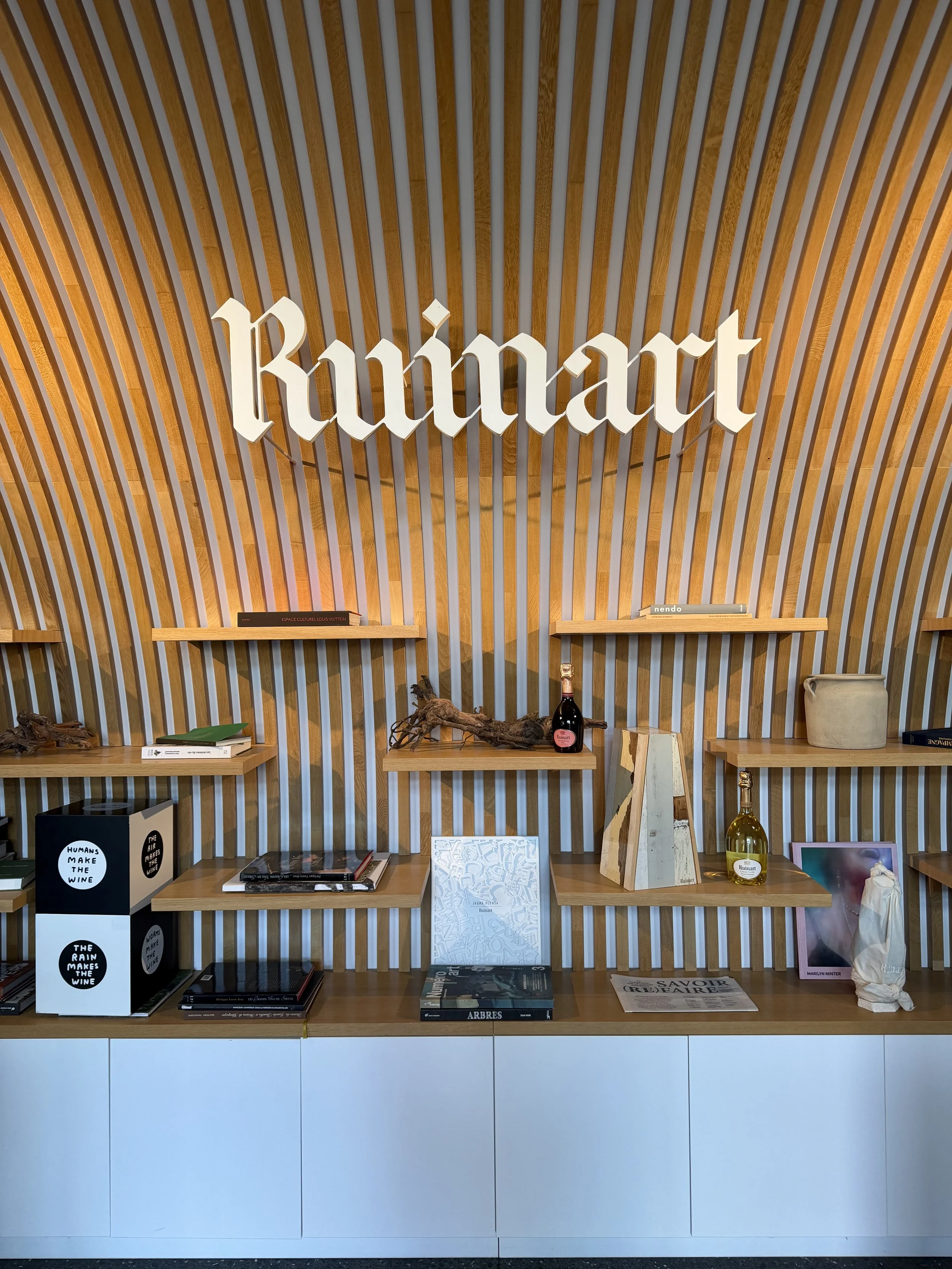
We went shopping at Ruinart and met Julian in the lobby. We’re still not sure if he worried we got lost, or if he just couldn’t resist going inside.
Sadly, our Champagne House tours had come to an end.
But thanks to Julian, we were about to experience something completely different the next morning.
The Grower Experience: Gounel + Lassalle
As Julian drove us back toward our hotel, he casually asked if we had plans to visit a grower Champagne house.
We said no, so he made a quick detour.
A few minutes later, we pulled into a small property where a man was washing his car. Julian got out, greeted him like an old friend, and I heard words I recognized even with my limited French: “mon cœur” and “mon frère.”
They kissed on the cheek, laughed, and talked amongst themselves before Julian introduced us. And within moments, it was agreed. Owners Arnaud and Sophie, a husband-and-wife duo, would open early the next morning just for us.
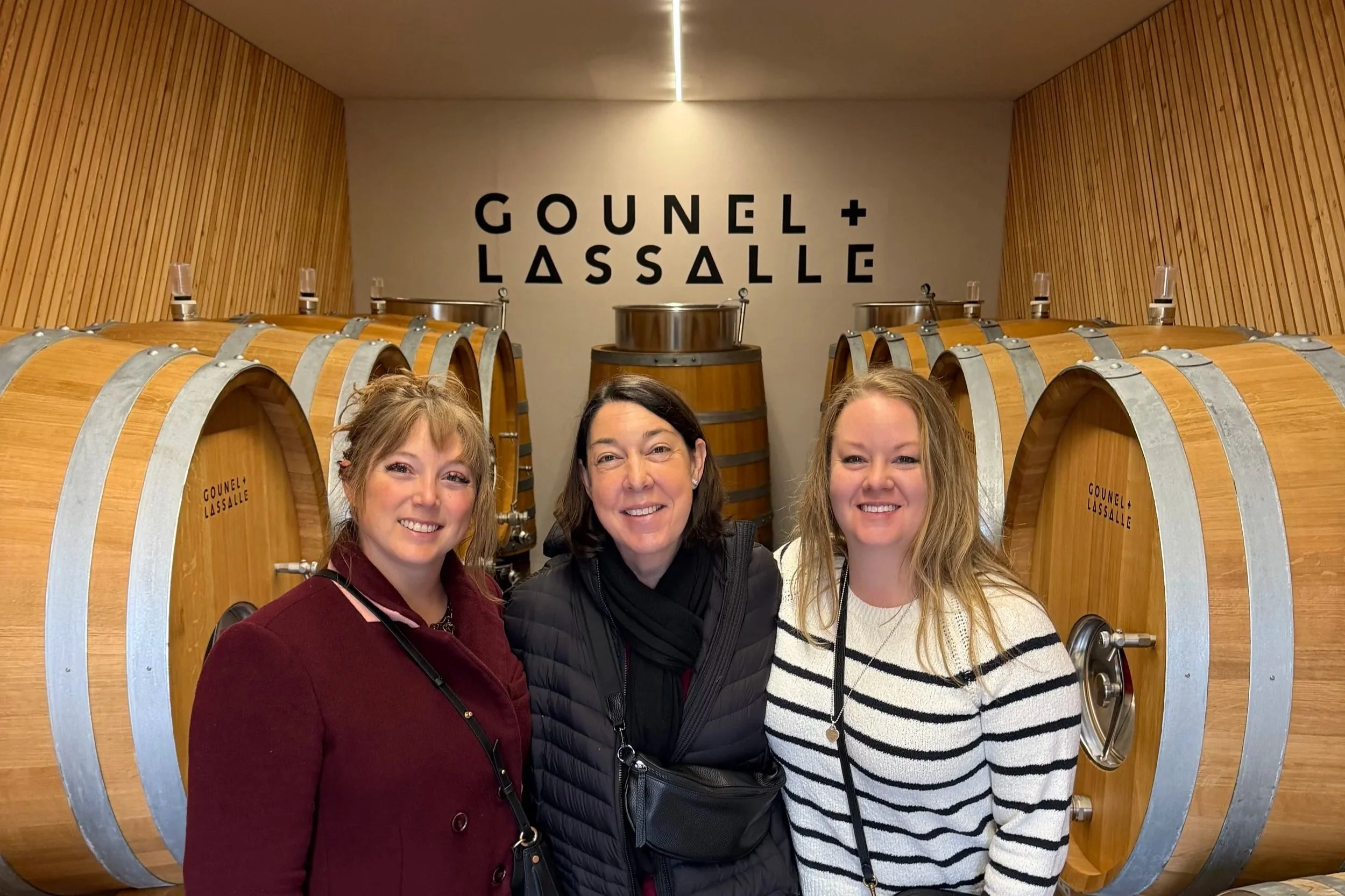
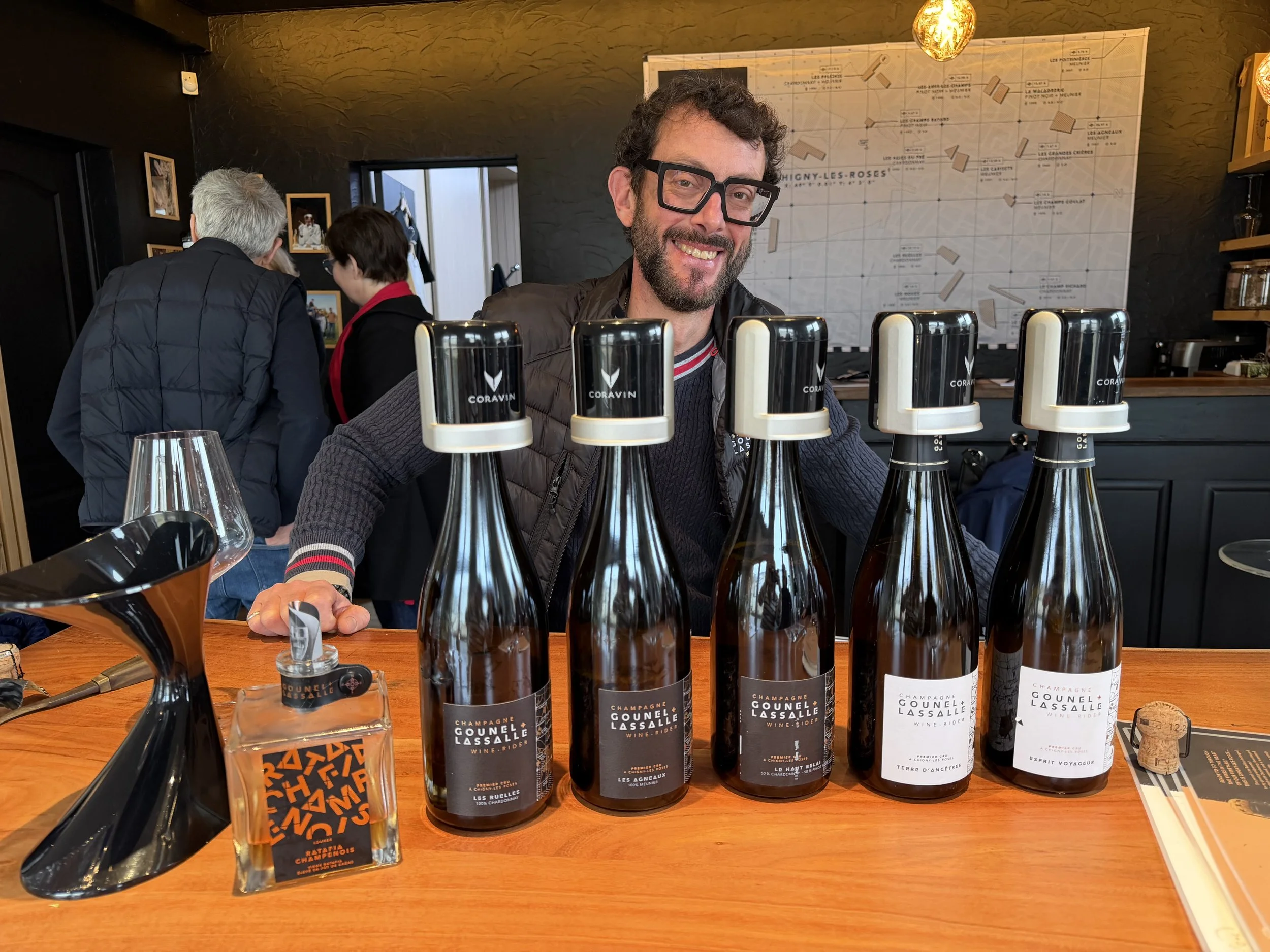
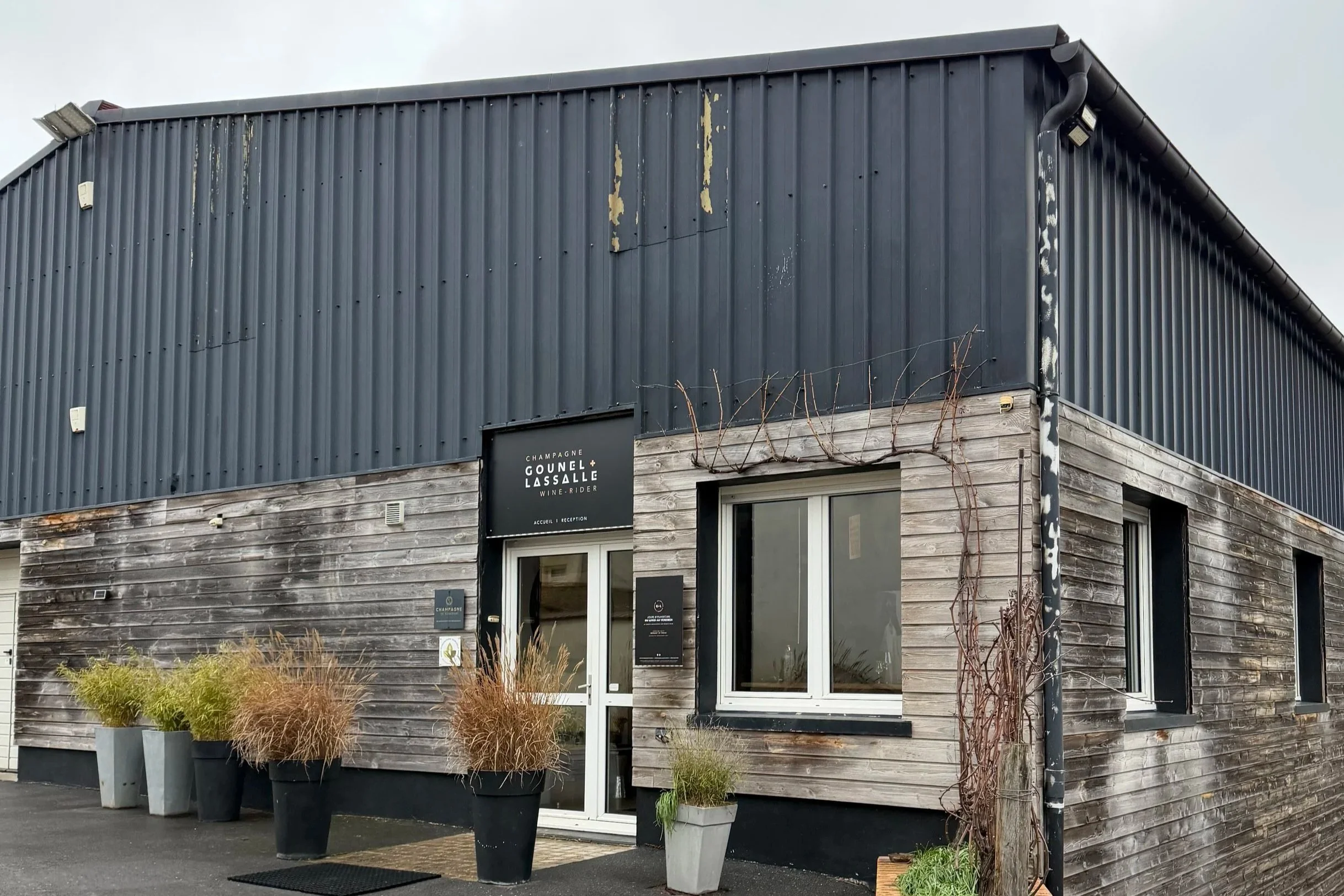
That’s how we ended up at Gounel + Lassalle.
House Champagne and grower Champagne are two different worlds.
The big Champagne houses (like Taittinger and Ruinart) buy or grow grapes from specific vineyards and blend them to create a consistent flavor year after year. That consistency is part of their identity. When you open a bottle, you know what to expect.
Grower Champagne (like Gounel + Lassalle) is more personal. The same family grows the grapes, makes the wine, and bottles it themselves, often from their own land. Because of that, the wine reflects the soil, the winemaker's choices, and even the specific year the grapes were harvested.
Arnaud walked us through his wines one by one, explaining how each cuvée (blend) came from different plots across their 29 vineyards in Chigny-les-Roses, a Premier Cru village (I’ll explain this at the end of the blog).
What amazed me most was that every bottle we tried was Brut Nature, meaning no added sugar. I expected them to taste harsh or too dry, but that wasn’t the case at all. I was surprised to find that each one had its own personality. Floral, citrus, mineral, soft, bright. For the first time, I could actually smell and taste the differences.
At one point, I mentioned I smelled florals, and he smiled and nodded, as if that was exactly what I was supposed to notice.
I wasn’t just drinking Champagne, I was understanding it.
The Dining Experience at Domaine du Chalet
You’re probably wondering what happened with Chef Damien at Domaine du Chalet, and you’d be right to ask.
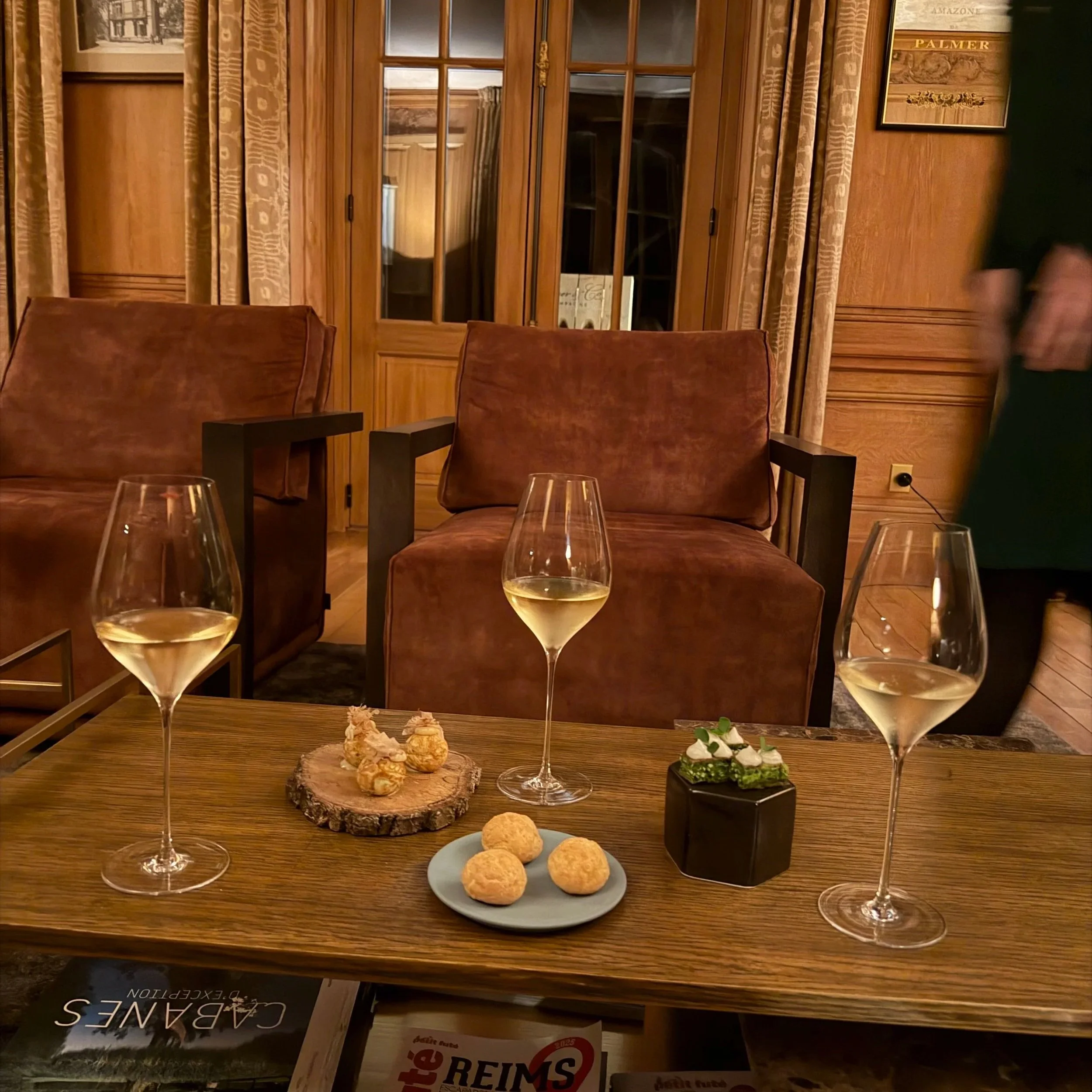
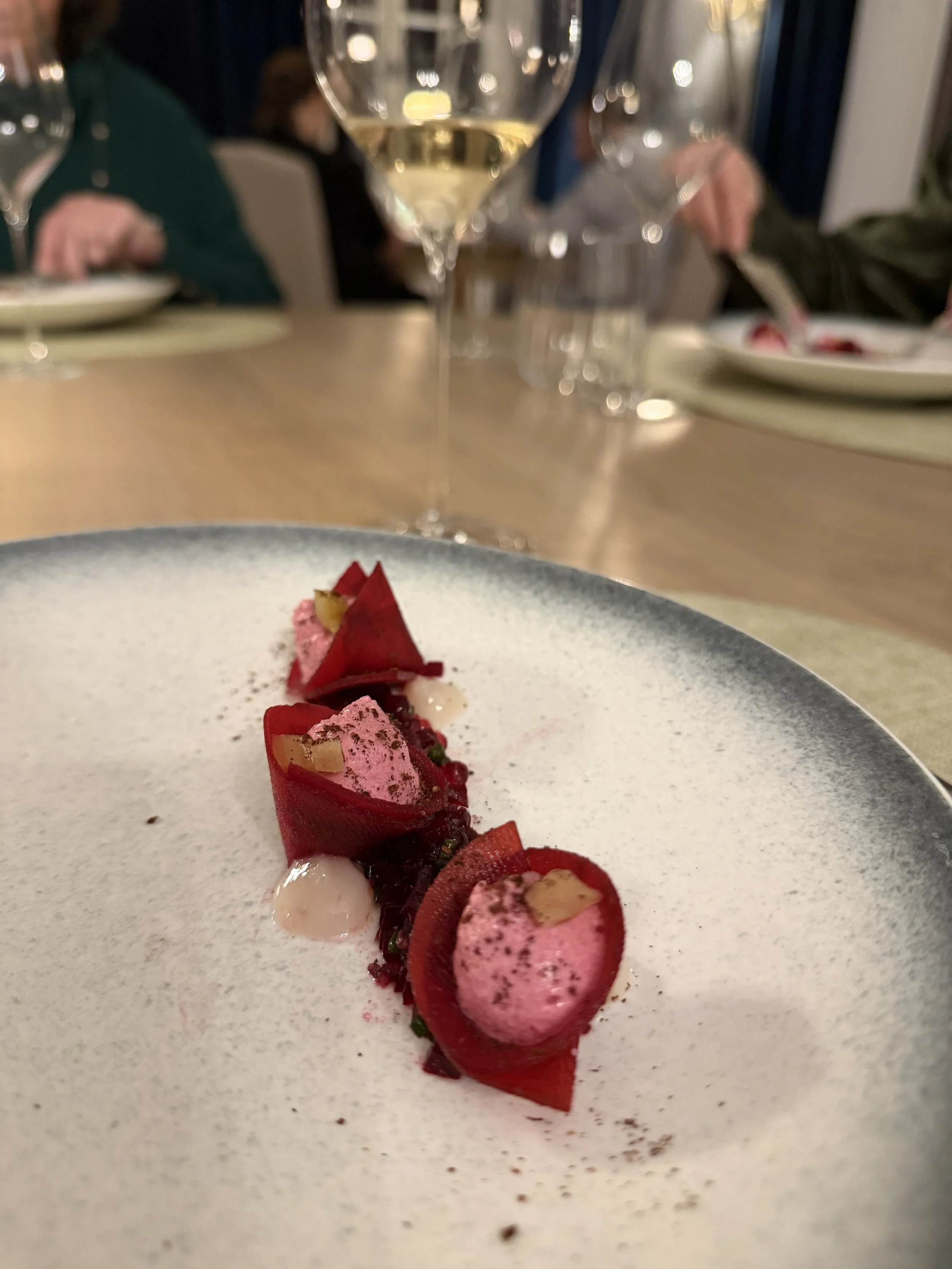
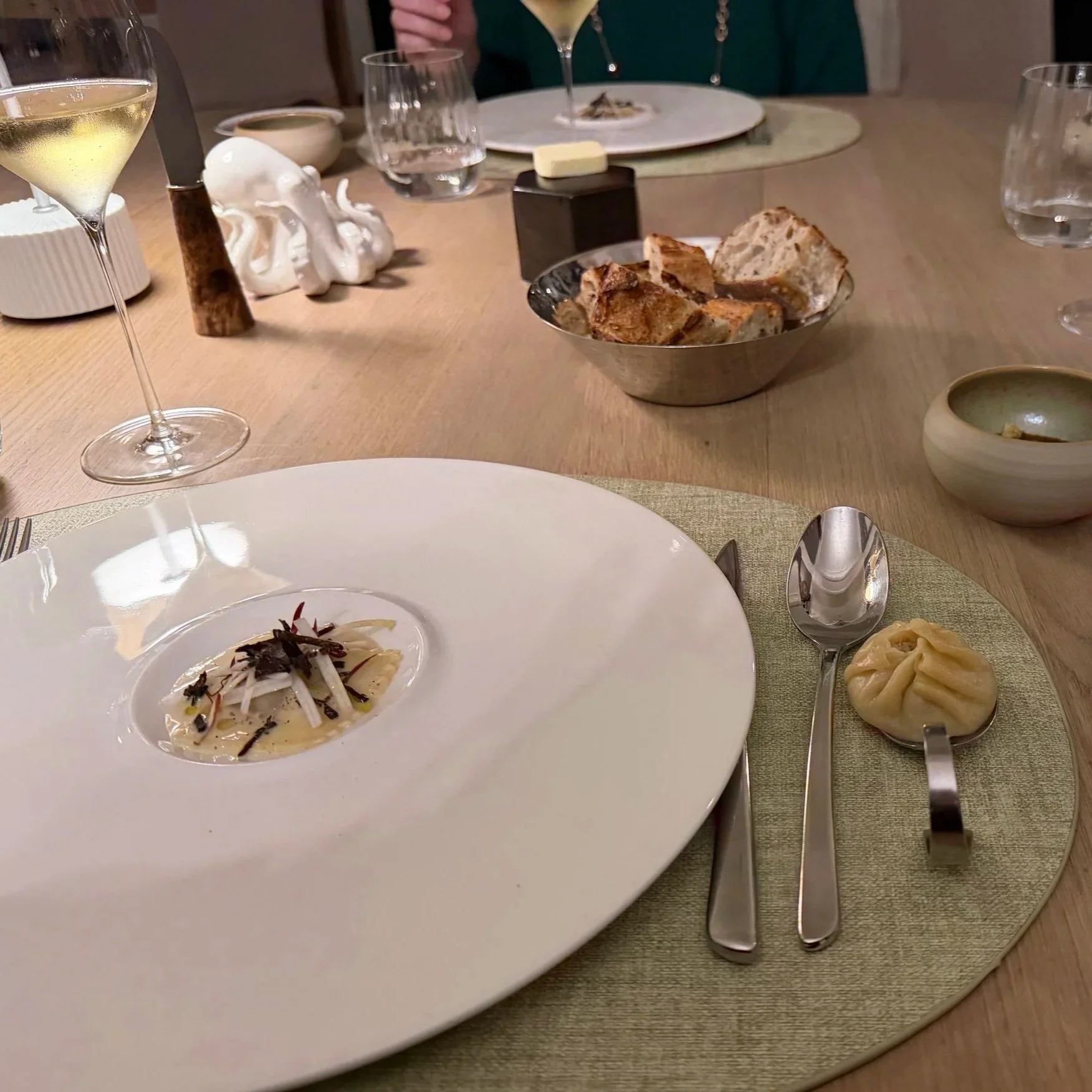
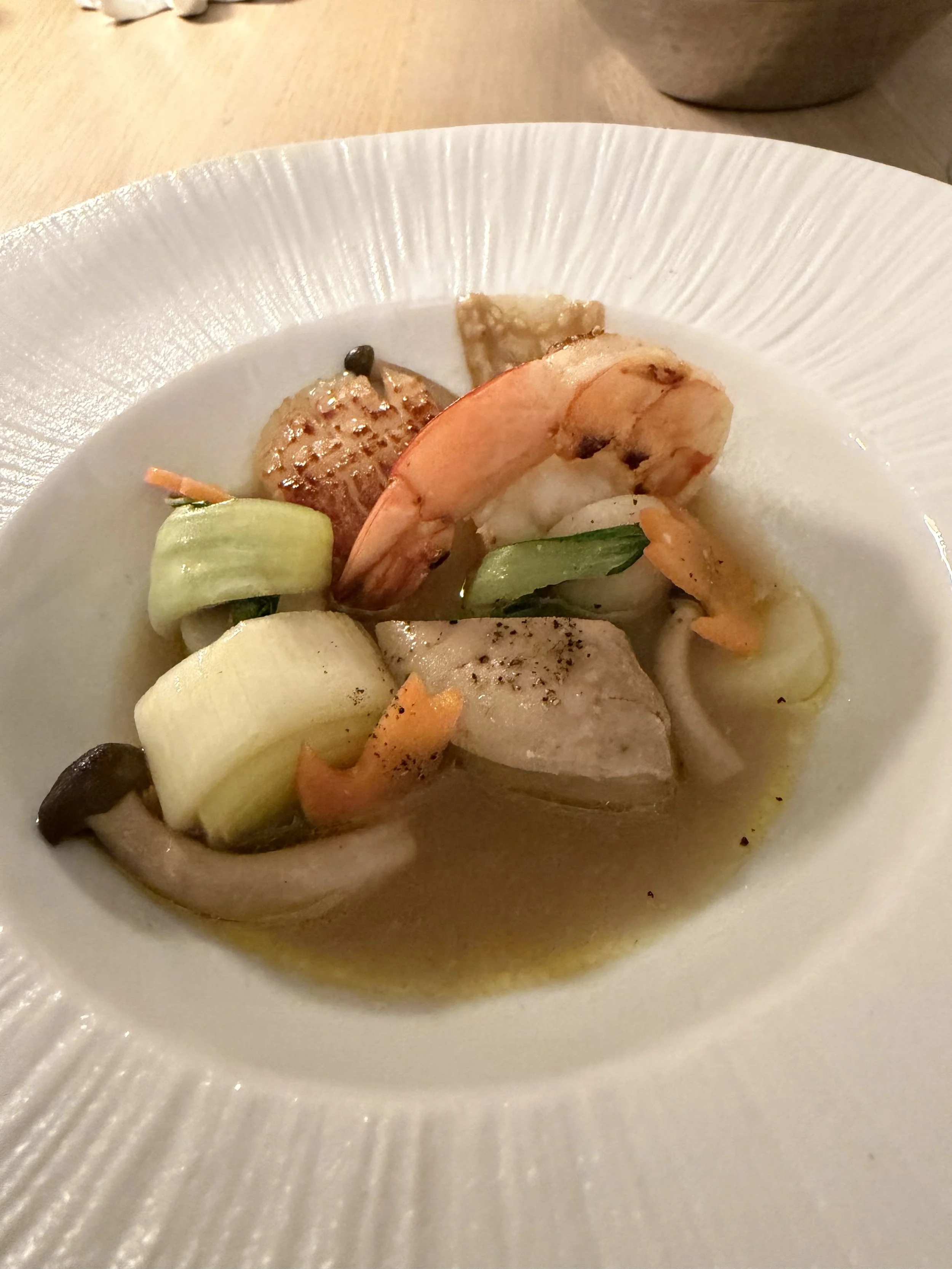
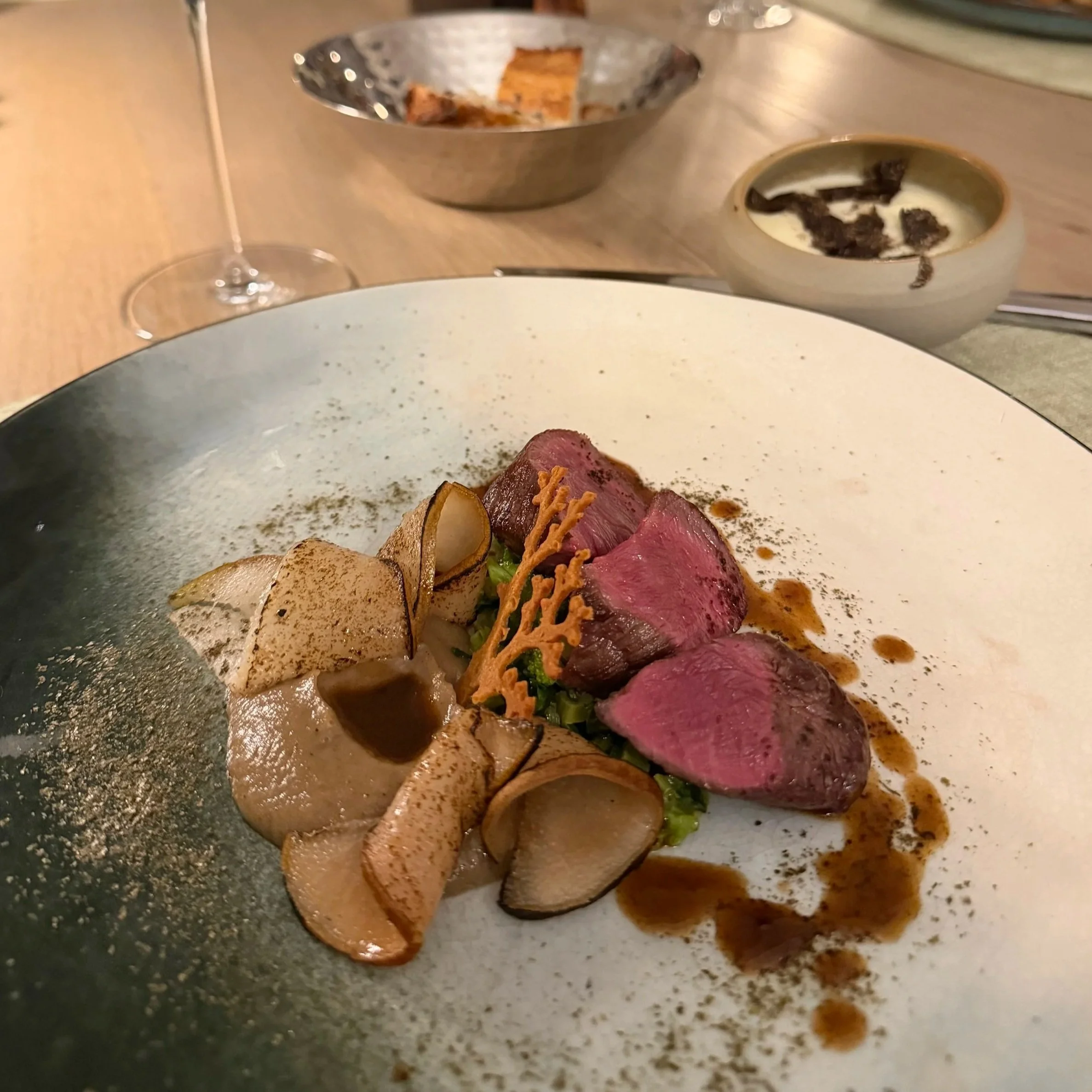
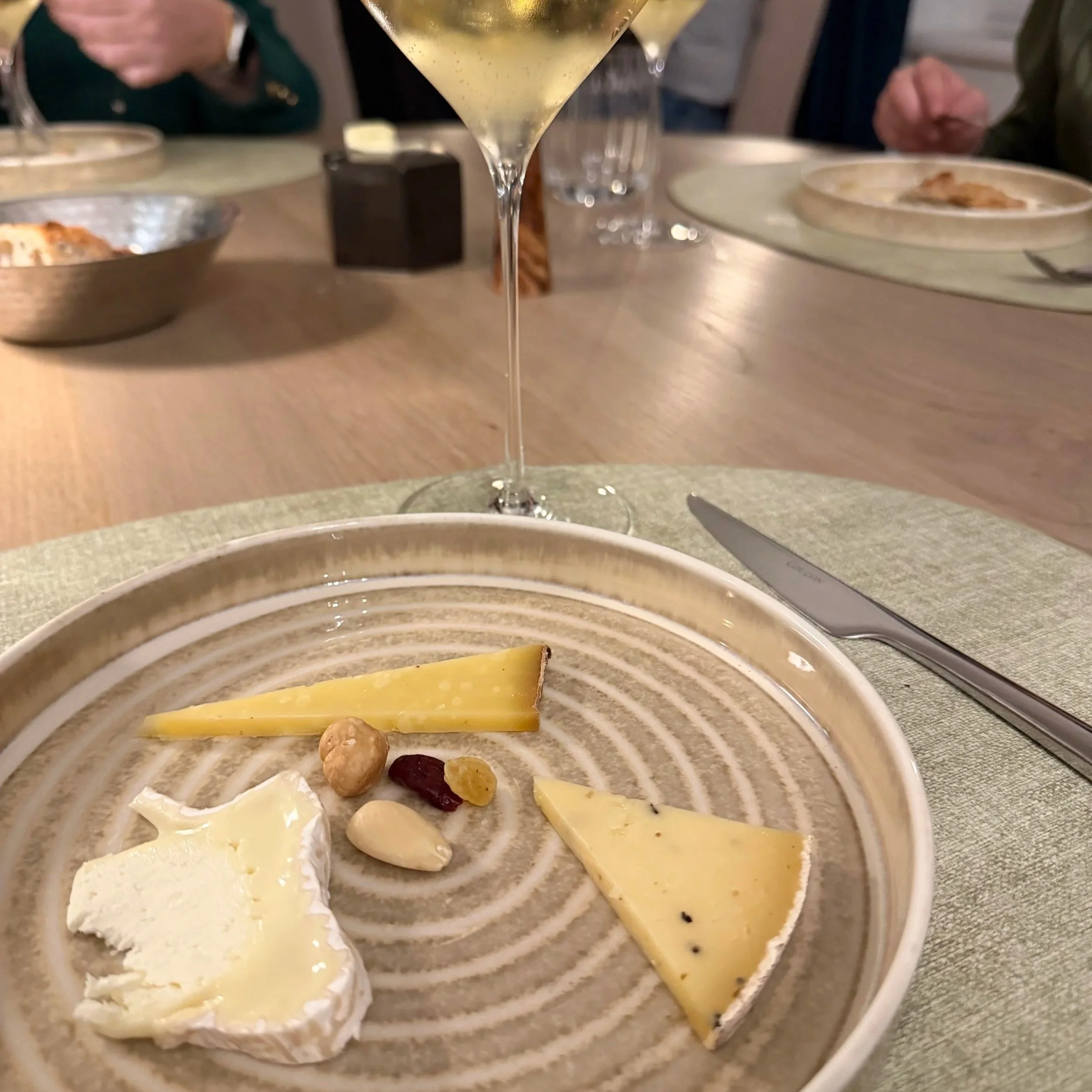
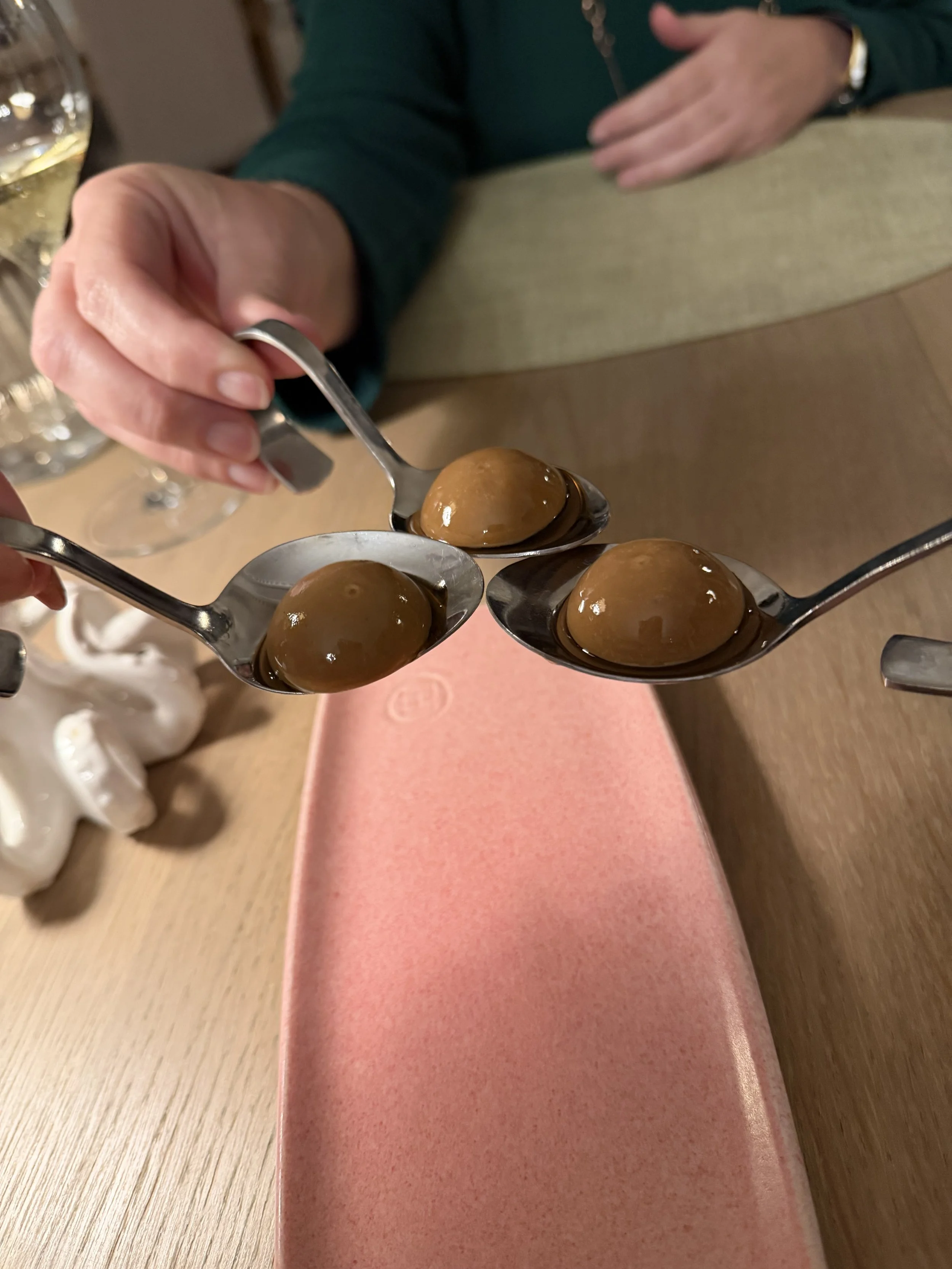
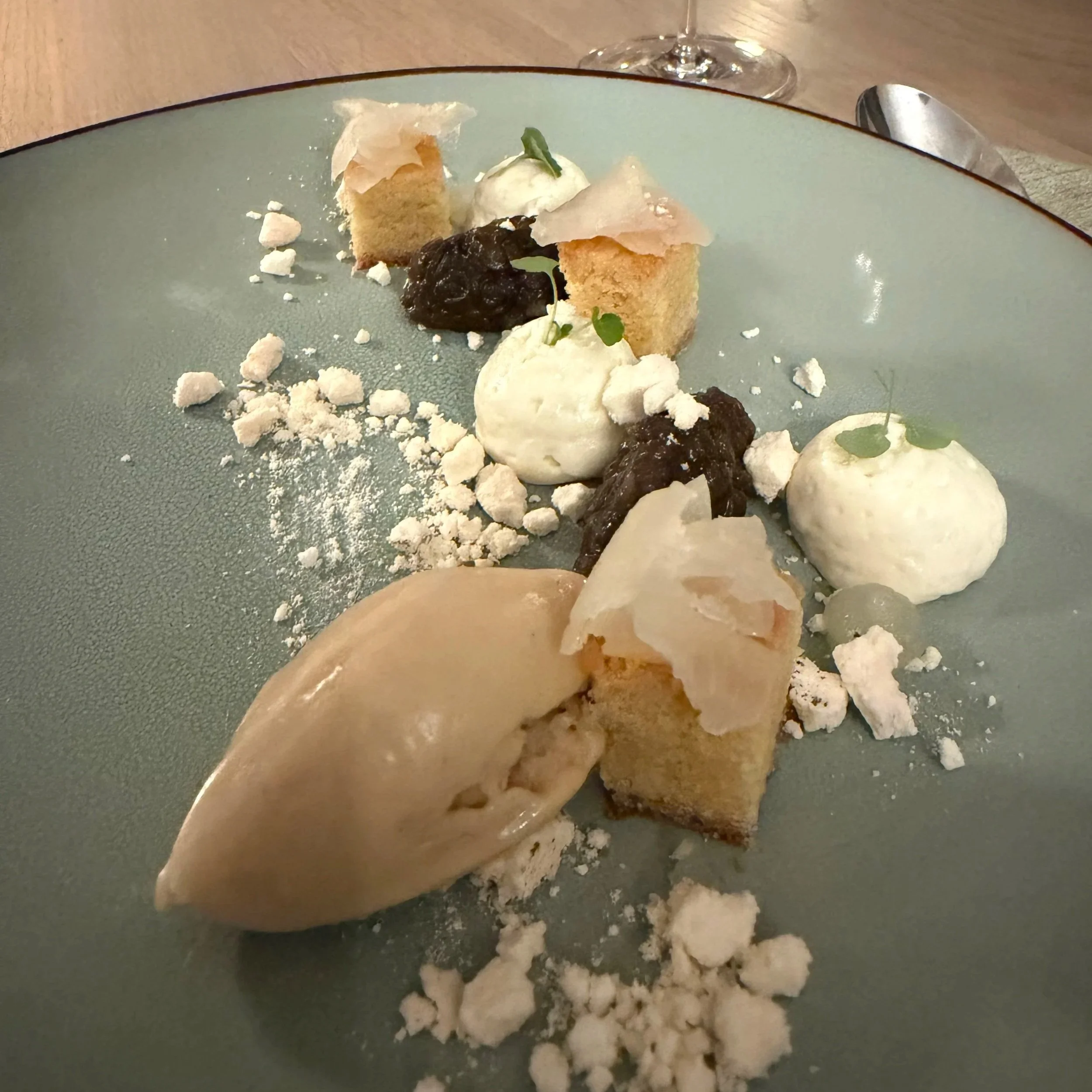
Chef Damien prepared a six-course tasting menu, each course paired with Champagne from Palmer & Co, and I don’t think I will ever be able to describe it properly. His dishes were sophisticated and rich, but also incredibly thoughtful, and we were lucky to experience flavors inspired by his recent trip to Japan.
At one point, I caught myself closing my eyes while chewing, trying to memorize the texture and the flavor because I knew I might never taste something like that again.
Dinner lasted hours. Chef Damien came out to talk to us several times throughout the evening, which somehow made the whole experience feel even more personal. One of the things I love most about dining in France is that every meal is an experience. Long, enjoyable dinners, shared with the best company, where no one is rushing you out the door.
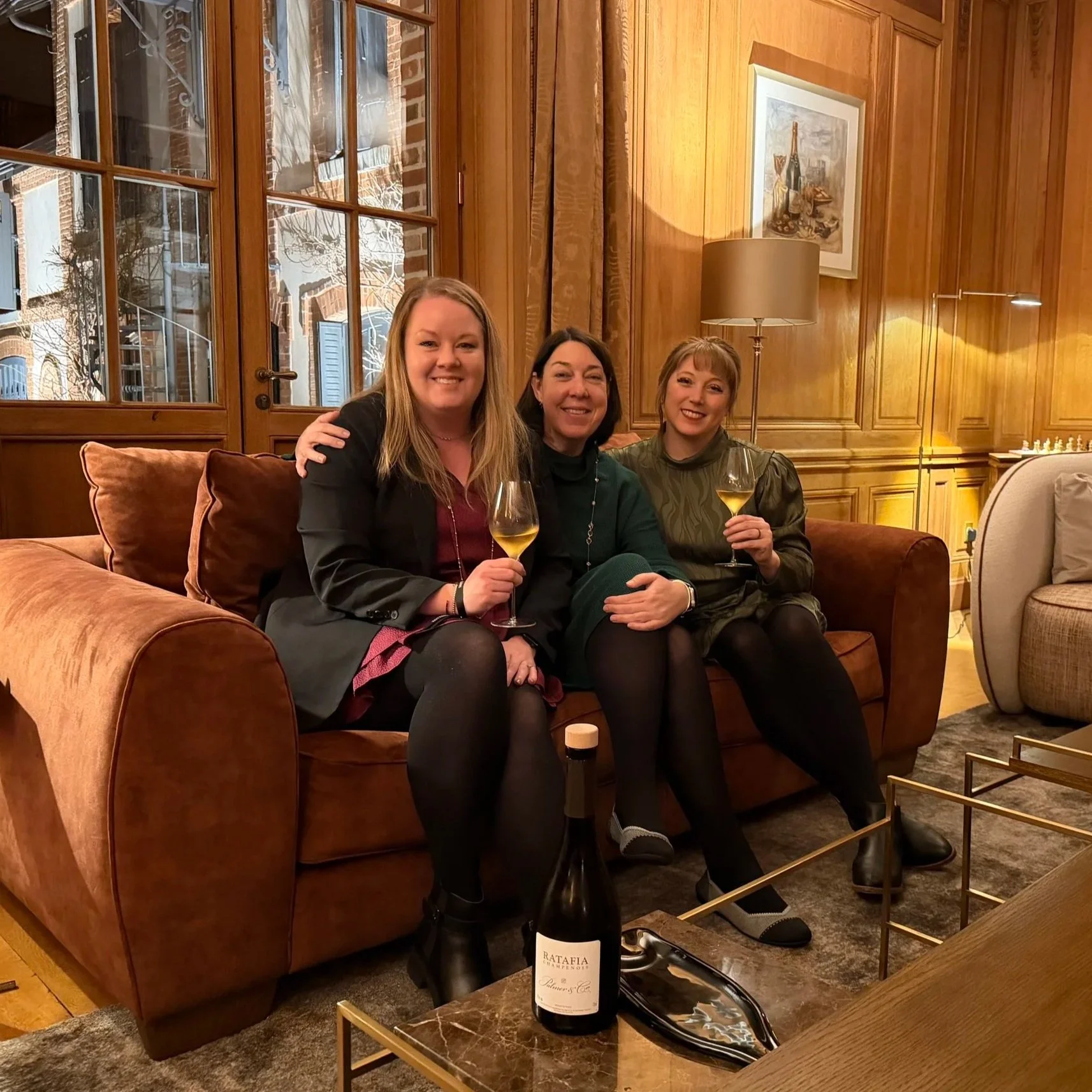
This dinner felt exactly like that, and maybe even more so. After the meal, we of course requested Ratafia, and our host suggested we move into the lounge to enjoy it. We happily agreed.
That’s really what made Domaine du Chalet so special. Those small, intimate moments with the staff, the drinks, the incredible attention to detail in the food and in the experience. Even as we sat in the lounge, sipping our digestif and talking, Chef Damien stopped by one last time to check on us and say goodbye, knowing we were heading out the next morning.
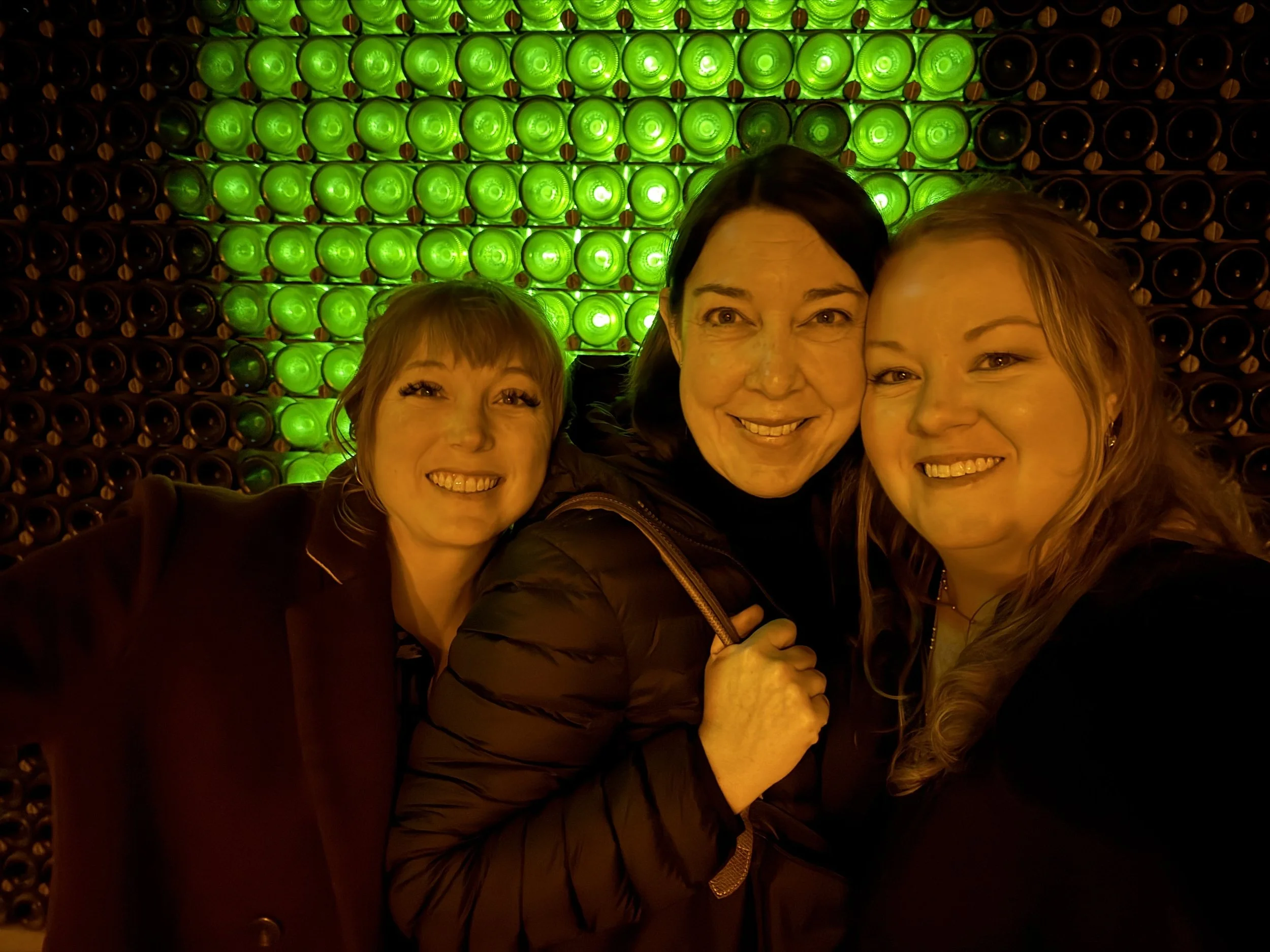
It was one of those meals I just know I’ll remember for the rest of my life. Spending it with the Ks made it all the more special.
Why Champagne Feels Different
What stayed with me most wasn’t just the Champagne itself, but the people who made the experience what it was.
Sabine, our hostess at breakfast each morning, who insisted on driving us to our morning tour instead of letting us walk.
Julian, telling stories like he was introducing us to his family.
Arnaud and Sophie, opening their winery early just for us.
Chef Damien, the wizard, checking on us between courses.
Everything felt personal.
At Taittinger, they said something I haven’t stopped thinking about. Champagne, they explained, isn’t just meant for life’s biggest celebrations.
It’s meant to be enjoyed in the big moments, yes, but also in the small ones. The quiet ones.
And now, in my own words, I associate Champagne with love, friendship, resilience, happiness, and togetherness.
The French use the phrase joie de vivre, which means the joy of living. It’s a deep appreciation for life as it is, in all its ordinary and extraordinary moments.
And honestly, I can’t think of a better way to experience that joie de vivre than with three friends reuniting in the country where it all began.
Talk about the perfect reason to open a bottle… or several… of Champagne.
XXX
And Now: My Guide to Champagne
What I Learned About Champagne
I’d be remiss if I kept all this high-level knowledge to myself, so let’s dig into the basics.
First, real Champagne can only come from the Champagne region of France. Anything else is technically sparkling wine. You’ll know you have the real thing when the bottle actually says Champagne on the label. Legally, no one else is allowed to use that name.
Champagne is one of the most regulated wines in the world. There are strict rules about how the grapes are grown, how the wine is made, how long it ages, and even how much sugar can be added.
There are three types of grapes there:
Chardonnay
Pinot Noir
Meunier
From those, you get the main styles:
Blend (Cuvée): A mix of any or all of the three grapes
Blanc de Blancs: 100% Chardonnay
Blanc de Noirs: Black grapes with white juice (Pinot Noir and/or Meunier)
Rosé: Made by letting the grape skins sit with the juice briefly to give it color or by blending a small amount of red wine into the champagne
Most Champagne is non-vintage, meaning it’s a blend of grapes from multiple years. Champagne houses want their wine to taste consistent every year, so they blend wines from different harvests, including reserve wines from previous years, to maintain the same style.
Some years, though, the harvest is so good that producers decide to bottle a vintage, meaning all the grapes come from a single year. Growers and producers across Champagne pay very close attention to the weather and growing conditions each season, and certain years become widely recognized as exceptional. You’ll often hear people say things like, “2012 was a great year,” which is a direct nod to the ideal harvest conditions.
Each house ultimately decides for itself whether to declare a vintage, but in strong years, many producers choose to bottle single-year Champagne rather than blend with reserve wines. Vintage Champagnes are also typically aged longer before release, which is part of what makes them special.
So don’t be alarmed if you can’t find a date on a champagne bottle. This is typical! And let me just say that non-vintage is still exceptional. In fact, I even preferred the non-vintage Blanc de Blancs over the 2013 vintage at Ruinart. Remember?
From that foundation, everything else is fairly straightforward.
Brut refers to sweetness, not quality. Brut is dry, Extra Brut and Brut Nature are even drier, and Demi-Sec is sweeter.
On bottles, you might also see Grand Cru or Premier Cru, which refer to the villages where the grapes were grown. Certain villages in Champagne are known for having the best soil, slope, sun exposure, and climate, which produce higher-quality grapes.
Cuvée simply means the blend, although Champagne houses often designate their best blends as Grande Cuvée or Tête de Cuvée.
Before this trip, I didn’t know any of that. Seriously, I thought Brut was a type of champagne.
A Quick Guide to Champagne at Home
I used to turn away from “champagne,” claiming I couldn’t drink it because it gave me a headache or made me feel fuzzy, even after one glass. What I quickly learned is that I wasn’t actually drinking Champagne at all.
As I mentioned, real Champagne can only come from the Champagne region of France. It’s highly regulated, and everything is controlled to protect the quality and the tradition.
During our tasting day, we had glass after glass over the course of 12 or so hours. No exaggeration, we probably had ten or more pours each between the different houses, tastings, and meals. And not once did I get a headache or feel that fuzzy feeling I always associated with “champagne” before. It completely changed my perspective.
Champagne is worth the splurge. It’s quality, it’s intentional, and you can taste the difference. Anything made outside the Champagne region is technically sparkling wine, and while some of it can be very good, it isn’t always held to the same standards.
Unless you really know what you’re buying, I’d say stick with Champagne.
My Favorite Type of Champagne
One thing I learned on this trip is that I have a favorite style: Blanc de Blancs. That said, I honestly enjoyed everything we tried.
Below are a few of the Champagnes we had that you can also find here in the U.S.
If I wanted to taste everything (with a group or over a period of time), here’s my Champagne checklist:
Blanc de Blancs
Blanc de Noirs
Rosé
Any cuvée (something that blends all three grapes)
And a Brut Nature of any of the above, just to see how different it can taste without added sugar (yes, the label will read: Brut Nature)
Happy tasting! 🥂
